
 Eseandre Mordi

Meta AI closed out 2025 with a massive fourth-quarter surge that caught attention across the industry. The numbers tell a clear story: this wasn't just a small bump—it was a breakout period. Comparing Q4 against Q3 reveals dramatic increases in downloads, active users, and web traffic. Similarweb's data shows Meta AI picking up serious momentum as the year wrapped up.
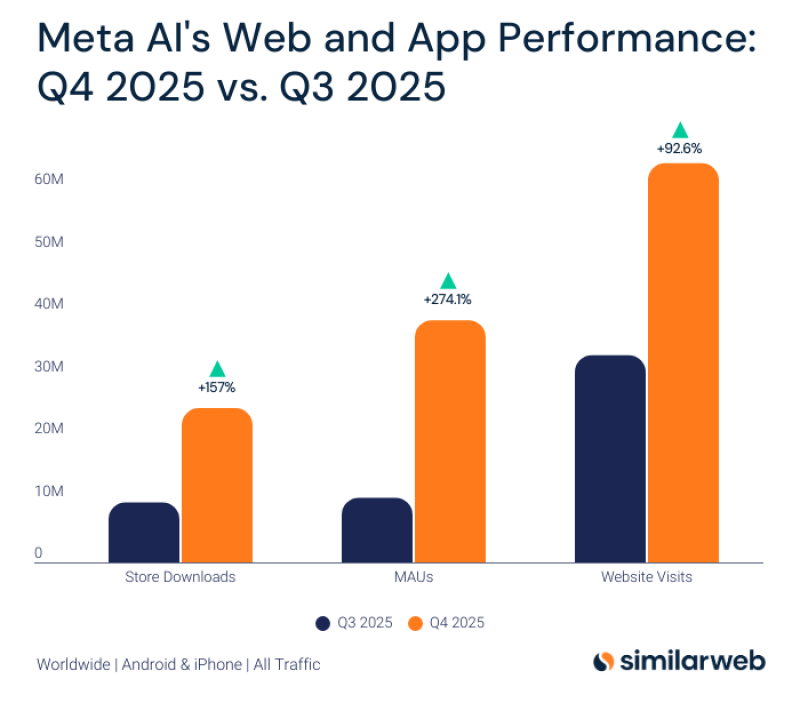
⬤ The download figures really stand out. Meta AI went from around 9 million app downloads in Q3 to over 22 million in Q4—a 157% jump in just three months. But here's what's even more interesting: monthly active users exploded from roughly 9 million to about 36 million, marking 274% growth. That gap between downloads and active users tells us something important. People weren't just installing the app out of curiosity—they were sticking around and using it regularly.
⬤ The website side of things showed similar strength. Traffic climbed from approximately 31 million visits in Q3 to more than 60 million in Q4, nearly doubling with 93% growth. What makes this significant is that growth happened simultaneously across mobile apps and web browsers. Whether people accessed Meta AI through Android, iPhone, or a desktop browser, engagement was climbing worldwide. That kind of coordinated growth across platforms usually signals genuine product-market fit rather than a flash in the pan.

⬤ Why does this matter beyond Meta's own product roadmap? Because it shows consumer AI tools hitting an inflection point in late 2025. When you see sustained gains across downloads, active users, and web visits all at once, it suggests people are building real habits around these platforms. As AI companies compete for attention and market share, these kinds of numbers shift the competitive landscape. Meta AI's Q4 performance demonstrates how quickly an AI platform can scale when it resonates with users across both mobile and web—and how fast the race is heating up.
 Eseandre Mordi



