
 Victoria Bazir
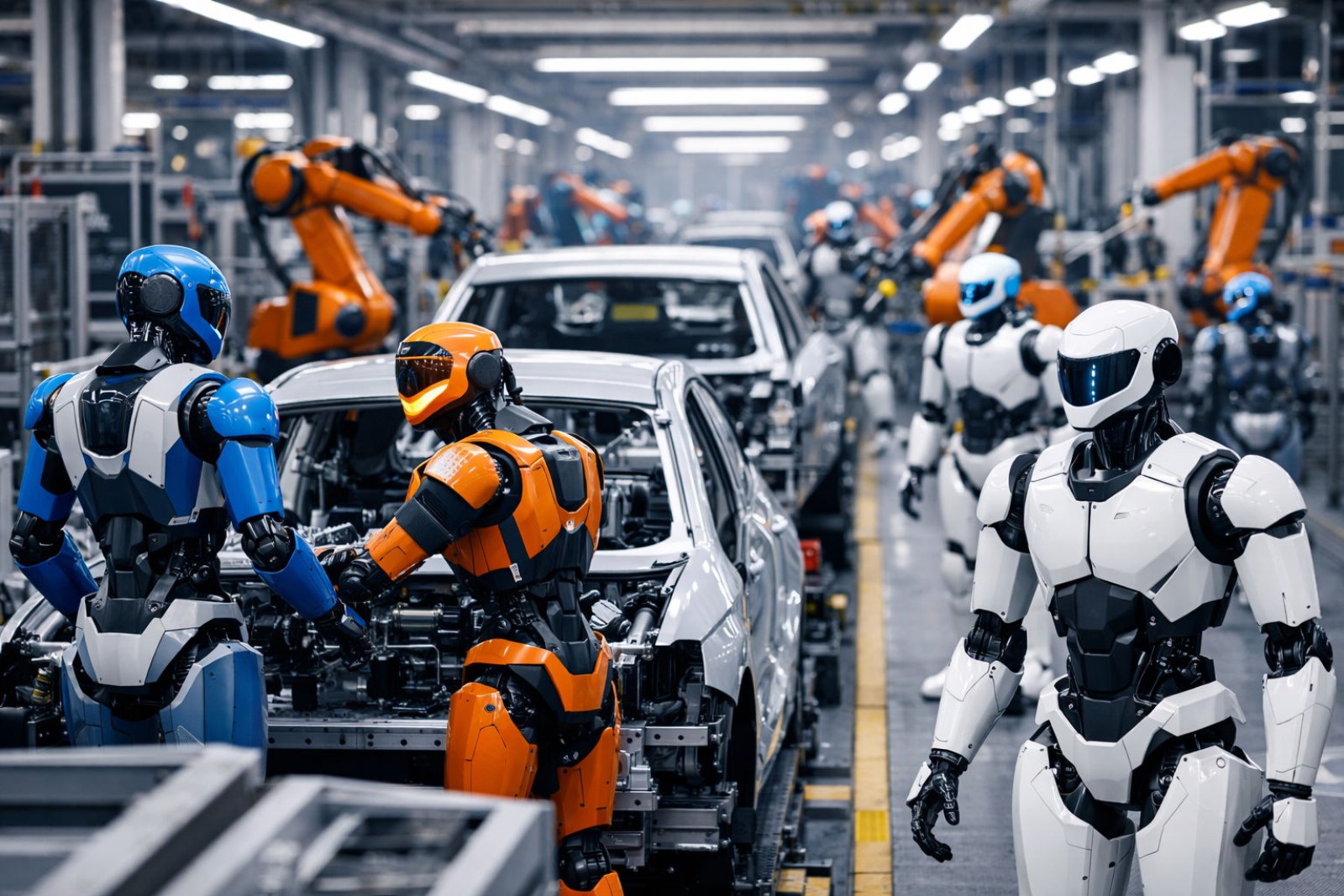
⬤ Renault Group is scaling up automation with a first batch of 350 Calvin-40 humanoid robots built by French company Wandercraft. After a year of in-plant trials, the headless bipedal robots are heading to production lines to handle physically demanding, repetitive tasks that currently fall on factory workers.
⬤ Calvin-40 is a purpose-built industrial humanoid that runs interchangeable end effectors including suction cups, grippers, and dexterous robotic hands. This modularity lets a single unit adapt across different handling tasks without hardware changes, making it practical across varied production workflows inside large automotive facilities.
⬤ Early trials focused on bin transport and tire handling, two ergonomically risky tasks that drive workplace injuries in high-volume plants. The goal is clear: cut physical strain for workers without sacrificing throughput. Similar early results were seen when Xiaomi deployed humanoid robots in its EV plant, reaching 90% task accuracy in a 3-hour trial, signaling that real-world humanoid deployments are moving past the concept stage.
⬤ The push for flexible robots reflects a wider industry shift. Fixed robotic arms handle dedicated tasks well, but manufacturers need systems that can move freely through complex environments. Advances in AI and compute power are enabling this leap. Research from Epoch AI showing 21,400% efficiency gains driven by compute scaling underlines how raw hardware progress continues to unlock new robotics capabilities.
⬤ On the hardware side, dexterity is advancing just as fast. Figure's 3rd-gen humanoid with its 7th-generation robotic hand shows how manipulation capabilities are rapidly catching up with mobility. For Renault, deploying 350 units marks a genuine operational bet that humanoid robots are ready for real factory conditions, not just controlled demos.
 Victoria Bazir



