
 Eseandre Mordi
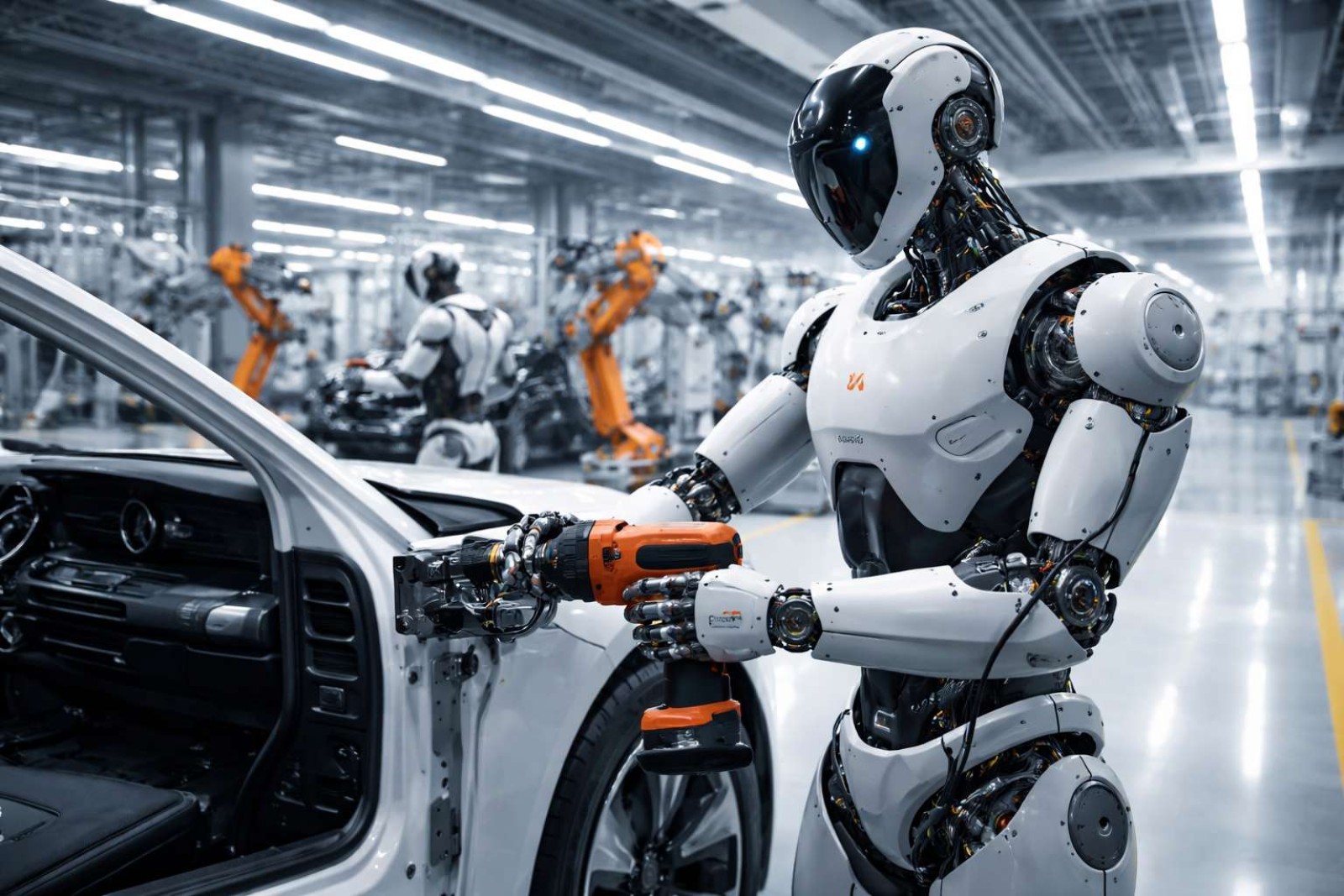
Humanoid robots are no longer a lab experiment. Xiaomi has moved them onto a live electric vehicle assembly line, and the early results suggest the technology is closer to real-world readiness than many expected. In a trial that ran without interruption, the robots handled repetitive fastening tasks in an active production environment, holding up under conditions that factory automation actually demands.
Xiaomi's Robots Achieve 90.2% Accuracy on EV Assembly Line
The test took place in the die-casting section of Xiaomi's EV plant, where humanoid robots spent three consecutive hours installing self-tapping nuts. They finished with a 90.2% success rate, a number that reflects not just precision but operational consistency over time.
The performance was powered by a Vision-Language-Action methodology combined with reinforcement learning. This approach lets the robots read visual information from their environment and translate it into physical actions, rather than following rigid pre-programmed movements. The distinction matters: it means the system can adapt, which is what separates a useful factory robot from a controlled demo.
Xiaomi described this as an early-stage implementation, but the framing around it points to something more deliberate. CEO Lei Jun has indicated the company plans to deploy significantly more humanoid robots across its factories over the next five years, framing it as a long-term structural shift rather than a pilot program.
AI Robotics Expansion Beyond Industrial Use Cases
The momentum at Xiaomi reflects a wider pattern taking shape across the industry. AI humanoid robots are entering retail environments in Shenzhen convenience stores, showing that deployment is spreading beyond factory floors into commercial spaces that deal with far less predictable conditions.
On the infrastructure side, Xiaomi is also investing in the underlying systems that make AI applications run efficiently. The company has been working to significantly reduce edge AI memory usage through its HyperVL architecture, and recently moved to launch a token recharge system ahead of full API billing implementation, signaling a broader push into AI platform services.
If Xiaomi's five-year robotics roadmap holds, the implications reach well beyond the assembly line. Manufacturing costs, workforce structures, and competitive dynamics in both the EV and AI sectors could all shift as humanoid robots move from trial runs to standard operations.
 Eseandre Mordi



