
 Victoria Bazir
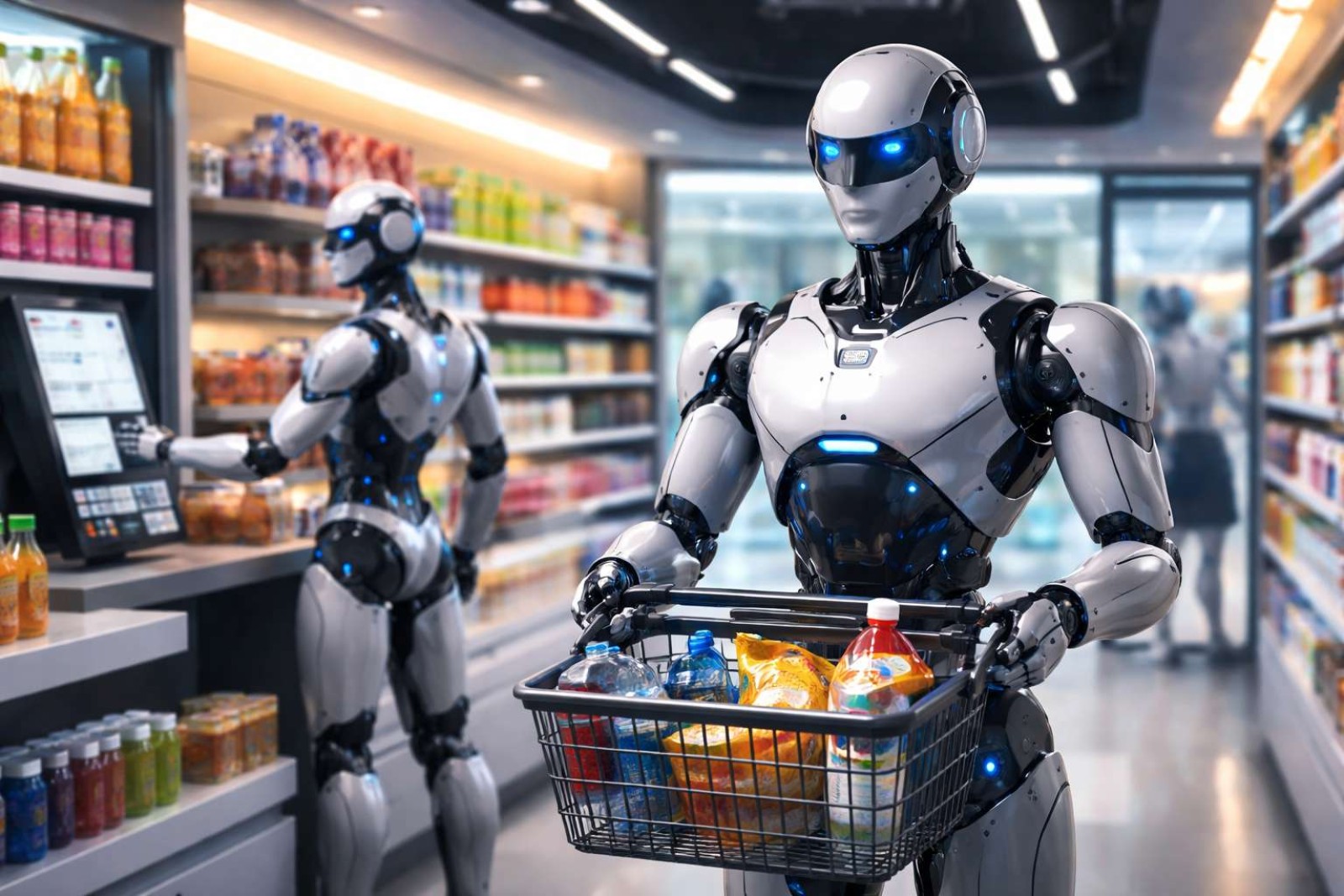
A humanoid robot is now working a real retail shift in Shenzhen — and it's not just a demo. DEXFORCE Robotics has put its DexForce W1 Pro (Gen2) wheeled humanoid to work inside a community convenience store, where it handles meal prep, microwave duties, and customer delivery on its own. The robot crafts nutritious, weight-loss-friendly meals based on customer preferences and brings them over — no staff required.
This isn't a proof-of-concept sitting behind glass. It's an AI-driven service assistant running live inside a public-facing store, interacting with real customers every day.
From Factory Floors to Retail Aisles: Humanoids Move Into Everyday Spaces
The DexForce W1 Pro signals something bigger than one robot in one store. The shift here is from controlled lab environments to messy, unpredictable real-world settings — and that's a meaningful leap. Beyond retail, we're already seeing humanoid robots perform real-time emotional AI presentations in public showcases, pointing to broader experimentation with service-oriented AI systems.
On the industrial side, the bar keeps rising. Humanoid robots are now handling real factory assembly tasks with millimeter-level precision, showing that the leap from pilot to production is already happening in some of the most demanding environments imaginable.
What Shenzhen's Robot Store Says About the Next 2 Years
DEXFORCE's deployment cuts through a lot of the hype around humanoid robotics. Combining mobility, AI decision-making, and autonomous task execution in a live consumer environment is exactly what separates a product from a prototype. When a robot can navigate a store, read customer preferences, operate a microwave, and hand over a meal — all without supervision — the technology stops being a novelty and starts being infrastructure.
The broader picture points toward normalization. With humanoid welding robots set to enter major shipyards by 2026, cross-sector adoption is moving faster than most expected. The question now isn't whether humanoid robots will appear in service industries — it's how quickly they'll stop being remarkable when they do.
 Victoria Bazir



