
 Saad Ullah
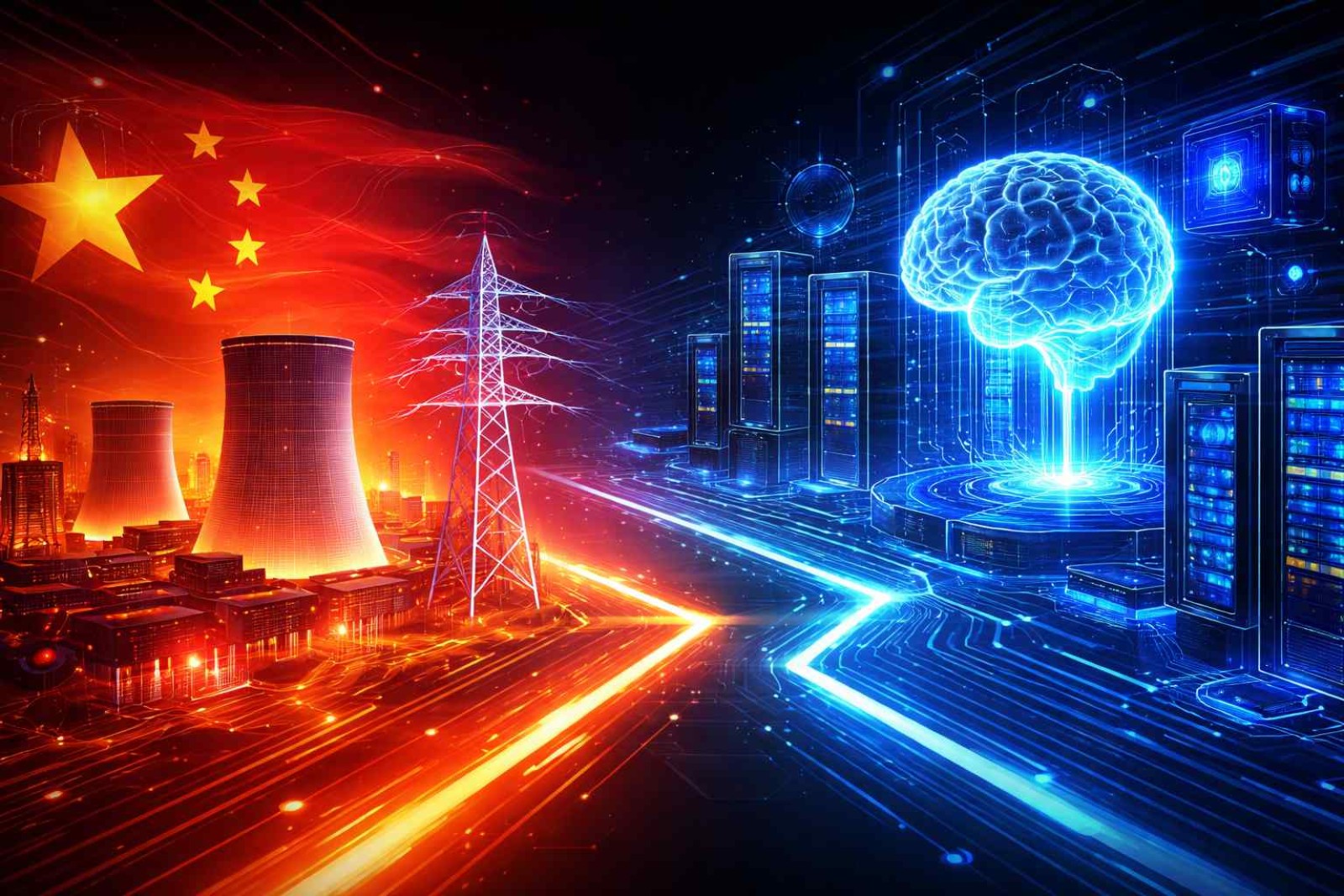
The global race for AI dominance increasingly depends on a factor beyond algorithms and chips - raw electrical power. Recent energy statistics show a dramatic divergence between China's rapidly expanding grid capacity and stagnating growth in the United States, potentially reshaping which nations can support the next generation of AI infrastructure.
China Powers Ahead: 74% Growth in 10 Years
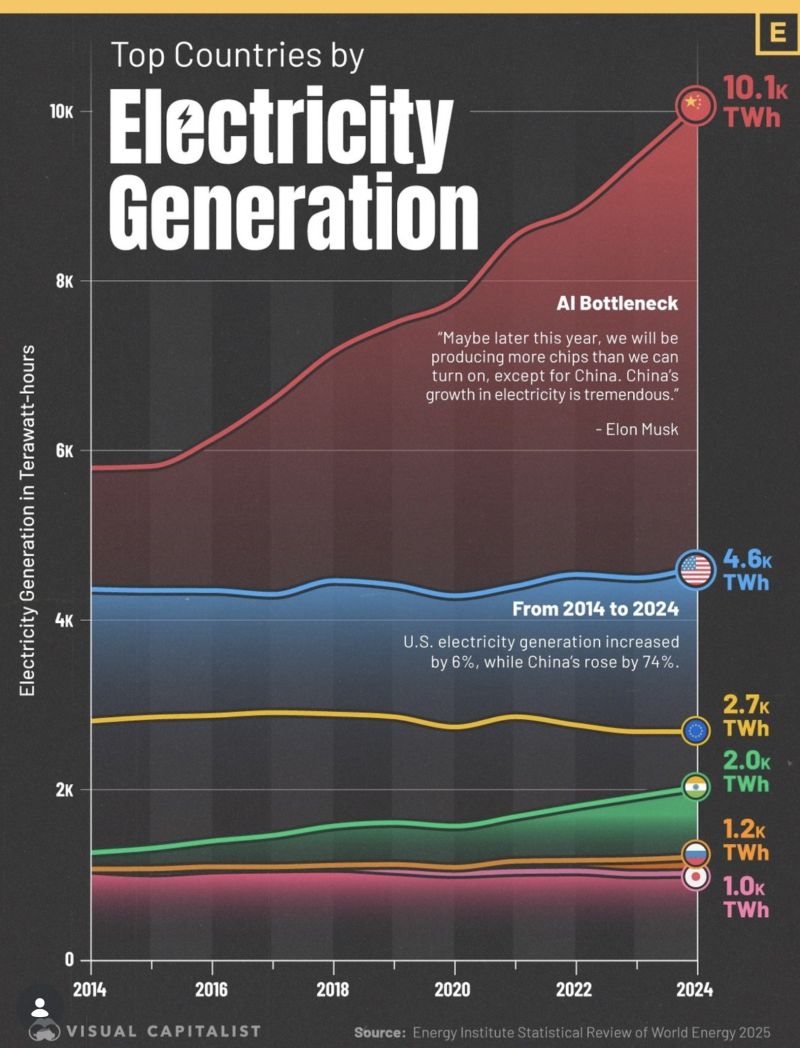
Data from the Energy Institute Statistical Review of World Energy 2025, visualized by Visual Capitalist, shows China's electricity generation climbing from under 6,000 terawatt-hours in 2014 to over 10,000 TWh in 2024. That 74% jump dwarfs the U.S. increase of just 6%, which brought American generation to roughly 4,600 TWh. The gap highlights how energy supply is becoming a critical bottleneck for AI deployment and large-scale computing.
China's infrastructure advantage already shows up in real-world applications. China Southern Power Grid tests Unitree G1 robot with BrainCo Revo2 hybrid hand, demonstrating how robust power networks enable next-generation robotics and industrial automation at scale.
Global Power Landscape and AI Compute Demands
Other major regions show relatively flat electricity output. The European Union generates around 2,700 TWh, while India approaches 2,000 TWh. As AI systems grow more computationally hungry, sustained power availability matters as much as software innovation. Perplexity's new embedding models store 32x more data while beating AI benchmarks, showing how efficiency gains still translate into greater infrastructure requirements.
Platform usage patterns confirm intensifying global AI demand. Claude weekly visits surge 122% in 6 weeks as AI competition heats up, illustrating rising computational needs that ultimately require reliable energy backbones.
The electricity generation gap may shape long-term AI competitiveness more than any single breakthrough. Strong grid expansion enables hyperscale data center deployment, while stagnant power growth creates infrastructure constraints that no amount of algorithmic cleverness can overcome.
 Saad Ullah



