Peter Smith
A reported internal leak of Anthropic's Claude Code has surfaced new details about how the platform operates under the hood. Crypto and AI analyst Kyle Chassé flagged that the system reloads a configuration file - CLAUDE.md - on every single interaction, enabling persistent customization across sessions and allowing users to effectively define behavior once and carry it forward indefinitely.
The system is built for something far more powerful than single-prompt interactions - it is designed from the ground up for agent-based workflows that run, decide, and adapt on their own.
How Claude Code's Agent Architecture Works
The disclosed details paint a picture that most users are only scratching the surface of what Claude Code can do.
While many rely on single prompts, the architecture is designed around advanced agent-based workflows that operate at a different level entirely. Subagents allow multiple agents to run in parallel while sharing a prompt cache, keeping operations efficient even at scale.
Auto Mode marks a genuine shift in how AI tools are being built - not as assistants waiting for instructions, but as autonomous systems capable of continuous, unsupervised execution.
Auto Mode pushes this further - the system can make decisions and execute actions independently, cutting out the need for manual approvals at every step.
Dream Mode and x402: Claude Code's 3 Most Disruptive Capabilities
Among the capabilities surfaced in the leak, three stand out as particularly significant for the direction of AI development:
- Proactive operation - the system initiates tasks without waiting for user input
- Dream Mode - Claude Code continues working autonomously even when the user is offline
- x402 integration - agents gain the ability to handle payments, extending their functionality from reasoning and task execution into fully transactional territory
When an AI agent can transact on your behalf while you sleep, the line between tool and autonomous operator effectively disappears.
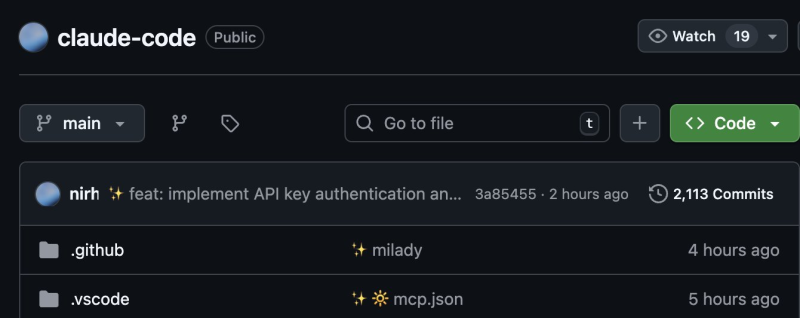
The accompanying repository snapshot points to a fast-moving project, with thousands of commits reflecting the pace of development behind the scenes.
This level of iteration mirrors what other players in the space are doing - Ollama's Pi coding agent for AI workflows is one recent example of how rapidly agent tooling is maturing across the industry.
Claude Code Dominance Reflects Broader AI Agent Shift
These revelations fit into a much broader pattern. AI systems are steadily moving away from prompt-based tools and toward autonomous agents capable of continuous operation. New model tiers like Anthropic Capybara AI reinforce just how quickly the ecosystem is pivoting toward agent-driven architecture, with Anthropic pushing capability boundaries well beyond what public-facing products currently show.
Adoption metrics back this up. Claude Code's dominance in GitHub usage - leading Codex with 79.8% npm share and 94.6% repository dominance - signals that developers are already betting on this architecture at scale. The infrastructure powering these tools is far more sophisticated than most users realize, and the gap between casual usage and what the system is actually capable of is only growing wider.
 Peter Smith