
 Usman Salis

⬤ DeepSeek is set to release its latest large language model, V4, in mid-February, more than a year after its previous major update. The Hangzhou-based lab plans to introduce a multimodal system capable of generating text, images, and video. Reports indicate the model includes significant coding improvements, as detailed in DeepSeek's V4 model set for mid-February launch with major coding upgrades. What makes V4 particularly notable is its optimization for Chinese processors from Huawei and Cambricon instead of Nvidia hardware.
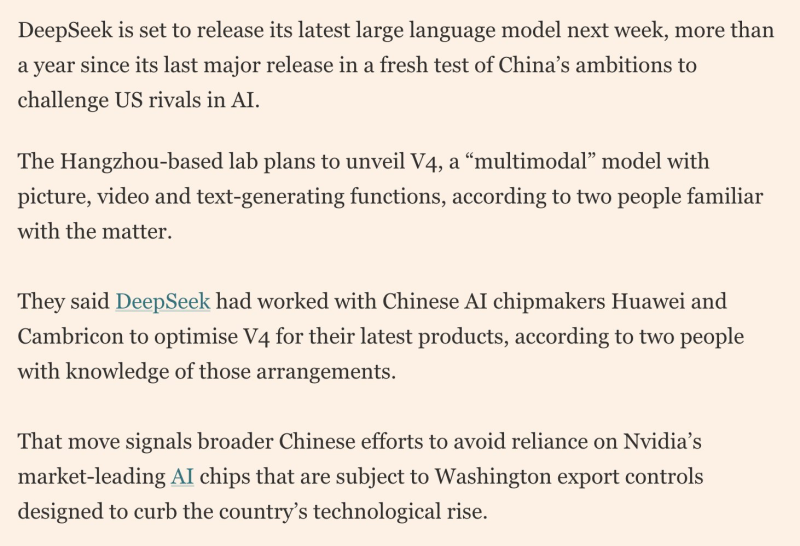
⬤ DeepSeek has reportedly collaborated closely with Huawei and Cambricon to fine-tune V4 for their latest AI accelerators. This strategic move reflects broader Chinese efforts to reduce reliance on Nvidia chips amid ongoing export restrictions. "The effectiveness of DeepSeek V4 on Huawei and Cambricon chips may serve as a key indicator of the long-term viability of alternative AI ecosystems," according to industry observers. Infrastructure-level advancements are also emerging across the domestic ecosystem, including developments such as TencentHunyuan's GradLoC fixes AI training crashes at token level, which highlight efforts to strengthen training reliability and model performance within localized AI stacks.
⬤ The shift toward a China-native AI stack comes as Chinese AI and robotics firms continue expanding their footprint globally. For example, China's AGIBot capturing 39% market share and leading global humanoid robot shipments underscores how domestic innovation is translating into measurable global positioning. DeepSeek V4 therefore represents not only a software release but also part of a broader structural realignment across hardware, robotics, and AI deployment strategies.
⬤ The upcoming DeepSeek V4 launch signals evolving competitive dynamics in artificial intelligence development. As geopolitical pressures reshape semiconductor supply chains, the success of models optimized for domestic hardware could influence where future AI infrastructure investments concentrate. The mid-February release will test whether Chinese processors can effectively support advanced AI workloads at scale, potentially reshaping the global AI hardware landscape.
 Usman Salis



