
 Eseandre Mordi

⬤ Biostate AI grabbed attention when Harvard's longevity lab partnered with the company to test K-Dense Beta, a multi-agent AI platform that works like a full research team. The system handled literature reviews, ran code, and designed experiments on its own, wrapping up a transcriptomic aging study in weeks rather than the years it would normally take. The trial shows how AI-driven automation is taking over more ground in biological research.
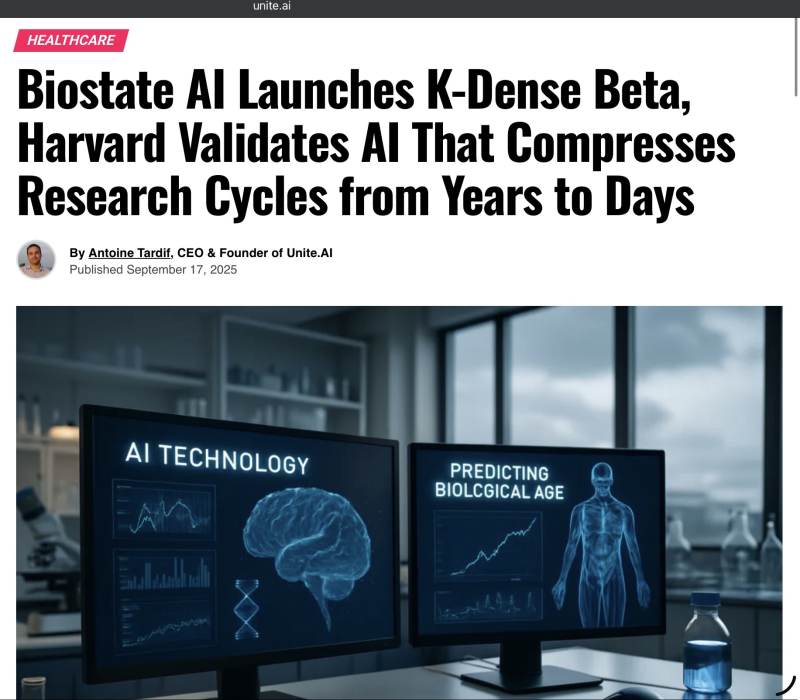
⬤ K-Dense Beta runs multiple scientific workflows at once and double-checks every step with built-in verification systems and reliability scores. That tackles a real pain point in modern biology—researchers are drowning in datasets that keep getting bigger and more complicated. The platform focuses on AI-assisted biomedical research, including digital brain modeling and biological age prediction, which lines up with what longevity scientists actually need.
⬤ The AI didn't just speed things up. During testing, it caught something interesting: aging isn't one long slide downhill but a series of separate biological programs. That means treatments might need to target specific life stages instead of taking a one-size-fits-all approach. It's the kind of pattern that's easy to miss in traditional research, especially when you're dealing with mountains of longevity data.
⬤ The partnership shows multi-agent AI frameworks becoming standard equipment in biomedical labs by boosting speed, clarity, and reliability. As longevity research expands and scientists need tools that can accelerate experiments while handling complex datasets, platforms like K-Dense Beta are changing what people expect from discovery timelines. Advanced AI moving into core lab work is part of a bigger shift reshaping health tech and the biotech landscape.
 Eseandre Mordi



