
 Saad Ullah
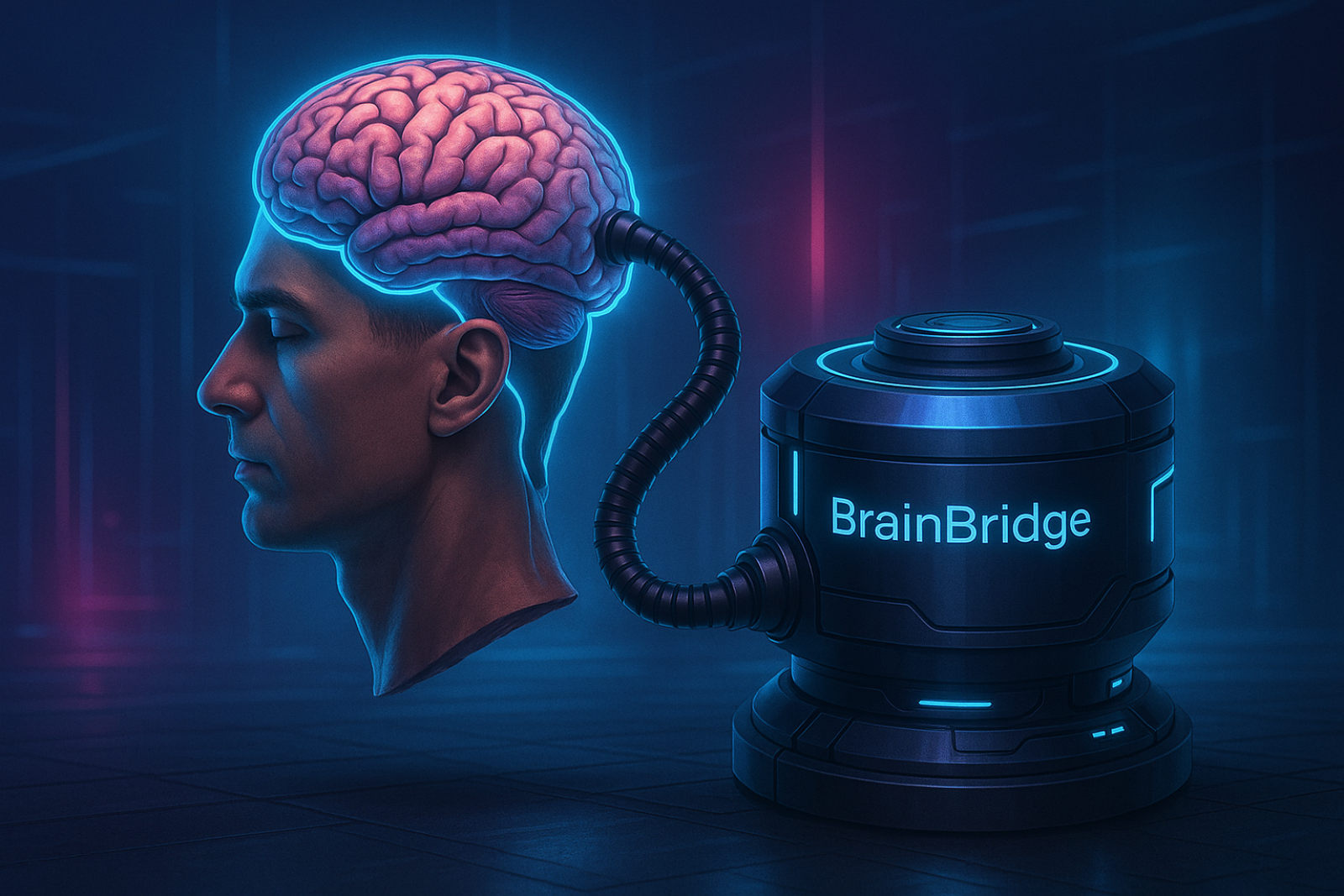
⬤ A high-profile concept called BrainBridge has ignited worldwide discussion after being unveiled as an AI-powered system designed for full head and face transplants. The proposal positions itself as the world's first transplant platform driven by advanced robotics, artificial intelligence and precision imaging. The concept targets patients with severe conditions like late-stage cancer, total paralysis, and neurodegenerative diseases including Alzheimer's and Parkinson's.
⬤ BrainBridge is designed as a fully automated surgical environment with coordinated robotic arms, AI guidance systems and detailed anatomical mapping. The promotional image shows a futuristic chamber where multiple robotic instruments operate around the patient's head and spine. While purely conceptual, the design outlines how automated systems might eventually support procedures that remain far beyond today's medical capabilities, with robotics and AI guiding every phase from planning to execution.
⬤ The proposal highlights its extraordinary nature, feeling like science fiction despite having a real conceptual framework. BrainBridge aims to offer hope for people with no conventional medical options, potentially giving them a second chance through a radical approach that merges robotics with long-term medical challenges. The concept remains speculative but detailed enough to spark serious consideration of future technological possibilities.
⬤ This development reflects how AI and robotics are expanding medical imagination. Even as just a conceptual design, BrainBridge has triggered debate about ethics, feasibility and the future of life-extending technologies, adding to broader conversations about emerging tech and transformative medical innovation.
 Saad Ullah



