
 Eseandre Mordi
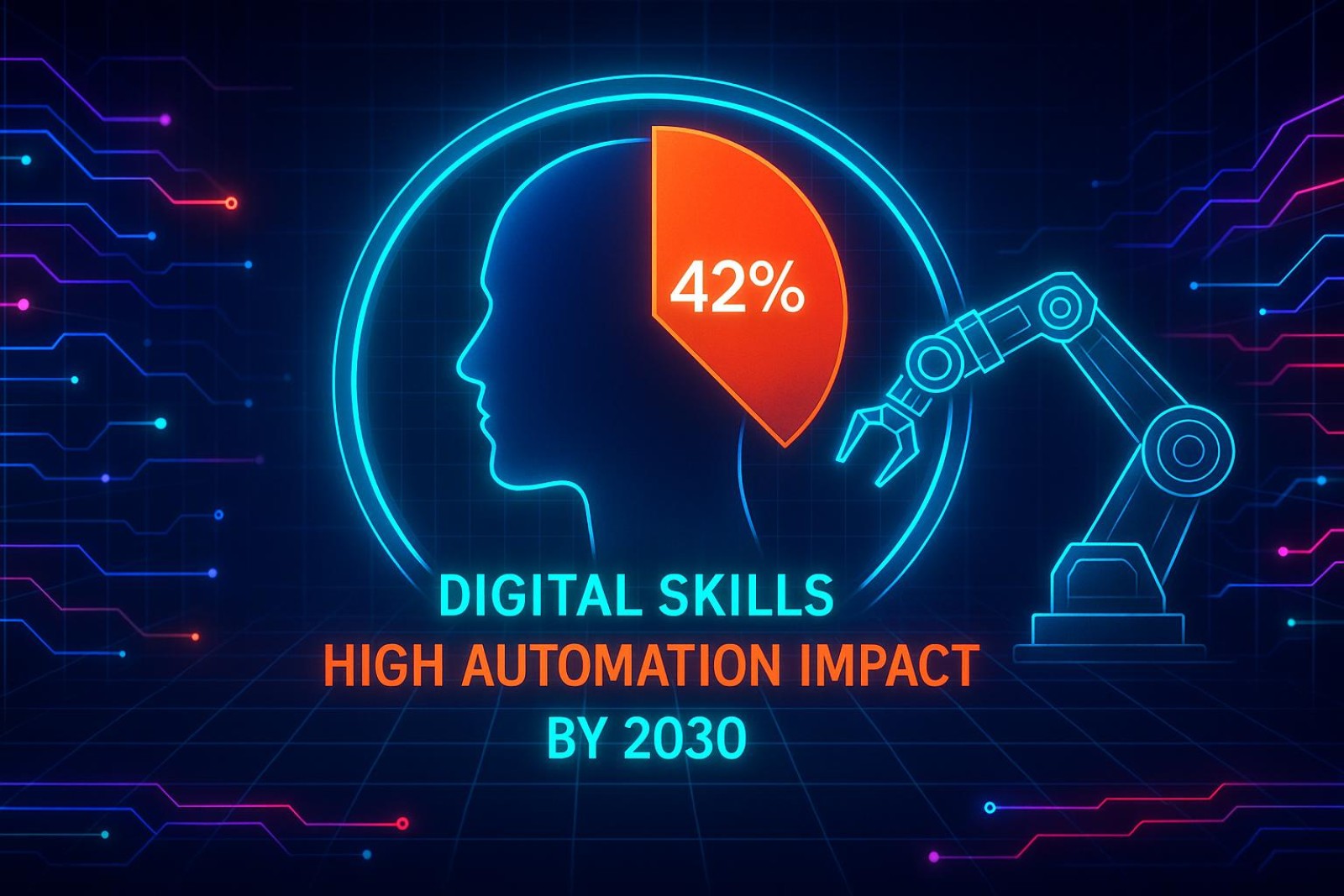
⬤ McKinsey Global Institute just dropped some eye-opening numbers about what's coming for American workers. Their latest Skill Change Index breaks down exactly which job skills are about to get hit hardest by AI and automation before 2030 rolls around. The short version? If you're working with digital tools and processing information all day, you're looking at some serious changes ahead.
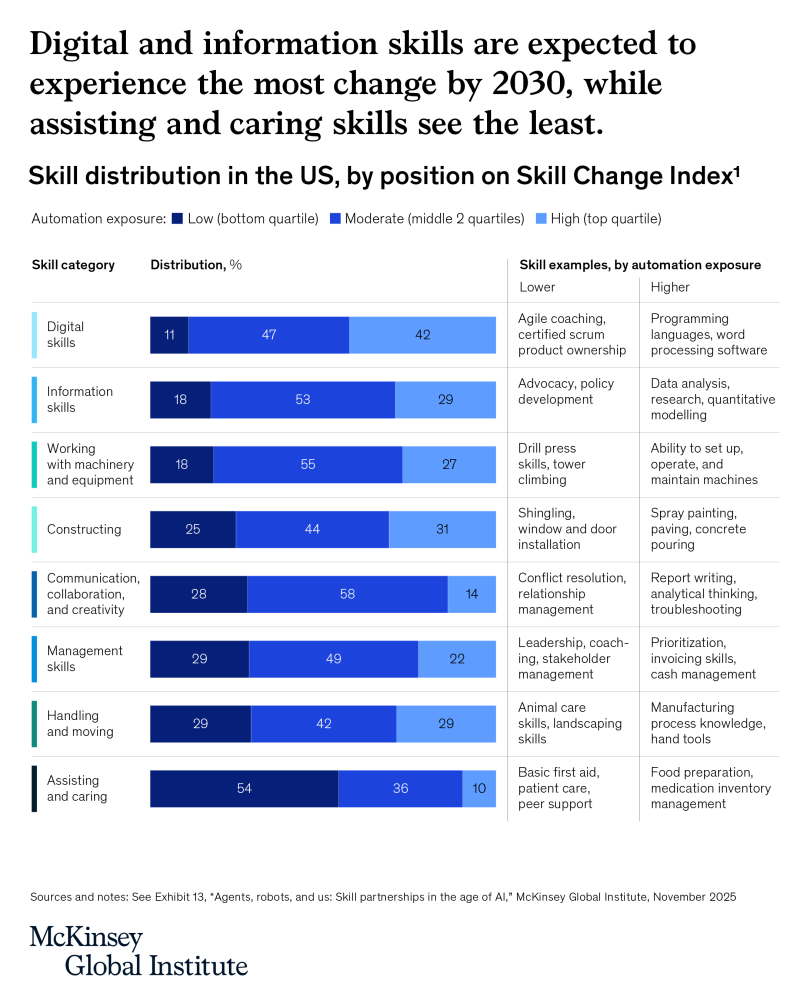
⬤ The data tells a pretty clear story. Digital skills are sitting at the top of the change list – 42% are in the high-impact zone, 47% are seeing moderate shifts, and only 11% are staying relatively stable. Information-processing skills aren't far behind, with 29% facing high disruption, 53% moderate, and 18% low. We're talking about things like agile coaching, crunching data, building quantitative models, and coding. Basically, the stuff that AI is getting really good at. Skills around machinery operation, construction work, communication, and creative tasks are also shifting, just not quite as dramatically.
⬤ Here's where it gets interesting though. Caring and assisting skills? Barely budging. A solid 54% of these activities fall into the low-change category, with only 10% expected to see high-level transformation. Think about tasks like taking care of patients, supporting peers, or providing first aid – stuff that really needs that human touch and emotional intelligence. McKinsey's breakdown shows how some jobs are going to need way more technical chops going forward, while others will keep relying on what makes us fundamentally human.
⬤ What this all means is pretty straightforward: AI isn't just changing work – it's completely reshaping which skills actually matter. As automation keeps accelerating, workers and companies alike need to get real about what's coming. Some people will need to level up their tech game fast, while others might find their people-focused skills becoming even more valuable. Either way, the next few years are going to demand some serious adaptation across the board.
 Eseandre Mordi



