
 Eseandre Mordi
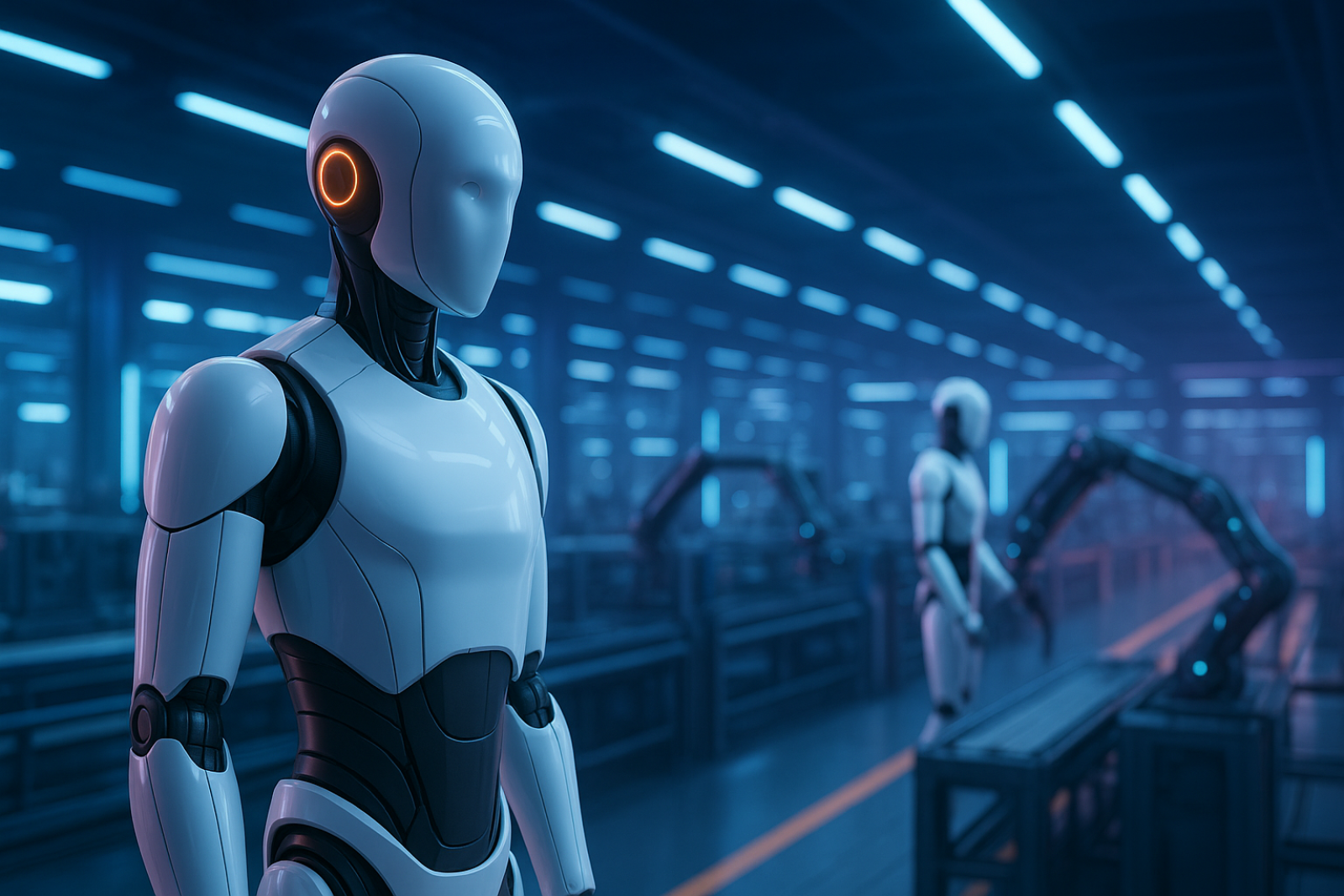
⬤ Xiaomi is ramping up its artificial intelligence strategy with an ambitious plan to bring humanoid robots into every factory over the next five years. CEO Lei Jun recently revealed that the company sees AI as a transformative force ready to reshape traditional industries, with the convergence of AI and manufacturing creating what he calls a trillion-dollar opportunity. This move marks a significant expansion of Xiaomi's automation efforts as it positions intelligent systems at the core of its industrial future.
⬤ The company is already seeing real results from AI integration in its electric vehicle facilities. Complex die-cast parts that were previously nearly impossible to inspect manually now go through X-ray systems powered by AI vision technology. The automated process completes inspections in just two seconds—ten times faster and over five times more accurate than human workers. Lei emphasized that building these advanced systems requires collaboration across multiple companies since no single player can handle everything from components to algorithms to manufacturing on their own.
⬤ Since launching its first humanoid prototype CyberOne in August 2022, Xiaomi has dramatically accelerated its robotics program. The 177-cm, 52-kg robot features 21-joint coordination, 3D vision, and emotion recognition capabilities. The company has also been aggressively expanding its talent pool, bringing on former Tesla Optimus engineer Zach Lu Zeyu in October to lead work on dexterous manipulation and tactile sensing. Xiaomi has opened over 200 robotics positions, including more than a dozen specialists focused specifically on robotic hand development.
⬤ These moves show how seriously Xiaomi is taking the shift toward AI-powered automation. With plans to roll out robots across its manufacturing operations at scale, the company is betting that humanoid systems will become as critical to its business as electric vehicles. The aggressive hiring and rapid development timeline point to intensifying competition in the robotics space, while the factory deployment strategy highlights a broader industry trend toward automated production systems that could fundamentally change how things get made.
 Eseandre Mordi



