
 Saad Ullah
A new open-source project, Lightpanda Browser, is turning heads in the AI developer community. Built from scratch in the Zig programming language and completely independent of Chromium, it targets one thing: machine-driven workloads where speed and memory efficiency actually matter.
What Makes Lightpanda Different from Chrome Headless
Unlike traditional browsers, Lightpanda skips the graphical layer entirely. It runs headless-only, supports JavaScript execution and partial Web API compatibility, and integrates with Playwright, Puppeteer, and chromedp via the Chrome DevTools Protocol. By stripping out everything built for human users, it slashes overhead without breaking existing automation workflows.
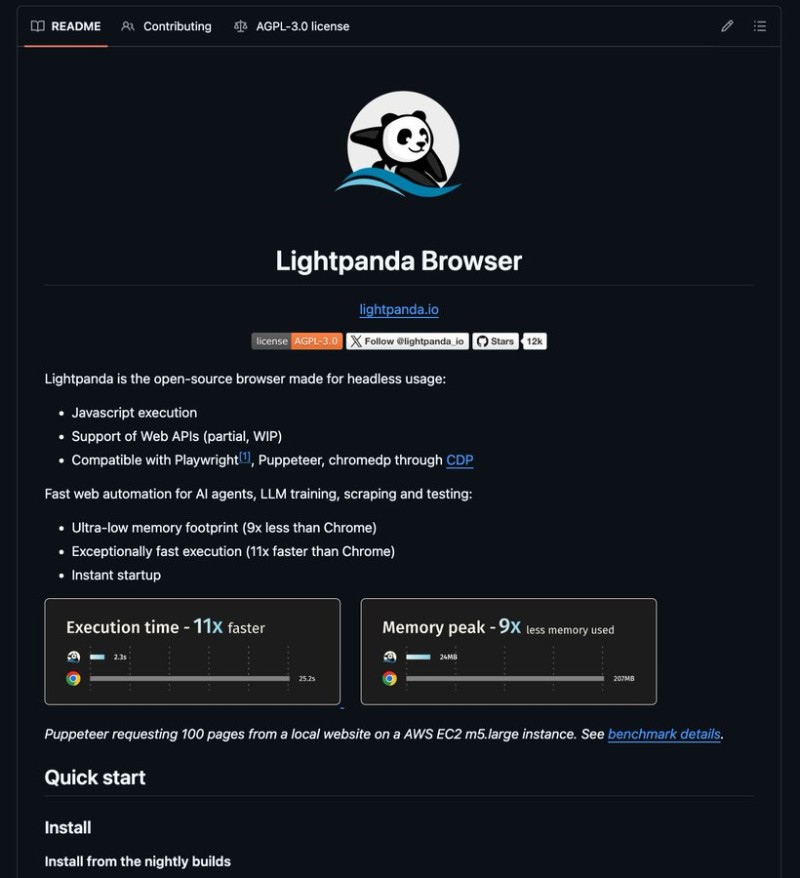
11x Speed Gain: Benchmark Results for AI Agents and Scraping
Benchmark data from the project documentation shows Lightpanda processing page batches up to 11 times faster than Chrome while consuming roughly 9 times less memory. For teams running large-scale scraping, agent pipelines, or testing infrastructure, that gap translates directly into cost and latency savings.
The shift toward infrastructure like Lightpanda reflects a real change in how AI systems interact with the web. Automated agents need to hit hundreds of URLs, extract data, and execute tasks at scale. Traditional browsers were never built for this. Projects like Google's Disco Browser, which turns tabs into AI apps, point to the same trend: the browser stack is being rebuilt around AI-native workflows, not human ones.
 Saad Ullah



