
 Eseandre Mordi
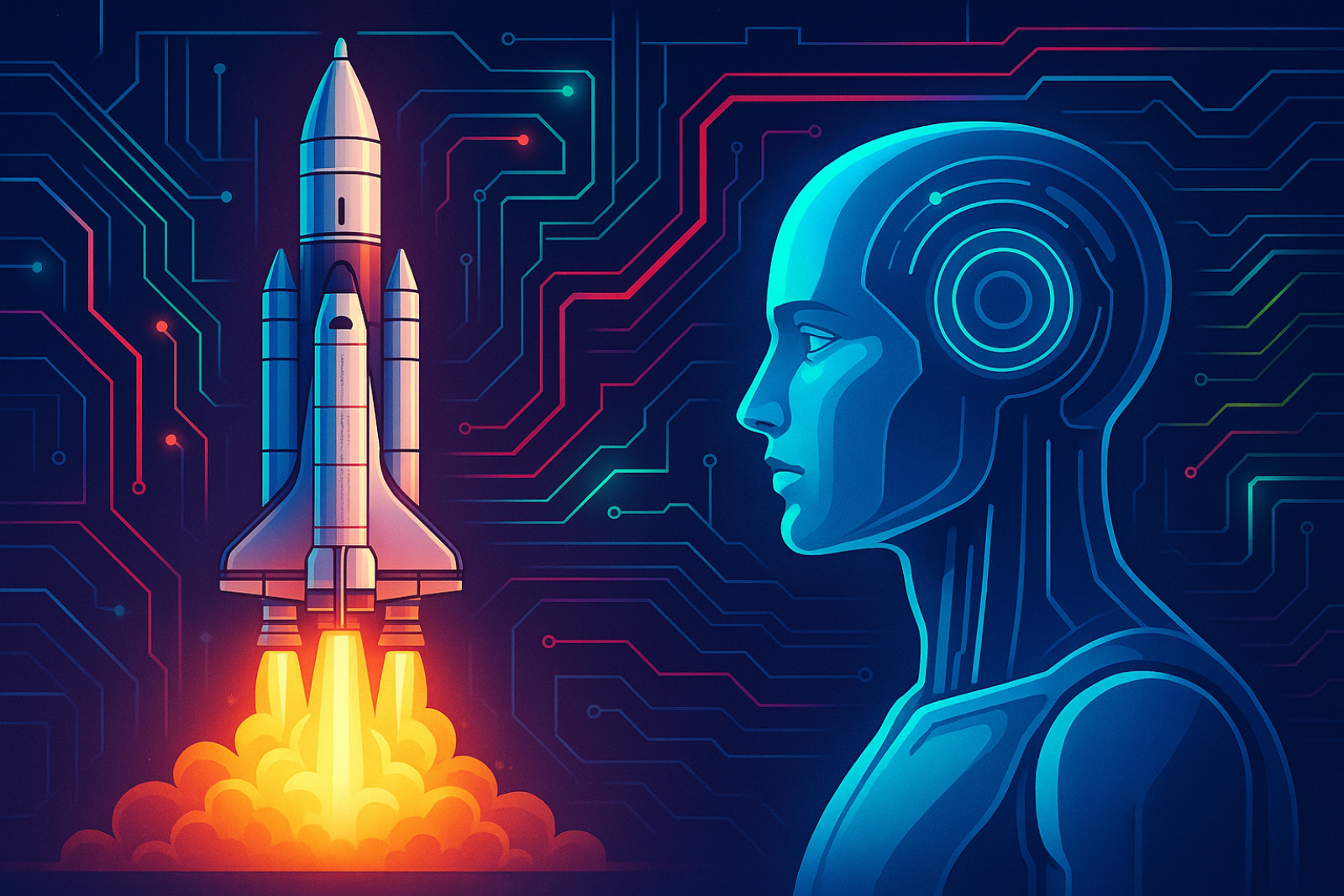
⬤The U.S. government just rolled out the Genesis Mission, a major push to speed up AGI development through scientific AI and massive computational firepower. The program is being positioned as today's equivalent of the Manhattan Project and will run through the Department of Energy. The goal is simple but ambitious: bring together America's national supercomputers, secure AI cloud platforms, critical datasets, and top scientific minds into one unified discovery engine powered by advanced AI.
⬤The Genesis Mission will tap into national lab supercomputers alongside secure federal cloud environments to power research at a scale that's never been done before. The plan includes training specialized AI models for key scientific areas and using AI agents to automate experiments, test hypotheses, and run discovery workflows. This setup is meant to clear research roadblocks, boost scientific output, and speed up data-heavy analysis across priority fields.
⬤The program zeroes in on critical areas where AI-driven modeling and automated labs can make an immediate difference—biotechnology, nuclear fusion, semiconductors, and quantum computing. By combining large-scale simulation systems with automated experimentation tools, the initiative aims to slash research timelines and massively expand what U.S. labs can accomplish.
⬤The Genesis Mission signals a major strategic pivot toward bringing national scientific computing and AI resources under one coordinated federal framework. As global competition heats up around AGI and advanced research platforms, this program could reshape expectations for long-term investment in computing power, semiconductor infrastructure, and automated lab systems. By making scientific AI and autonomous experimentation the centerpiece of federal strategy, the U.S. is signaling a new approach to accelerating breakthrough innovation across multiple frontier technologies.
 Eseandre Mordi



