
 Saad Ullah
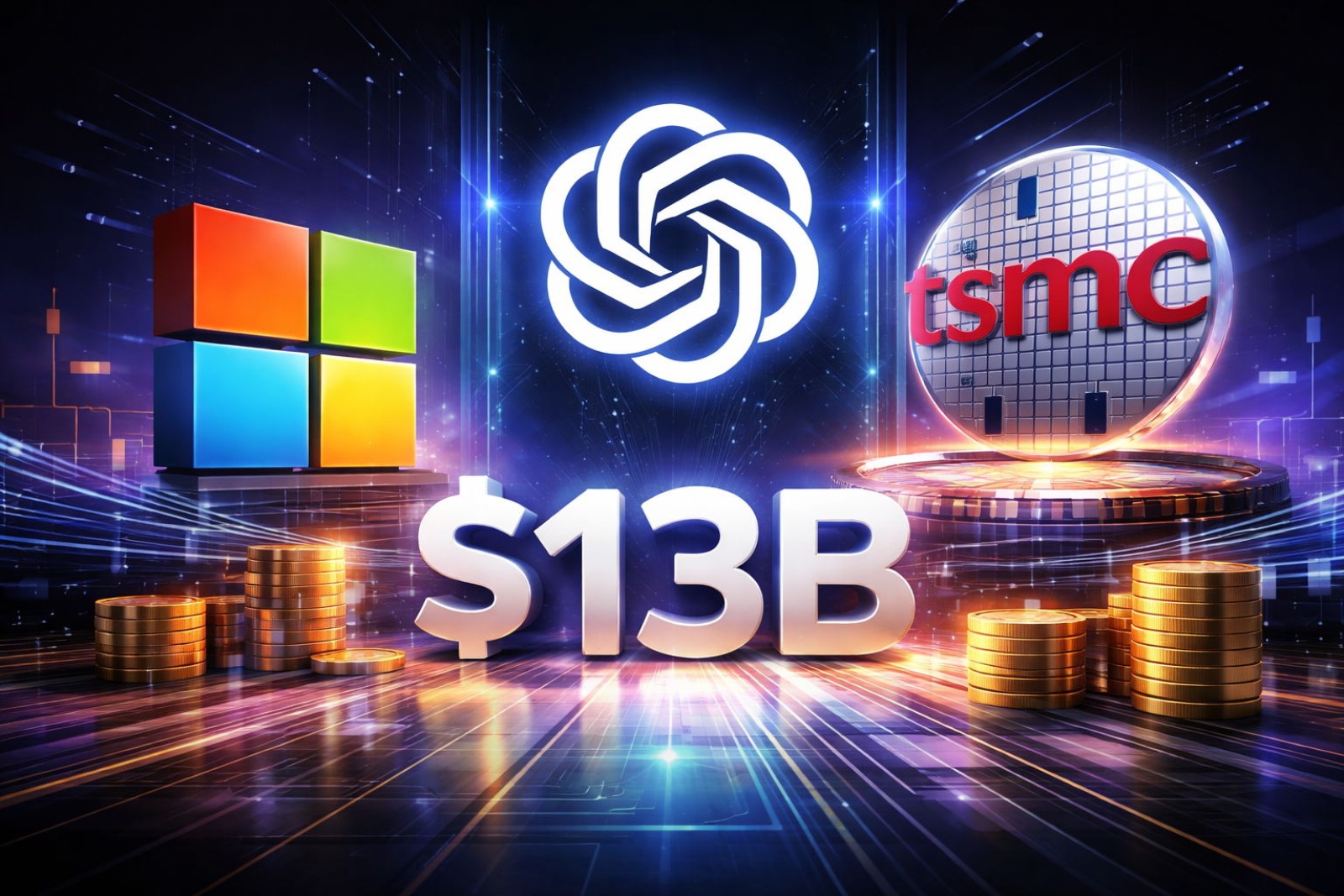
OpenAI has circulated an investor document that reads like a pre-IPO prospectus, and the risks it highlights are striking. Two names stand out above the rest: Microsoft and TSMC. The disclosure lays bare how deeply the company's future depends on infrastructure it does not fully control.
The $13 Billion Microsoft Problem
At the center of OpenAI's risk picture is its relationship with Microsoft, which continues to expand its AI research capabilities, and which has invested roughly $13 billion into the company and serves as its exclusive cloud provider.
That combination of financial backer and infrastructure supplier creates a dependency that the filing treats as a genuine threat. If Azure capacity tightens or the commercial terms of the partnership shift, OpenAI warns it could directly affect the company's ability to scale. Owning neither the cloud nor the checkbook gives OpenAI limited room to maneuver if that relationship changes.
TSMC and the Semiconductor Chokepoint
The second flagged risk runs deeper into the hardware supply chain. OpenAI identifies Taiwan Semiconductor Manufacturing Company as a critical vulnerability, given TSMC's role in producing the advanced chips that power OpenAI's most ambitious long-term AI research goals, including its $1.4T autonomous researcher program, including the Nvidia GPU infrastructure behind model training.
The concern is not hypothetical. Geopolitical tensions around Taiwan, or any disruption to semiconductor production, could slow or halt OpenAI's ability to train models and deliver services at scale.
This reflects a problem that is bigger than OpenAI alone. The entire AI industry runs on chips produced by a very small number of manufacturers in a very small number of locations. The concentration of that supply chain is both a known risk and, for now, largely unavoidable. As companies like OpenAI push toward more efficient AI systems that reduce token usage and infrastructure overhead, the pressure on that bottleneck is only going to increase.
What makes the filing notable is not the risks themselves, which are widely understood across the industry, but OpenAI's willingness to spell them out for investors. As the company moves closer to public market activity, this kind of transparency around infrastructure dependency is becoming standard practice. How markets will weigh these dependencies against OpenAI's growth trajectory remains the open question.
 Saad Ullah



