
 Victoria Bazir
⬤ Microsoft and Nvidia are moving beyond data centers and into the power grid itself. The two companies are applying artificial intelligence to nuclear energy development, targeting the sector's most stubborn bottlenecks: slow permitting, costly design cycles, and aging operational practices.
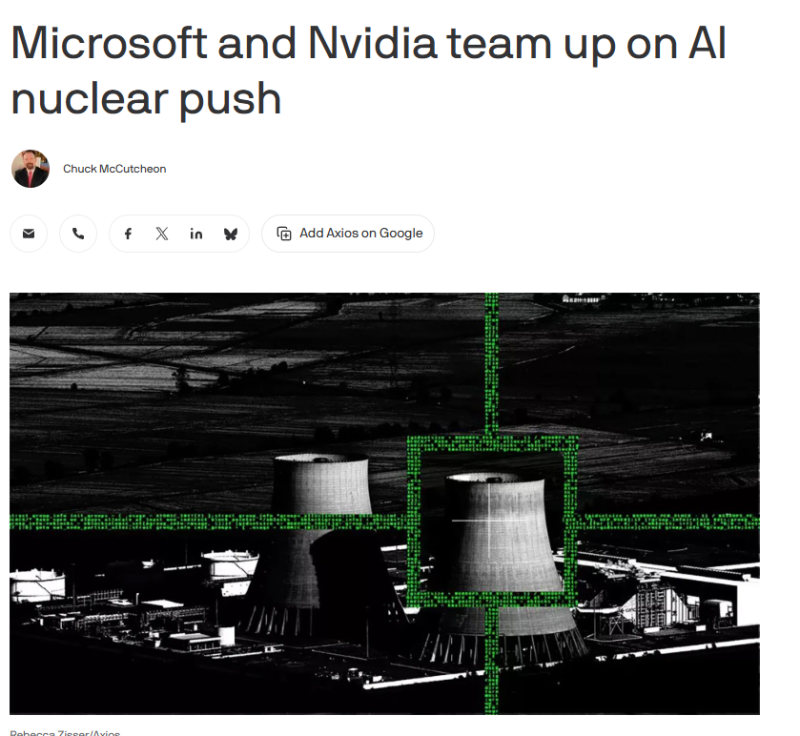
⬤ The core of the effort is generative AI that automates dense regulatory documentation, a process that has historically pushed nuclear projects years behind schedule. Alongside that, digital twin technology is being used to simulate entire facilities before a single brick is laid, sharpening planning accuracy and cutting pre-construction risk. This arrives as rising electricity demand driven by AI infrastructure growth is straining grids worldwide.
Power supply, not computing hardware, could define who leads the next phase of the AI race.
⬤ That quote captures a shift now playing out across the industry. Energy availability is fast becoming a hard ceiling on AI expansion. Some analyses argue that electricity capacity, not chips, is the real competitive moat. This is precisely the context behind Microsoft's exposure and strategic risks in AI partnerships and its push to secure long-term, carbon-free power sources.
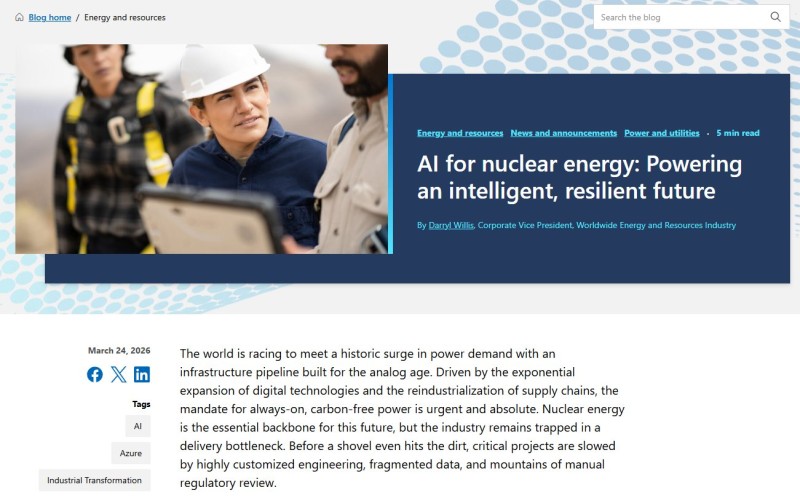
⬤ For Nvidia, the move reinforces a strategy that goes far beyond GPUs. Applying AI across the full nuclear lifecycle, from site design through daily operations, could compress project timelines and lower costs significantly. That would matter enormously for an industry where construction overruns are the norm. Nvidia's record-breaking revenue growth amid the AI boom gives it the capital and credibility to bet on infrastructure plays like this one. Together, the two companies are quietly building the energy backbone their own AI ambitions depend on.
 Victoria Bazir



