
 Usman Salis

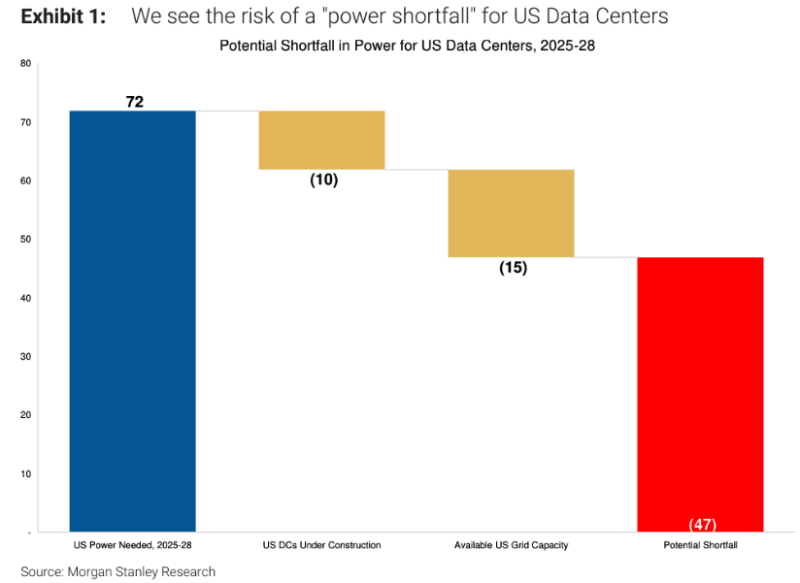
⬤ A major power crunch is coming for AI data centers. New research shows AI infrastructure will need roughly 72 GW of power from 2025 to 2028. The problem? Only about 10 GW is already locked in through data centers under construction, and another 15 GW might come from available grid capacity. That leaves a massive 47 GW shortfall that threatens to slow down AI expansion across the country.
⬤ Traditional grid connections won't solve this fast enough, so the focus is shifting to quick-deploy power alternatives. The projections show 15 to 20 GW could come from gas turbines, while Bloom Energy fuel cells (ticker BE) might deliver another 5 to 8 GW. Collocating facilities at existing power plants, especially nuclear sites, could add 5 to 15 GW, though this option faces regulatory hurdles. There's also potential to repurpose Bitcoin-mining facilities with established grid access, which could provide 10 to 15 GW.
⬤ Even with these aggressive measures rolling out, there's still a problem. The probability-weighted analysis suggests these solutions will deliver 31 to 50 GW by 2028, which sounds impressive until you realize it still leaves a 6 to 16 GW deficit. The math simply doesn't close, meaning some AI projects will face delays or need to compete harder for limited power resources.

⬤ This power constraint is reshaping the entire AI infrastructure landscape. Access to electricity is becoming just as critical as chip supply or capital investment. Hyperscalers, utilities, and everyone building out AI compute capacity now have to factor power availability into their strategic planning. The race is on to see whether U.S. infrastructure can keep pace with generative AI's explosive growth demands.
 Usman Salis



