
 Marina Lyubimova

⬤ New McKinsey data show that companies already earning at least ten percent of their EBITDA from generative AI now outpace their peers in both trust and governance investments. A survey of more than 1,300 organisations reveals that those high performers adopt risk frameworks and oversight structures far repeatedly than the rest.
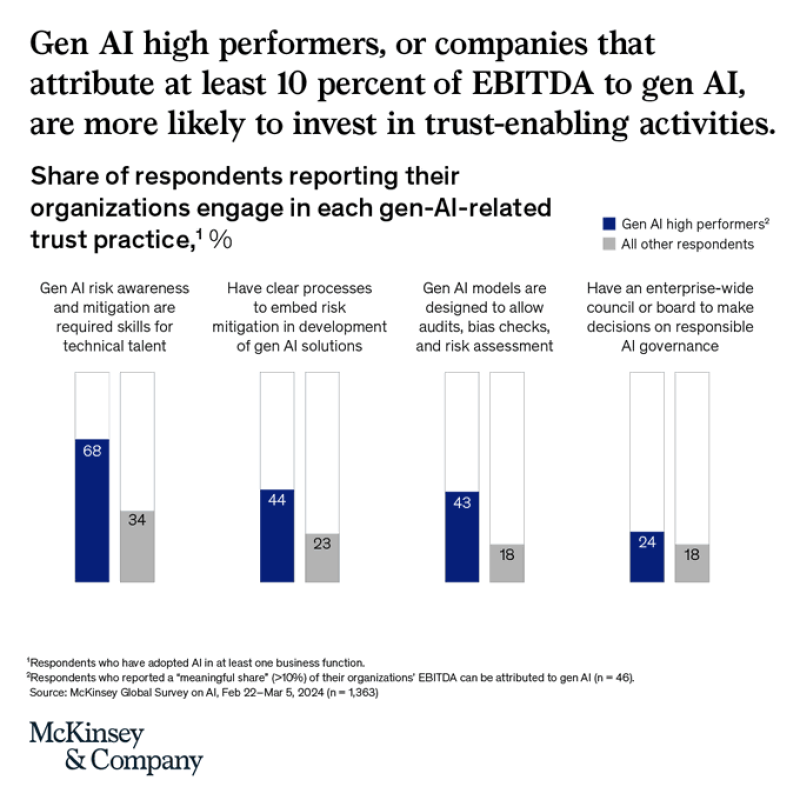
⬤ The figures speak plainly. Among the top tier, sixty eight percent oblige technology teams to prove they understand risks plus know how to lessen them - elsewhere only thirty four percent impose the same requirement. Forty-four percent of the leaders embed formal controls into AI development from the outset, while only twenty three percent of other firms do so. A further distinction - forty three percent of the front runners design models that support later audits and bias checks - the remainder reach only eighteen percent.
Companies whose EBITDA already gains a material lift from generative AI weave trust into their operations at a deeper level.
⬤ Governance bodies are turning into routine fixtures at the top. About twenty four percent of high performers have set up a council or board tasked with overseeing responsible-AI work - among other respondents the figure is eighteen percent. The contrast underlines how culture, talent readiness and disciplined risk management now separate the leaders from the followers as AI spreads through day-to-day operations.

⬤ The gap carries weight because it shows which organisations are prepared for the next wave of adoption. Those that lay down trust infrastructure early place themselves in a position to absorb regulatory pressure, keep performance gains intact but also adjust faster once AI begins to drive larger shares of revenue and decision-making across global markets.
 Marina Lyubimova



