
 Peter Smith
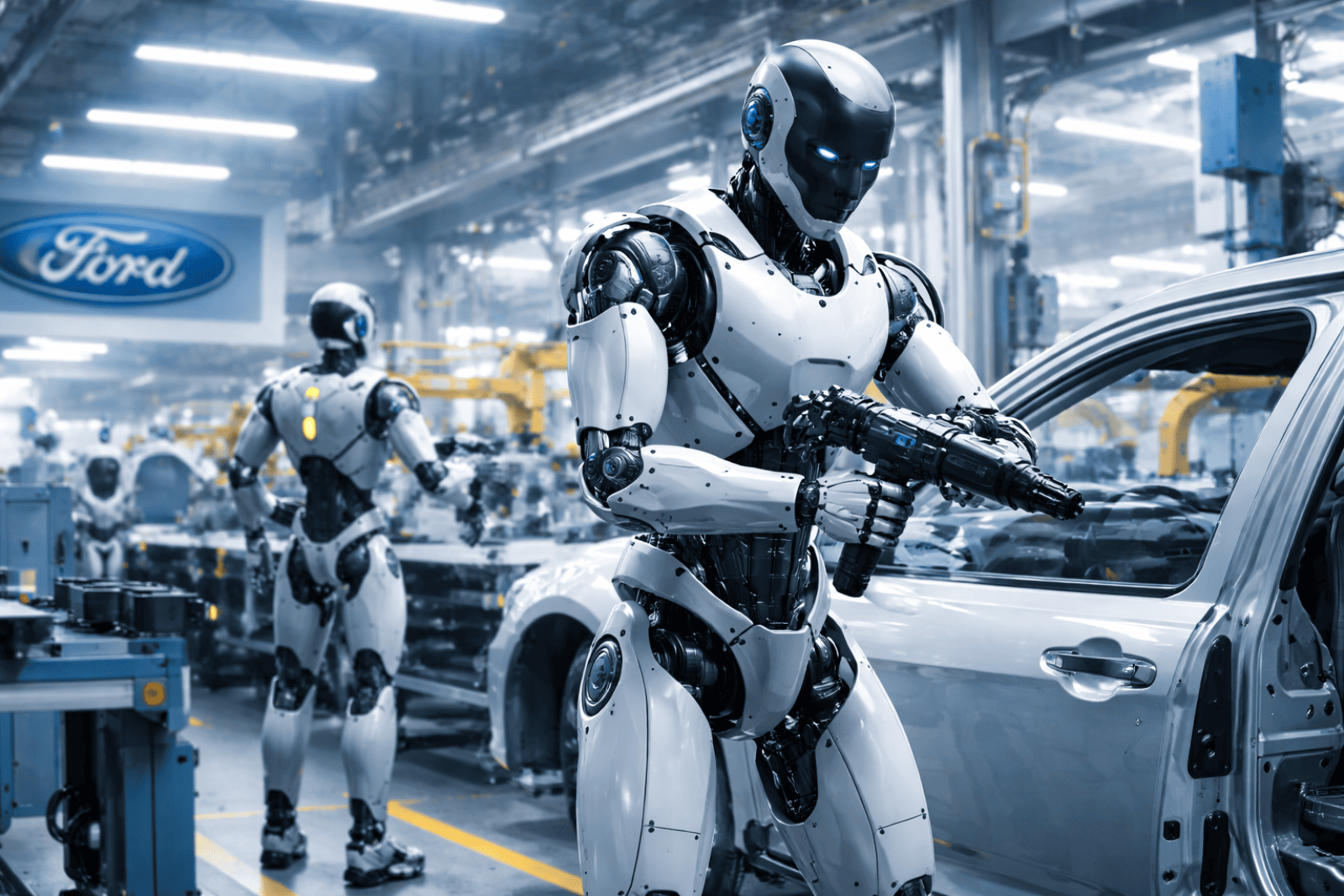
⬤ Ford's Cologne factory just wrapped up something pretty remarkable: a six-week trial of a humanoid robot working real production shifts on the assembly floor. The HMND 01 robot from Humanoid proved it could handle actual manufacturing tasks without constant human babysitting. This wasn't some sterile lab demo—it was the messy, unpredictable environment of an active car plant where things break, layouts change, and you need equipment that can actually adapt.
⬤ The numbers tell an impressive story. Over those six weeks, the HMND 01 ran autonomous tote handling sessions for an hour at a time, hitting 97% reliability with almost no failures. Even better, it completed 60% more tasks than the initial projections suggested it would manage. The robot used both arms to manipulate large metal car body parts on its own, showing it could handle the kind of heavy, awkward components that make up real automotive work.
⬤ What makes this particularly interesting is how the robot "sees" the world. The HMND 01 didn't use QR codes, positioning markers, or remote control—just pure visual perception. It navigated and grabbed parts using vision alone, which matters a lot in car factories where production lines get reconfigured and parts change constantly. Traditional fixed robots struggle when things move around; humanoid platforms like this one might actually keep up.
⬤ This successful pilot suggests we're watching a real shift in factory automation strategy. Humanoid robots probably won't replace existing systems entirely, but they could fill in where traditional automation falls short—handling tasks that need mobility, quick adaptation, and the ability to work in spaces designed for humans. Ford's Cologne trial shows that future manufacturing might increasingly depend on these flexible humanoid platforms as production gets more complex and factories need equipment that can evolve with them.
 Peter Smith



