
 Eseandre Mordi
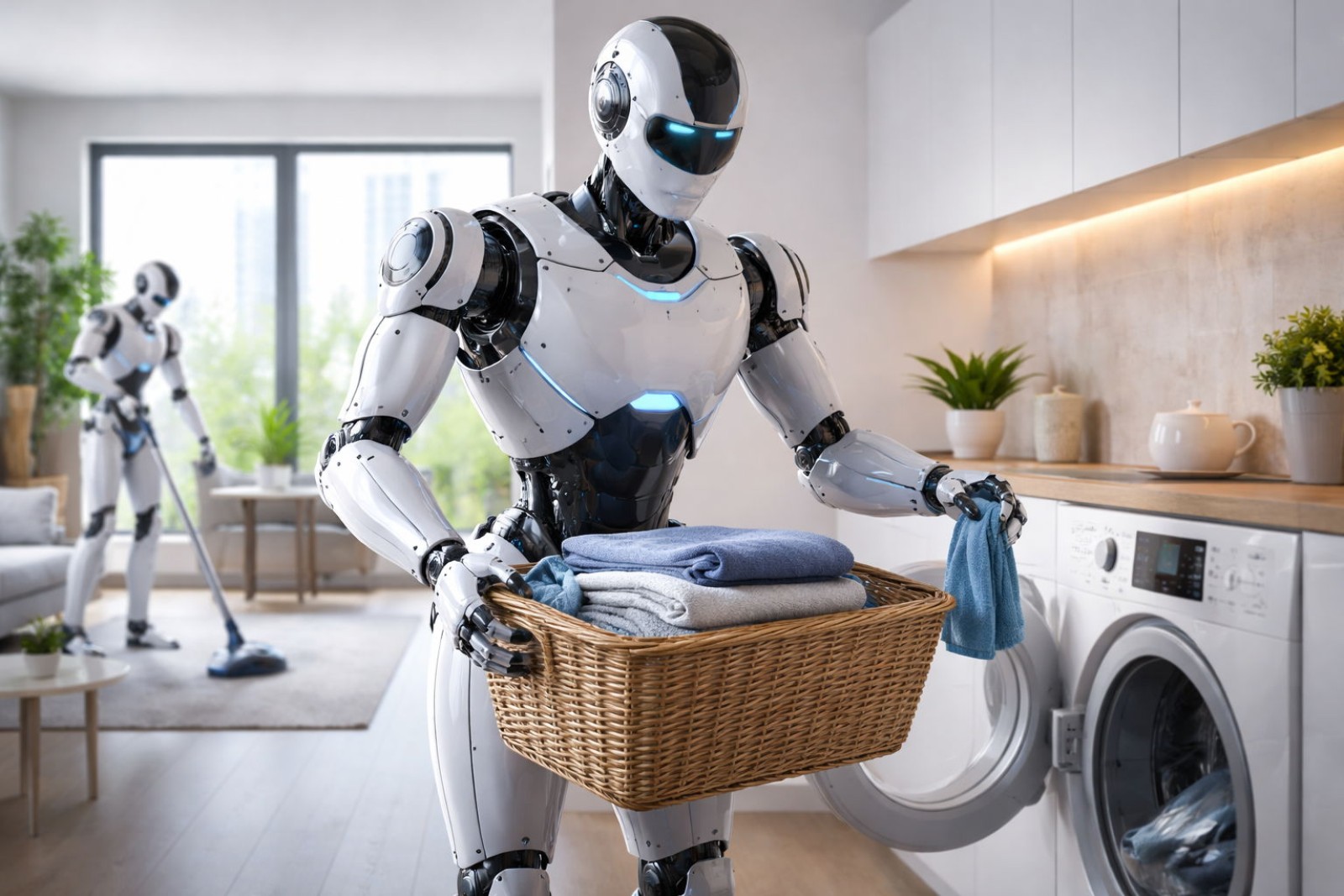
Robots in your kitchen might sound like science fiction, but a new demonstration from Reflex is making that future feel a lot closer. The company shared a "day in the life" video on X showing a humanoid robot operating inside homes and apartments - drawing curtains, preparing food, folding laundry, and wiping down surfaces. It's a clear signal that robotics is moving beyond factory floors and into everyday living spaces.
80 kg Robot That Cooks, Cleans, and Fits in Your Kitchen
The Reflex robot weighs around 80 kilograms, and its two arms can handle a combined load of roughly 23 kilograms. The hardware pairs a wheeled chassis with a vertically adjustable body, giving it a compact turning radius suited to tight apartments and narrow kitchens.
In the demo, the gripper-style arms move through surprisingly fluid sequences - peeling bananas, blending smoothies, chopping vegetables, and cooking steak. It's not fully autonomous yet, but the movements are precise enough to handle objects most robots still struggle with. Broader context on humanoid robot completes household tasks research shows how quickly this space is advancing.
Teleoperation Collects Real-World Data to Build Toward Autonomy
Right now, Reflex relies on a human-in-the-loop model: remote operators guide the robot through tasks while the system logs data. That's a deliberate strategy. Every interaction in a real home teaches the robot something a simulated environment can't replicate - the weight of a pan, the resistance of a door handle, the unpredictability of a cluttered counter. The same approach is already working in logistics, where teleoperated systems like those covered in AI humanoid robots entering retail perform repetitive tasks while building operational experience.
The longer-term use case extends well beyond household chores. Remote operation could let a single caregiver assist multiple elderly people without traveling between homes - a compelling proposition given global aging demographics. As AI agent memory 4-layer infrastructure matures, the kind of persistent, context-aware intelligence needed to make these robots truly useful in homes is becoming more achievable. The hardware is clearly ready. Now it's a data and software race.
 Eseandre Mordi



