
 Saad Ullah
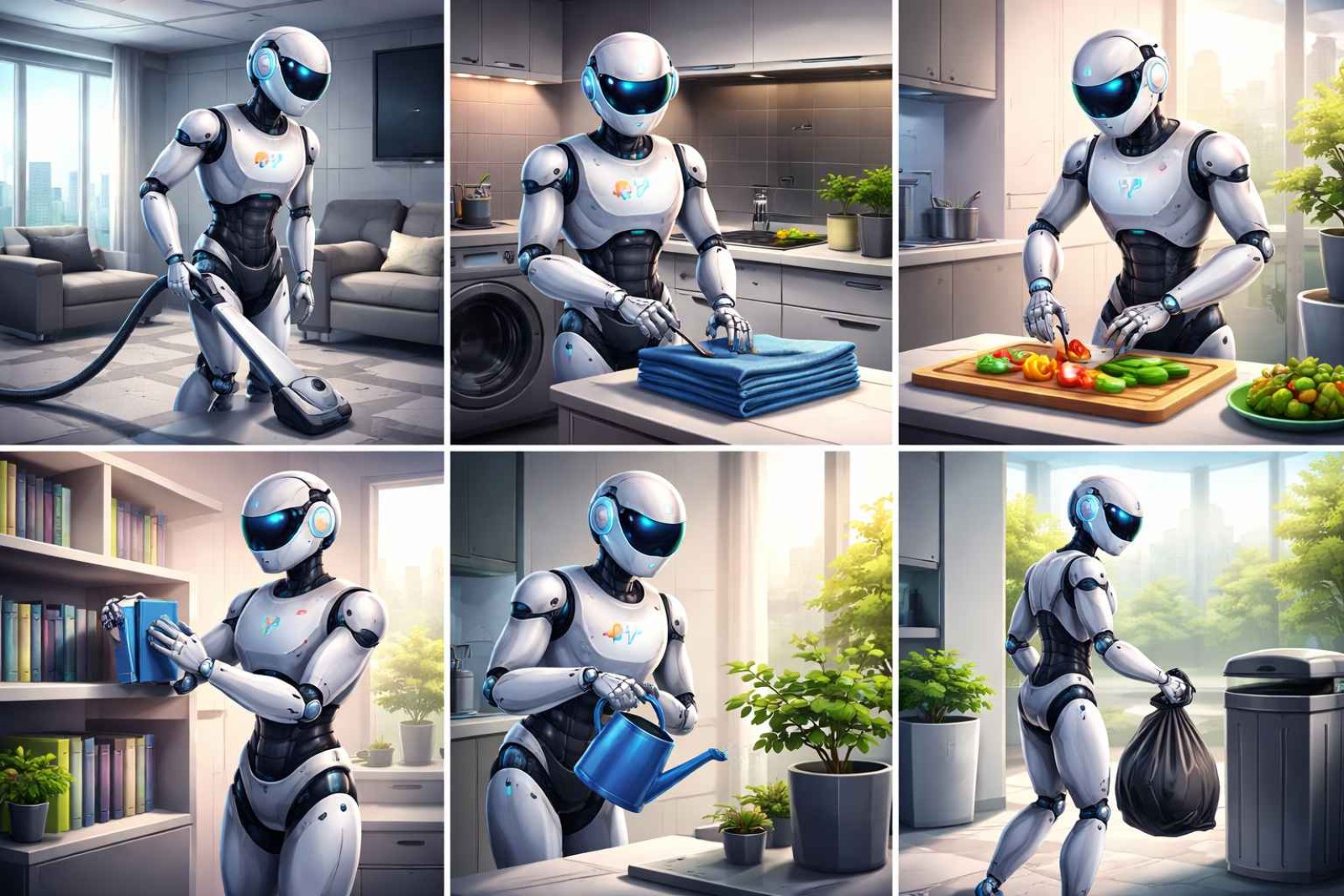
⬤ A robotics team's latest Pi 0.6 robot model has demonstrated a significant leap in humanoid capability by completing household tasks traditionally considered difficult for machines. The demonstration showcased the robot washing dishes, making sandwiches, wiping kitchen countertops, opening boxes with keys, and peeling oranges using tools. These activities require fine motor control, spatial awareness, and adaptive reasoning rather than simple repetitive motion.
⬤ The update highlights the Moravec paradox, which suggests that tasks humans perform subconsciously—like basic manipulation and coordination—are often the hardest for machines to master. While dancing or scripted movements are comparatively easy to program, everyday chores involve subtle adjustments, object recognition, and real-time decision-making. Pi 0.6 executed these actions with improved consistency, indicating progress in perception, control systems, and learning-based manipulation.
⬤ The range of tasks completed underscores broader momentum in humanoid robotics, where developers are increasingly focusing on practical, real-world functionality. By handling dishes, food preparation, and household tools, Pi 0.6 moves beyond controlled lab demonstrations toward scenarios closer to daily human environments. Advances in model training and hardware integration are enabling robots to perform multi-step tasks that combine vision, touch, and coordinated movement.
⬤ This development points to expanding use cases for humanoid robots in domestic and service settings. Improved performance in routine chores could accelerate interest in automation designed to assist with labor-intensive or time-consuming tasks. As robotics continues to converge with advances in AI perception and control, demonstrations like this may influence market sentiment around the long-term potential of service robots and the pace at which complex human-centric tasks become viable for automated systems.
 Saad Ullah



