
 Usman Salis

Traditional AI training data validation relies on centralized teams and expensive vendor contracts, creating bottlenecks in dataset production. REPO AI presents an alternative: a decentralized network where domain experts stake tokens on their judgments, turning data labeling into a competitive prediction market that rewards accuracy and penalizes errors.
How Token-Based Validation Works
The REPO network organizes AI data validation across specialized expert domains. The system integrates robotics, translation, safety protocols, and forecasting tasks into unified infrastructure where contributors evaluate outputs through token-based staking instead of traditional centralized oversight.
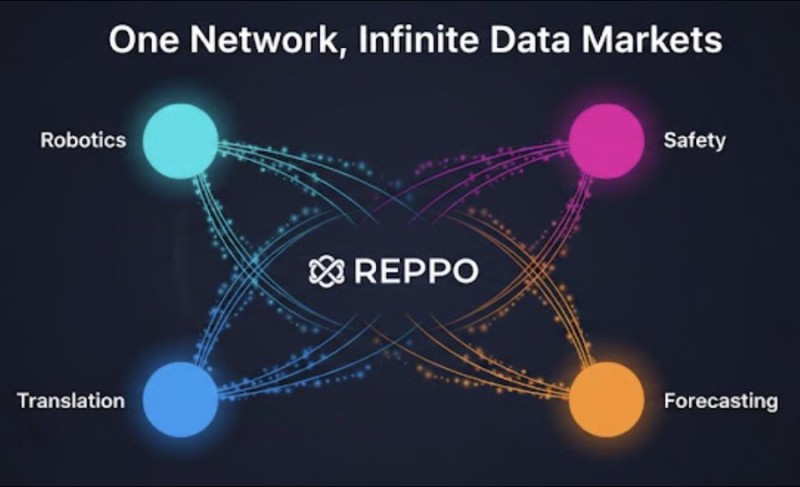
The concept operates through subnets functioning as independent prediction markets. Linguists participate in translation markets, safety researchers work within moderation subnets, and robotics specialists contribute to embodied AI datasets. Rather than manual reviewer selection, credibility develops organically through demonstrated accuracy over time.
Contributors stake tokens on each validation judgment, establishing economic accountability directly tied to correctness. "The mechanism aims to replace expensive vendor contracts and internal hiring bottlenecks with continuous open validation," according to the network's framework. Participants who consistently provide accurate labels accumulate both rewards and influence, while those delivering inaccurate assessments lose capital and gradually exit the system.
The Broader AI Infrastructure Context
This validation approach emerges amid significant infrastructure demands across the AI sector. Similar resource allocation challenges appear in the AI data center power race shaping infrastructure needs, where major tech companies compete for computational resources at unprecedented scale.
Decentralized Validation as a Scaling Solution
The REPO framework presents an alternative pathway for scaling machine learning datasets. By connecting incentives directly to data quality and distributing verification across specialized communities, decentralized validation networks attempt to deliver production-ready datasets accessible on demand across AI applications.
The system sidesteps traditional hiring cycles and vendor negotiations, instead allowing experts worldwide to contribute based on their domain knowledge. Economic incentives replace management hierarchies, with the market itself determining who remains influential within each subnet based purely on validation accuracy.
Whether token-staked prediction markets can match the consistency and reliability of established data labeling operations remains an open question, but the approach offers a fundamentally different model for organizing expert judgment at scale.
 Usman Salis



