
 Eseandre Mordi

⬤ Web traffic took a hit across the board in November 2025, with Similarweb's data showing that every single site in the top 10 saw fewer visitors compared to October. What's interesting is that the rankings themselves didn't budge—the usual suspects held their spots even as their numbers slipped. Google stayed on top with 82.28 billion visits, commanding nearly 20% of all traffic measured, though even the search giant dropped 3.57% month over month.
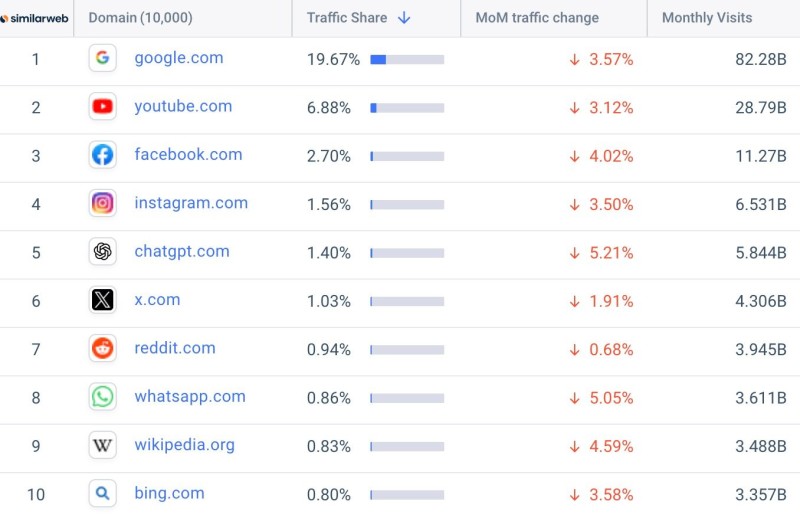
⬤ YouTube came in second with 28.79 billion visits, grabbing close to 7% of the traffic pie. Facebook landed third at 11.27 billion, while Instagram took fourth place with 6.531 billion visits after falling 3.50%. ChatGPT rounded out the top five with 5.844 billion visits, but it got hit the hardest—down 5.21% from October. The rest of the list included X.com, Reddit, WhatsApp, Wikipedia, and Bing, all showing smaller pullbacks between 0.68% and 5.05%.

⬤ What stands out here is that nobody won at someone else's expense. The decline wasn't about users jumping ship from one platform to another—it was a synchronized cooldown across the entire digital landscape. Google and YouTube still own more than a quarter of total traffic within this group, proving they're not going anywhere. But when you see the same pattern repeated across platforms big and small, it points to something bigger going on than just individual site performance.
⬤ These shifts matter because web traffic isn't just a vanity metric—it's a window into how people are spending their time online, how well ads are performing, and what the overall mood is in the digital economy. When you get a coordinated dip like this across the internet's biggest players, it could be telling us something about the economy, seasonal changes, or just people changing how they consume content. Either way, it's worth watching as we head into the new year.
 Eseandre Mordi



