
 Victoria Bazir

⬤ NVIDIA's chief executive Jensen Huang recently shared his perspective on how advances in AI computing power are completely reshaping problem-solving approaches. His main point? When tools get dramatically faster, problems automatically feel smaller and more doable. This insight shows how NVIDIA sees extreme computing power as the key driver behind recent breakthroughs in what AI systems can actually accomplish.
⬤ Huang used a clever comparison to explain this shift. Think about traveling at Mach 10 speeds—suddenly the world feels tiny, right? That's exactly what's happening with AI compute. Massive performance gains don't just speed things up; they fundamentally change which challenges developers and researchers are willing to tackle. Problems that seemed impossible yesterday become "why not?" today.
⬤ Take large-scale data ingestion as an example. Huang pointed out that feeding the entire internet into a model used to sound completely crazy. But once the tools became fast enough, it suddenly seemed obvious. The dataset didn't change—the compute power did. And that shift in capability made the whole task feel way less intimidating.
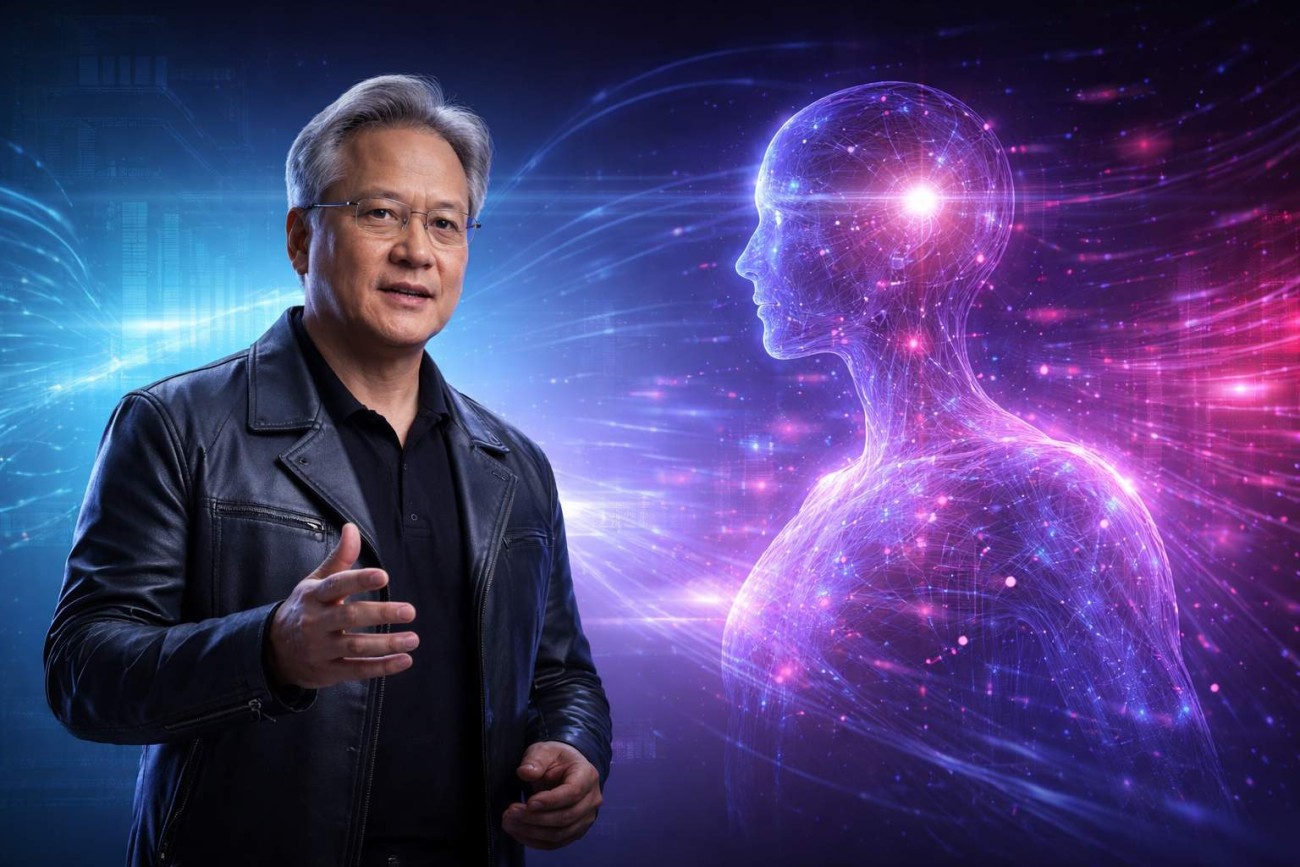
⬤ What makes Huang's comments significant is how they frame AI's future trajectory. Focusing on speed and scale suggests that ongoing compute improvements will keep shrinking what we consider "too complex to solve." This perspective explains why everyone's watching AI infrastructure and high-performance computing so closely—better tools literally reshape what we think AI systems might achieve down the road.
 Victoria Bazir



