
 Usman Salis
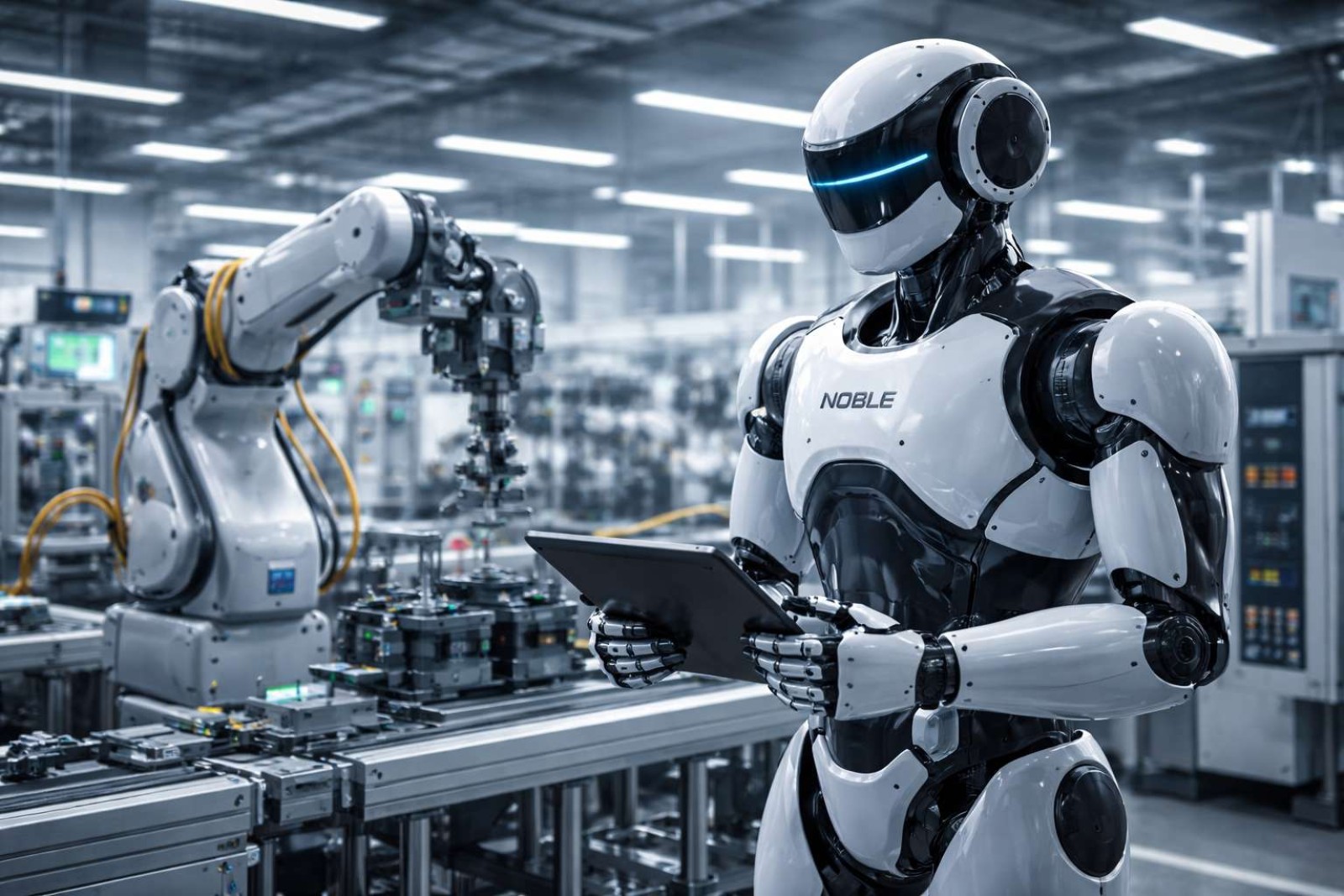
After roughly 18 months of stealth development, Noble Machines has introduced its first humanoid robot - and it is already on the factory floor. The U.S. startup confirmed the machine is deployed inside a Fortune Global 500 manufacturing facility, marking one of the few genuine real-world applications of humanoid robotics in heavy industry to date. The team behind it brings engineering experience from SpaceX, NASA, and Apple, signaling serious technical ambition from day one.
Built for the Work Humans Avoid
The Noble Machines robot is engineered for the jobs that are dull, dangerous, or simply exhausting. It can lift up to 27 kilograms, walk at 0.8 meters per second, and run for approximately five hours on a single charge.
More importantly, it can navigate construction sites, scaffolding, and industrial staircases - the kinds of environments where traditional fixed automation simply cannot go. The platform sits alongside next-generation humanoid platforms featuring advanced robotic hands and dexterity improvements, representing a fast-maturing field pushing closer to practical deployment.
AI Software Stack Makes the Difference
Hardware alone does not explain the ambition here. The system uses a modular end effector for rapid tool switching, supports both fully autonomous operation and remote tele-operation, and runs an AI-controlled software stack designed for fast skill acquisition. Noble Machines says the robot can slot into existing enterprise workflows within hours - a claim that matters enormously for industrial buyers wary of long integration timelines. This fits a broader pattern of large-scale investment and innovation across major AI and robotics companies as the sector accelerates toward real commercial deployment.
The wider context is hard to ignore. Computing infrastructure is expanding rapidly, and rapid improvements in AI efficiency driven by large-scale compute advancements are enabling far more capable intelligent systems than were possible just two or three years ago. Noble Machines is betting that the timing is right - and the Fortune 500 deployment suggests at least one major manufacturer agrees.
 Usman Salis



