
 Eseandre Mordi
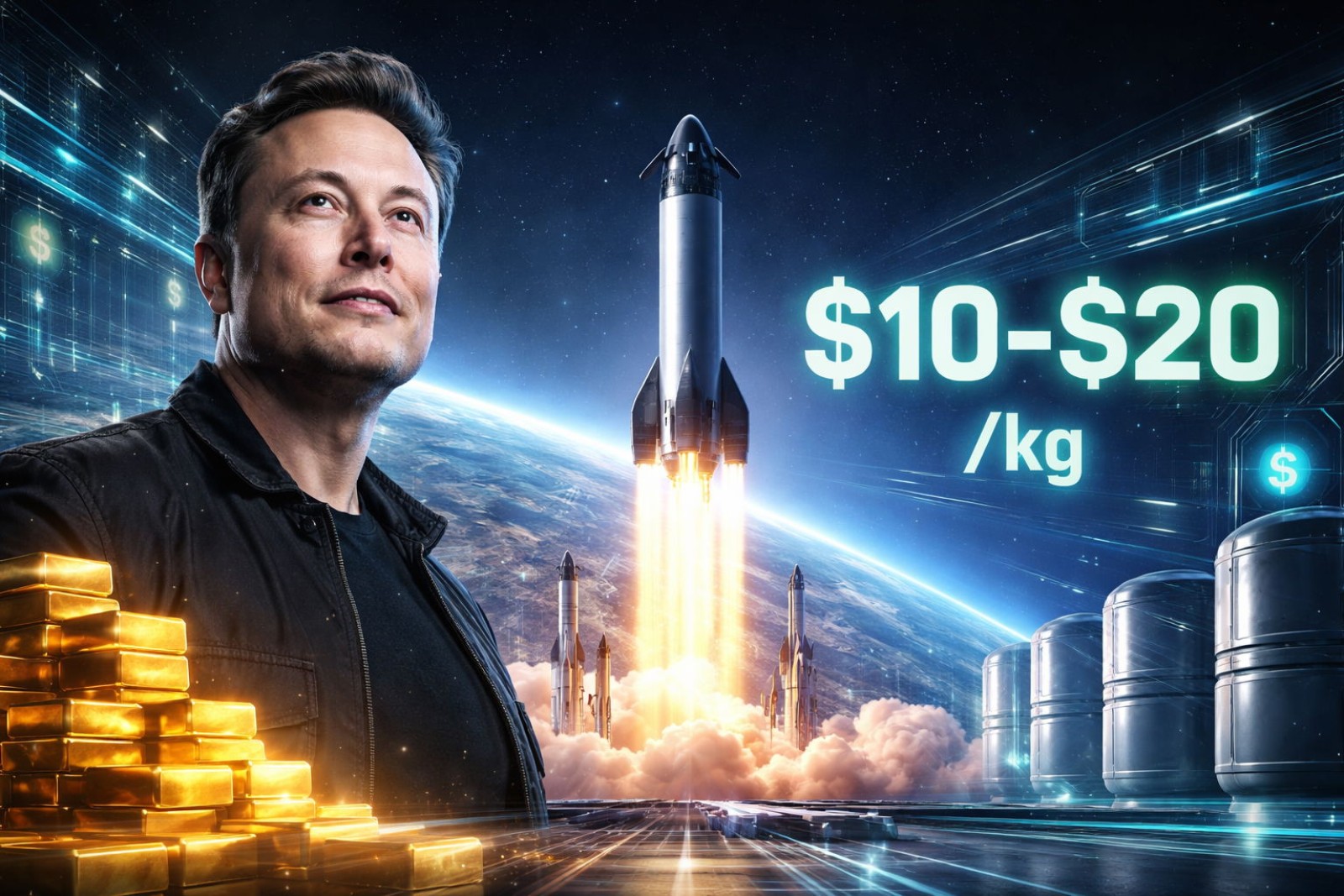
⬤ SpaceX, led by Tesla (TSLA) CEO Elon Musk, is pushing a dramatic overhaul of space launch economics. The company's next-generation Starship targets costs of just $10-20 per kilogram, down from $54,000-$65,000/kg during the Space Shuttle era. That pressure is already reshaping orbital competition: SpaceX is challenging Amazon's FCC bid in the 10,000-satellite data center race.
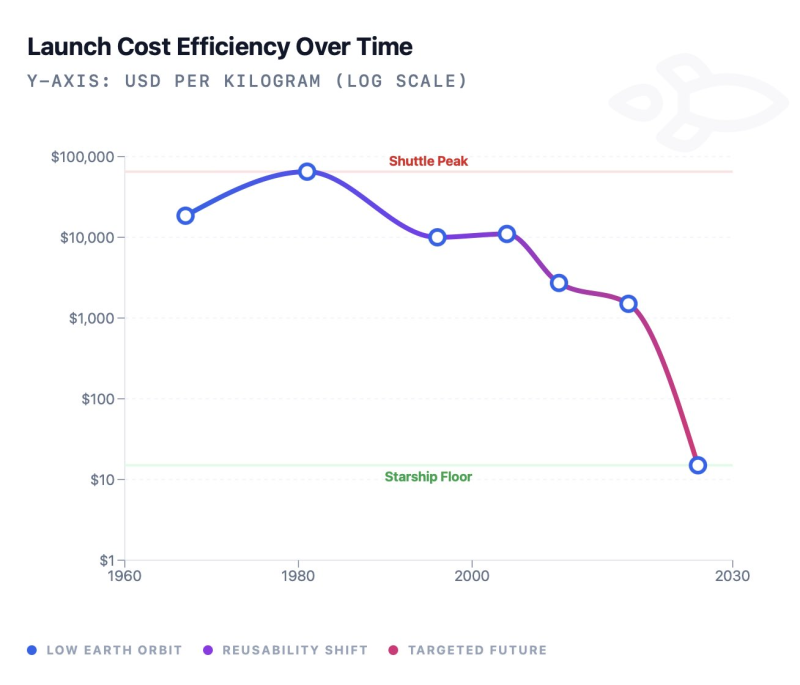
⬤ High launch costs were once an accepted reality, propped up by limited reusability and costly infrastructure. SpaceX already cracked that with Falcon 9, cutting costs to $1,600-$2,700/kg via reusable boosters. The same drive for cross-domain breakthroughs shows up across Musk's portfolio: Musk claims Optimus could outperform surgeons within three years.
Even if Starship only gets halfway to that goal, it still represents a transformation that no other program in history has achieved.
⬤ The $10-20/kg target is aspirational, but conservative estimates already put Starship at $13-$30/kg with high reuse rates. That compression of cost curves mirrors what is happening in AI: NVDA-linked benchmarks show Falcon H1-R7B scoring 16 on the Intelligence Index among 7B models.
⬤ The downstream effects extend well beyond aerospace. Cheaper launches could accelerate satellite deployment, enable new orbital infrastructure, and open commercial opportunities that were never viable before. Musk's work at SpaceX, while separate from Tesla (TSLA), keeps reshaping how markets think about long-cycle innovation and its power to redraw entire industries.
 Eseandre Mordi



