
 Saad Ullah
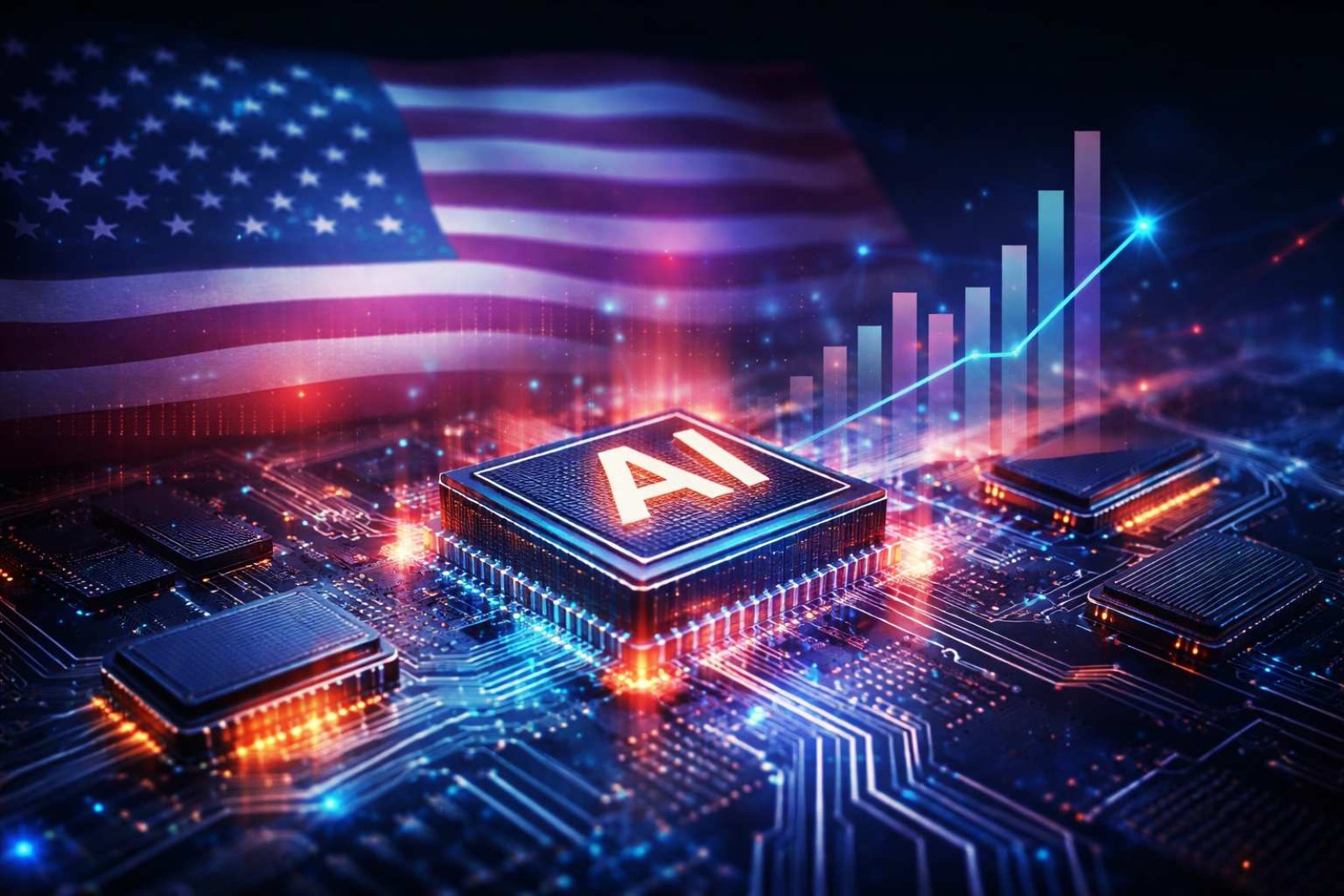
The artificial intelligence revolution is reshaping the global semiconductor landscape. After years of steady decline, U.S. chip market share has staged a remarkable comeback, climbing to levels not seen in over two decades. This surge reflects how AI infrastructure investment is transforming the tech industry from the ground up.
AI Infrastructure Drives Historic Market Shift
The Americas' share of global semiconductor sales has jumped from 21.9% in 2021 to 32.2% in 2025, according to recent market data. This dramatic rise comes after hitting bottom near 15.2% during the 2008 financial crisis. The turnaround is powered almost entirely by artificial intelligence infrastructure spending, with companies pouring billions into advanced GPUs and data-center chips.
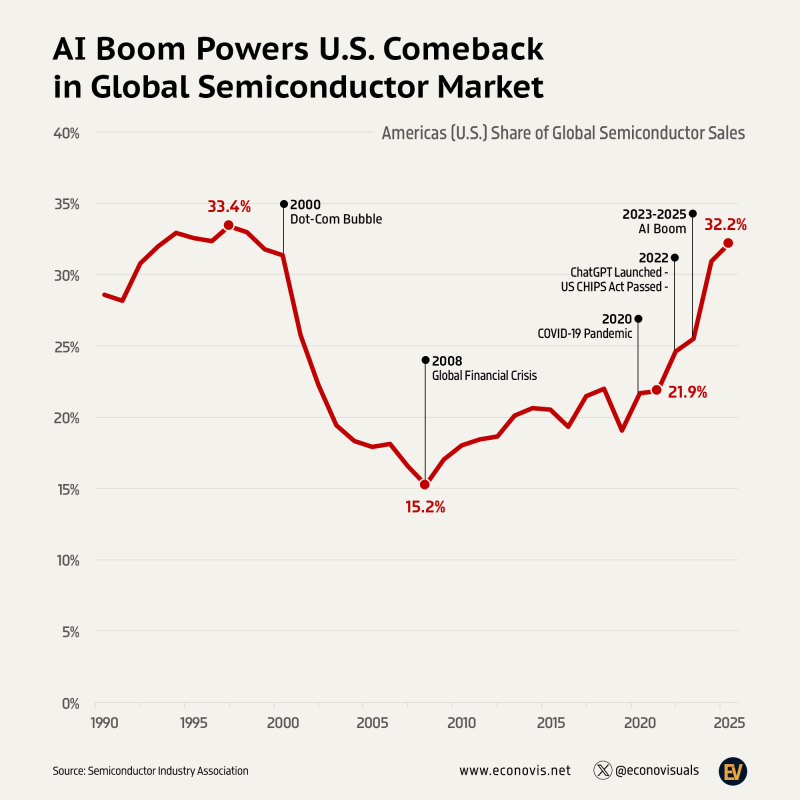
Semiconductor revenues have doubled since 2021, reflecting unprecedented demand for AI compute power. The growth mirrors broader trends in the sector, including the explosive adoption of generative AI platforms. ChatGPT dominates with 15b visits while rivals trail in 2025 GenAI race shows how consumer-facing AI tools are driving hardware requirements across the industry.
From Dot-Com Peak to AI Renaissance
Historical data reveals an interesting pattern. During the 2000 dot-com bubble, U.S. semiconductor share peaked at roughly 33.4% before sliding through the early 2000s. The recent AI-driven surge has pushed market share back to those peak levels, suggesting we're witnessing a fundamental industry transformation rather than a temporary spike.
The rebound also coincides with structural industry catalysts such as expanded domestic manufacturing initiatives and heightened demand for AI training and inference hardware.
Broader Technology Ecosystem Benefits
The semiconductor revival extends beyond hardware sales. Growing investment in AI systems, cloud computing, and enterprise automation creates ripple effects throughout the tech sector. Open-source AI development is spreading compute demand across platforms, as demonstrated by initiatives like U.S. launches Trinity large open-source AI model rivals GLM-45.
AI Reshapes Global Supply Chains
This shift in market share highlights how AI progress accelerates: models now complete multi-hour complex tasks in record time, fundamentally changing infrastructure requirements. As AI workloads become central to digital operations, semiconductor production has regained strategic importance for both economic and national security reasons.
The momentum in AI deployment suggests this trend will continue strengthening global semiconductor dynamics in coming years, with compute infrastructure remaining a critical bottleneck for AI advancement.
 Saad Ullah



