
 Eseandre Mordi

⬤ OpenAI just bumped up its long-term revenue outlook, and the numbers tell an interesting story. According to updated forecasts from Q3 2025, the company now expects to hit around $200 billion in annual revenue by 2030—up from the $174 billion they were projecting earlier this year. The main driver? ChatGPT subscriptions are performing way better than expected.
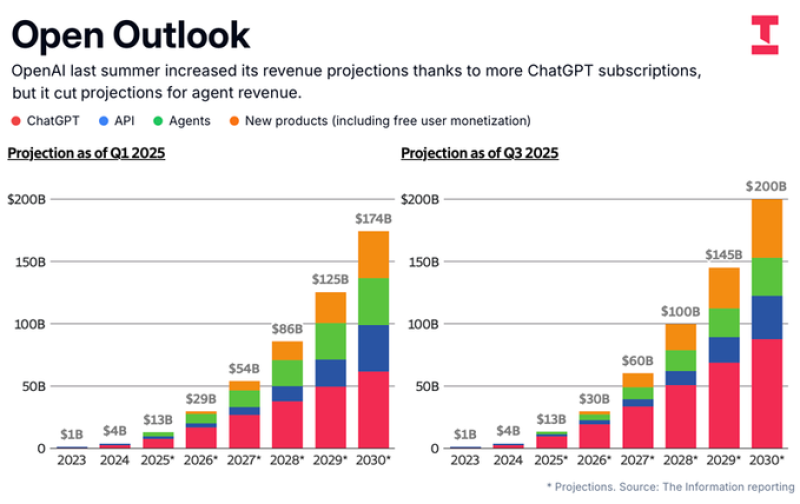
⬤ The updated projections show ChatGPT subscriptions carrying more weight in the revenue mix, alongside steady contributions from APIs and emerging revenue streams like free user monetization. What's changed is the outlook for agent-related products—those forecasts have actually come down, suggesting OpenAI's reassessing how quickly those advanced AI tools will start bringing in serious money.
⬤ Meanwhile, OpenAI's leadership is pushing hard to position the company as an all-in-one AI solution for enterprises. They're bundling ChatGPT with Codex, APIs, and workflow automation tools into comprehensive packages. The strategy makes sense given the heat they're feeling from competitors like Anthropic, whose Claude Code and flexible enterprise deals have been winning over customers.
We're seeing consistent willingness from both individual users and enterprises to pay for AI services at scale.
⬤ For the broader tech landscape, these revised numbers reveal where real commercial demand is building in generative AI right now. Subscription models are clearly resonating with customers ready to pay for AI capabilities. But the trimmed-down agent revenue projections highlight the uncertainty still hanging over more sophisticated AI products—it's not entirely clear yet how to turn cutting-edge capabilities into reliable revenue streams. These competing trends offer a window into how AI business models are taking shape and what might drive growth across the sector going forward.
 Eseandre Mordi



