
 Saad Ullah

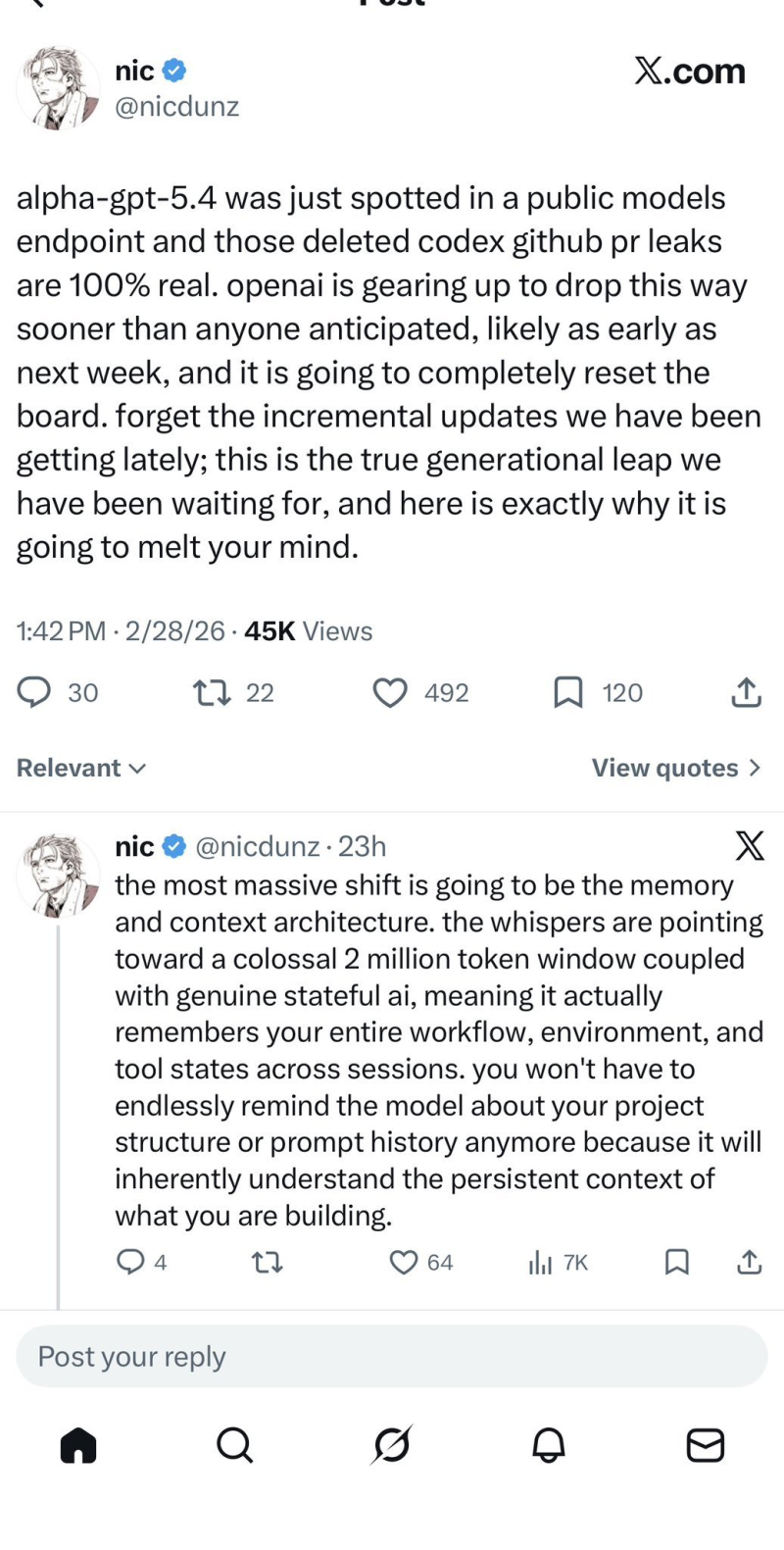
⬤ OpenAI's next-generation model, GPT-5.4, surfaced in two separate references inside public GitHub Codex pull requests before being quietly pulled, according to circulating screenshots. The leak points to sweeping upgrades: a colossal 2 million token context window and a persistent memory architecture that retains workflow context, environment states, and tool history across sessions. Early docs also hint at full-resolution image processing, meaning pixel-perfect analysis of architectural drawings or dense screenshots with zero lossy compression.
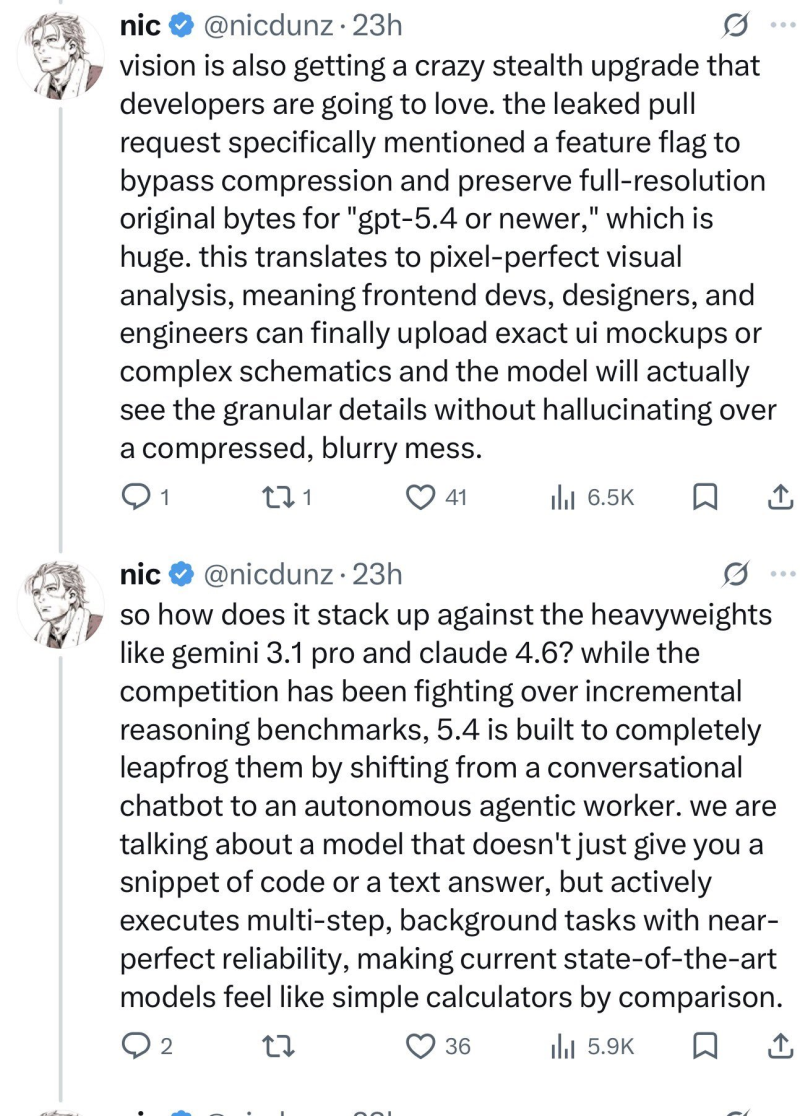
⬤ GPT-5.4 appears designed to move from chatbot to autonomous worker, executing multi-step tasks with high reliability. A priority speed tier is reportedly in the mix for faster responses. This push mirrors broader shifts covered in AI Memory Evolution: 10x Efficiency Gains as RAG Systems Become Obsolete, where enhanced memory and efficiency are fundamentally reshaping how models are trained and deployed.
Models able to retain massive context windows and process high-fidelity visual inputs may reshape expectations around real-world application performance.
⬤ Community prediction markets put the odds of GPT-5.4 shipping before April 2026 at roughly 55%, climbing to 74% before June. The competition is fierce: Claude Opus 4.6 recently topped SWE-bench with a score of 517, a reminder of just how quickly the top-tier field is advancing.
⬤ The depth of these rumored upgrades underscores the industry's race toward extended context, persistent state, and richer visual reasoning. As the debate around foundational progress intensifies, analyses like GPT-5 vs GPT-4: Are We Actually Racing Toward AGI? show how fast baseline expectations are shifting across the entire landscape.
 Saad Ullah



