
 Saad Ullah
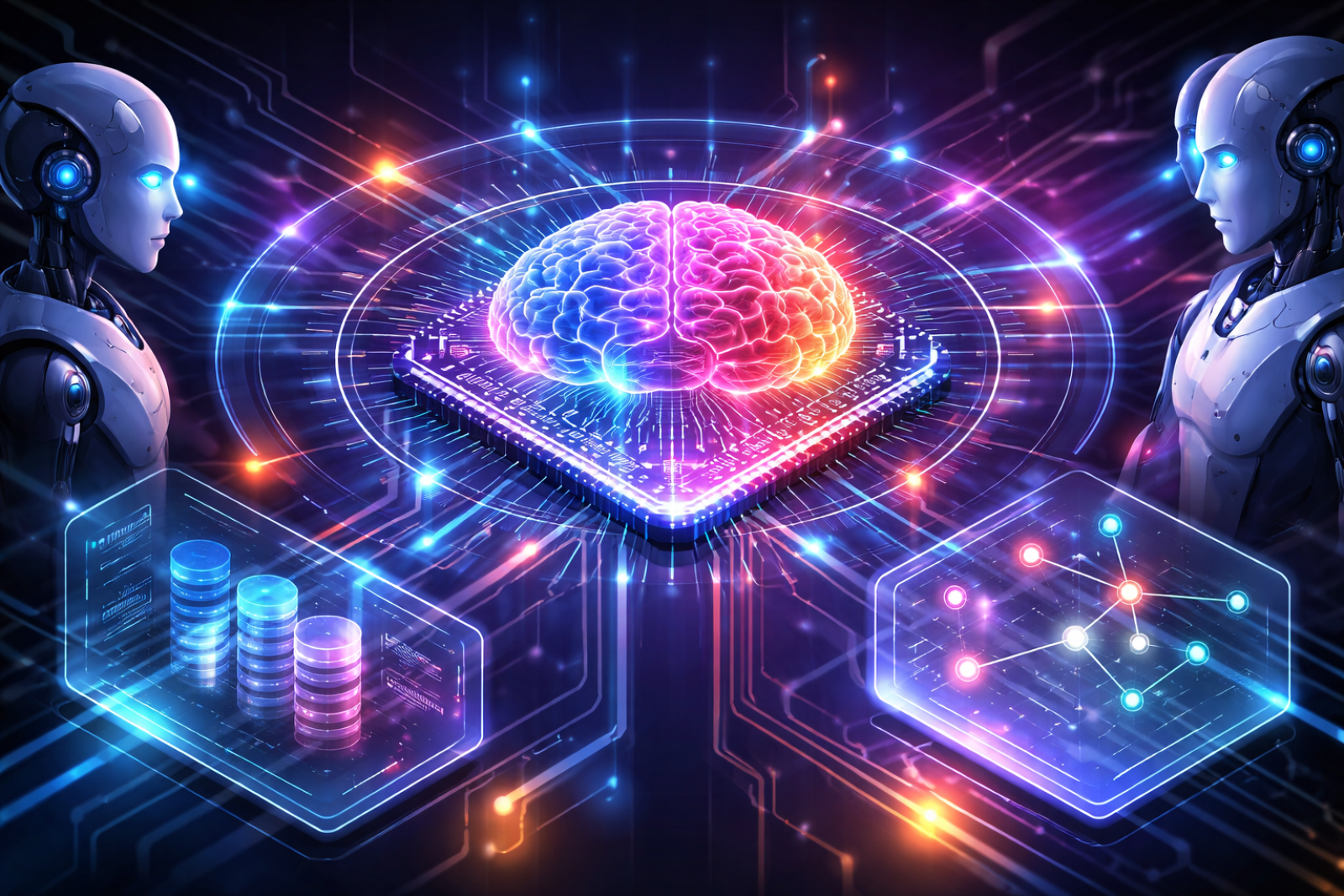
The artificial intelligence landscape is experiencing a fundamental transformation in how agents process and retain information. Traditional Retrieval-Augmented Generation systems, which dominated AI development from 2020 to 2023, are rapidly giving way to sophisticated memory architectures that learn and adapt continuously. This shift represents more than incremental improvement - it signals a complete rethinking of how AI systems interact with knowledge and users over time.
Why Traditional RAG Systems Hit a Performance Wall
RAG was never the end goal of AI agent evolution. RAG pipelines allowed models to fetch external context before generating outputs, but they remained fundamentally read-only and couldn't learn from ongoing user interactions. These systems performed one-shot retrieval, fetching information for a single response without accumulating or reusing context later.
The next iteration, Agentic RAG, introduced decision logic so agents could choose when to query sources and decide which ones to pull from. Explains one AI researcher familiar with the transition. Even with improved retrieval mechanisms, agents lacked an external writeback layer essential for true learning.
How Persistent Memory Transforms AI Capabilities
The breakthrough comes from persistent AI memory layers combining read and write access. These systems allow agents to retain user preferences, conversation threads, past context, and other signals that shape personalized responses. Persistent memory fits between static pre-training and continual learning, enabling agents to accumulate knowledge without costly retraining.
Technologies like Cognee simplify implementation of memory graphs and storage structures. Meanwhile, innovations like Hysparse Hybrid Attention Cuts AI Memory Usage by 10x demonstrate how hybrid attention models dramatically reduce resource requirements. Similarly, the Memu Framework Drops Vector Databases for Simple File-Based AI Memory approach eliminates traditional vector databases in favor of simpler architectures, advancing practical scalability.
The Future of Adaptive AI Agents
This evolution matters because it fundamentally changes model capabilities. Agents that read and write external knowledge, retain preferences, and learn iteratively enable genuinely personalized interactions and long-term context awareness. The trajectory points toward increasingly proactive, contextually aware AI applications performing across diverse domains. As frameworks reduce memory overhead and simplify integration, the industry is decisively moving from static retrieval to continuous learning architectures that evolve with every interaction.
 Saad Ullah



