
 Alex Dudov
⬤ Grok is rolling out one of its biggest developer updates yet—native GitHub integration and a full coding workspace that works as an end-to-end development environment. The new features let you pull repos, edit code, commit changes, and push updates without leaving Grok. It's powered by Grok Code, the model that's already crushing major coding benchmarks, and it signals a real shift in how developers might use AI tools.
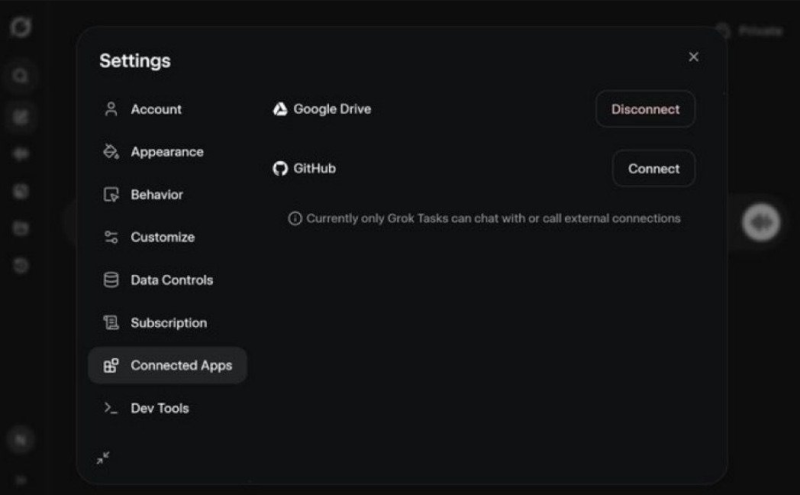
⬤ The "Connected Apps" panel now shows direct GitHub integration right next to Google Drive support. This setup brings version control straight into the assistant. xAI says the environment taps into Grok's 2 million-token context window, real-time internet access, and minimal output restrictions—making debugging, iterative development, and repo management way smoother. Grok is positioning itself against ChatGPT's Canvas and Claude's Projects, but with a more complete workflow that keeps everything centralized.
⬤ xAI is calling this upgrade a foundational move toward turning Grok into a "developer OS"—a platform built to support every stage of software creation. It fits the broader trend of AI-assisted engineering, where developers increasingly lean on intelligent agents to automate busywork, parse complex codebases, and boost productivity. Grok's combination of conversational reasoning and full in-app repo control marks a clear evolution in AI-powered dev tools.
⬤ With GitHub integration and native coding workspaces going live, competition among AI assistants targeting modern software engineering is heating up. As development workflows become more AI-dependent for planning, coding, testing, and deployment, platforms offering deeper ecosystem integration could drive adoption trends across the industry. xAI's push to make Grok a unified development hub shows how agentic coding tools might reshape what we expect AI to handle throughout the engineering process.
 Alex Dudov



