
 Victoria Bazir
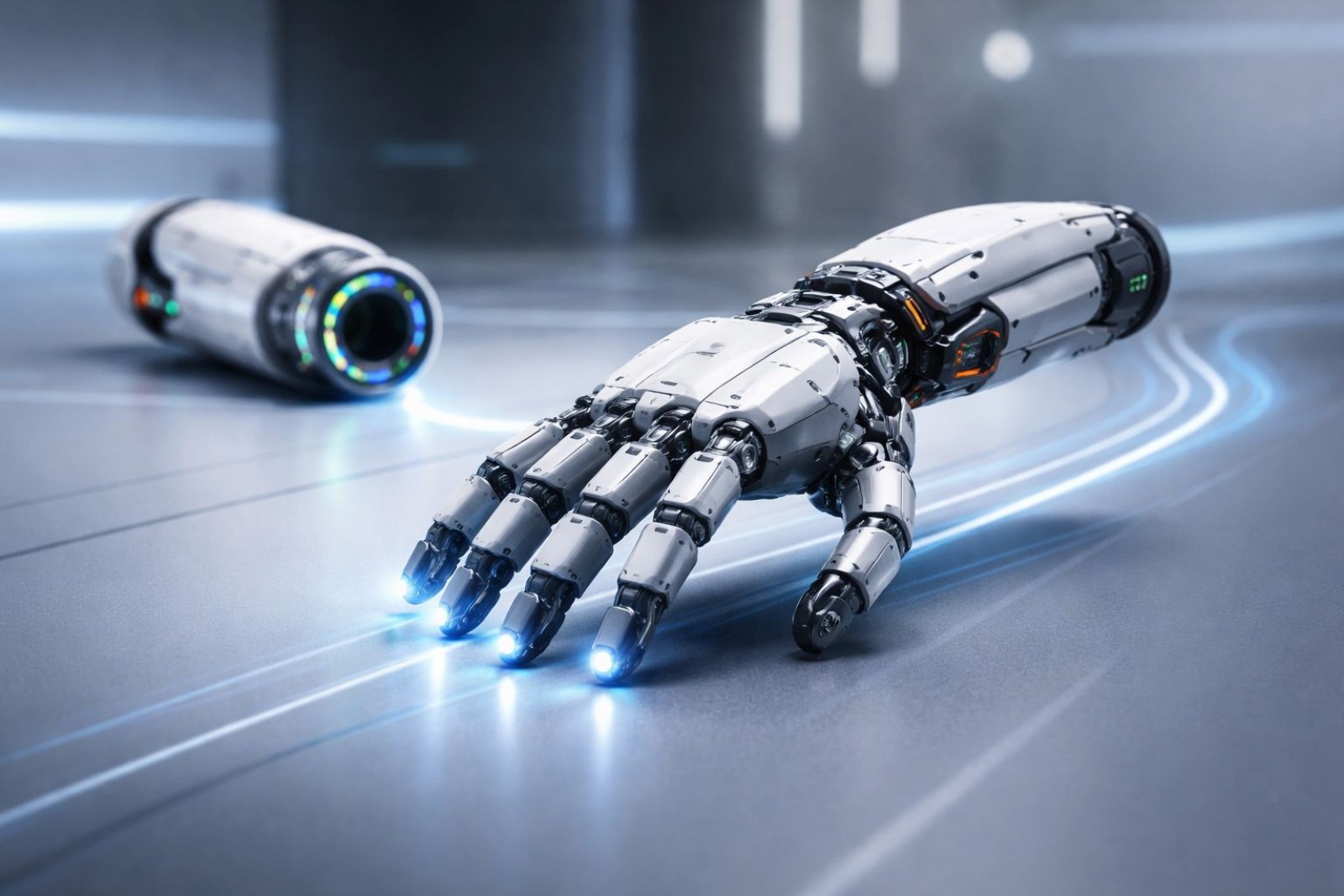
⬤ The Swiss Federal Institute of Technology in Lausanne just dropped something unusual: a robotic hand that doesn't stay put. Unlike traditional robotic grippers that remain permanently attached, this design can detach, move on its own, and snap back onto the arm when needed. It's a pretty clear departure from the five-fingered approach that's dominated robotics for years.
⬤ Here's how it works—the hand crawls to wherever it needs to go after separating from the robotic arm, taking cues from spiders and octopus tentacles. Once it arrives, it grabs what it needs, does the job, then makes its way back to reattach. That means the robot can reach spots that would normally be out of range, especially in tight or awkward spaces.
⬤ The hand also handles objects differently than you'd expect. Instead of only gripping things with fingertips, it can place items on its back and juggle multiple objects at once. It's less about copying human hands and more about getting things done in ways that actually work.

⬤ What makes this interesting is the modular angle. A humanoid robot with this kind of hand could swap components, detach parts when needed, and adjust to whatever the situation demands. It's a step away from rigid, one-size-fits-all designs and toward systems that adapt on the fly—something that could matter for factories, service robots, and research labs down the line.
 Victoria Bazir



