
 Victoria Bazir
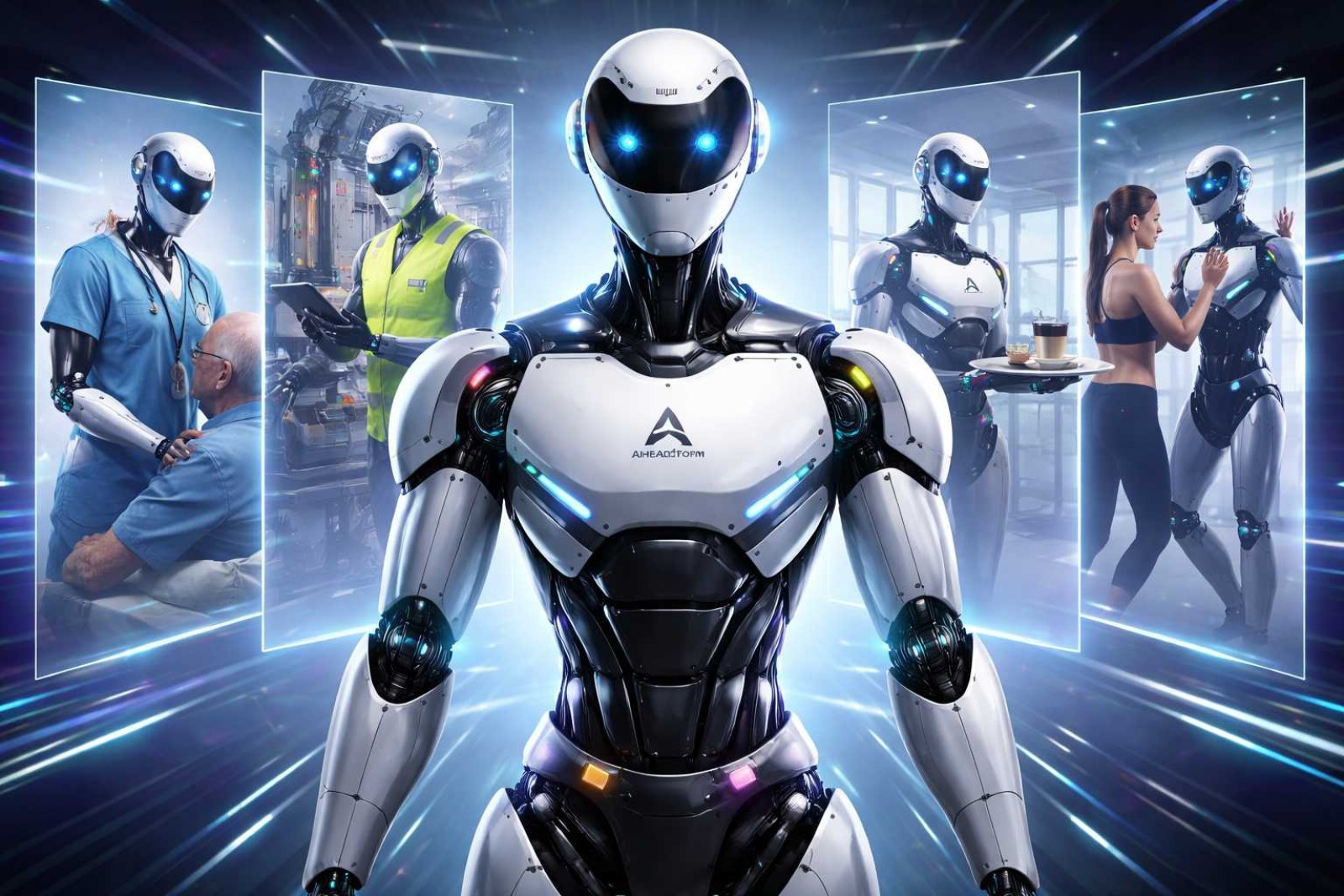
Social robotics just got a new contender. Aheadform's F1 is not built for factory floors or warehouse logistics - it is built to talk, listen, and connect. As the line between artificial intelligence and human interaction continues to blur, the F1 represents a deliberate push toward robots that fit into everyday life rather than industrial pipelines.
F1 Robot Switches Between 4 Identities in Real Time
Robotics developer Aheadform has introduced the F1 half-humanoid robot, a system built around social interaction and companionship through artificial intelligence. The robot combines realistic humanoid design with conversational AI to support natural human-robot communication. The F1 can dynamically switch identities - functioning as a teacher, companion, learning assistant, or therapist depending on the context of the interaction. That flexibility alone sets it apart from most commercial robots on the market today.
The F1 is part of a broader wave of AI-driven robotics focused on human-centric design. Developers are integrating large language models, perception systems, and expressive humanoid features to make machines communicate more naturally. Research in embodied AI is accelerating quickly, with studies exploring how AI models like BridgeV2W improve robot motion prediction and interaction accuracy - a capability that directly benefits socially interactive robots like the F1.
Humanoid Robots Are Entering Retail, Factories, and Daily Life
The emergence of socially interactive robots connects to a much wider trend. Companies across industries are testing humanoid machines in real-world environments at a pace that would have seemed unlikely just a few years ago. Recent deployments show how lightweight humanoid robots are being introduced inside Fortune 500 factories to assist with tasks, while other experiments highlight humanoid robots entering retail environments such as convenience stores in active customer-facing roles.
The F1's launch fits squarely into this momentum. As humanoid robots grow more capable of understanding language, emotion, and context, they are being positioned not just as labor tools but as companions, assistants, and service interfaces. The continued development of systems like the F1 signals a broader shift: AI-driven machines are moving out of specialized automation and into the spaces where people actually live and work.
 Victoria Bazir



