
 Sergey Diakov
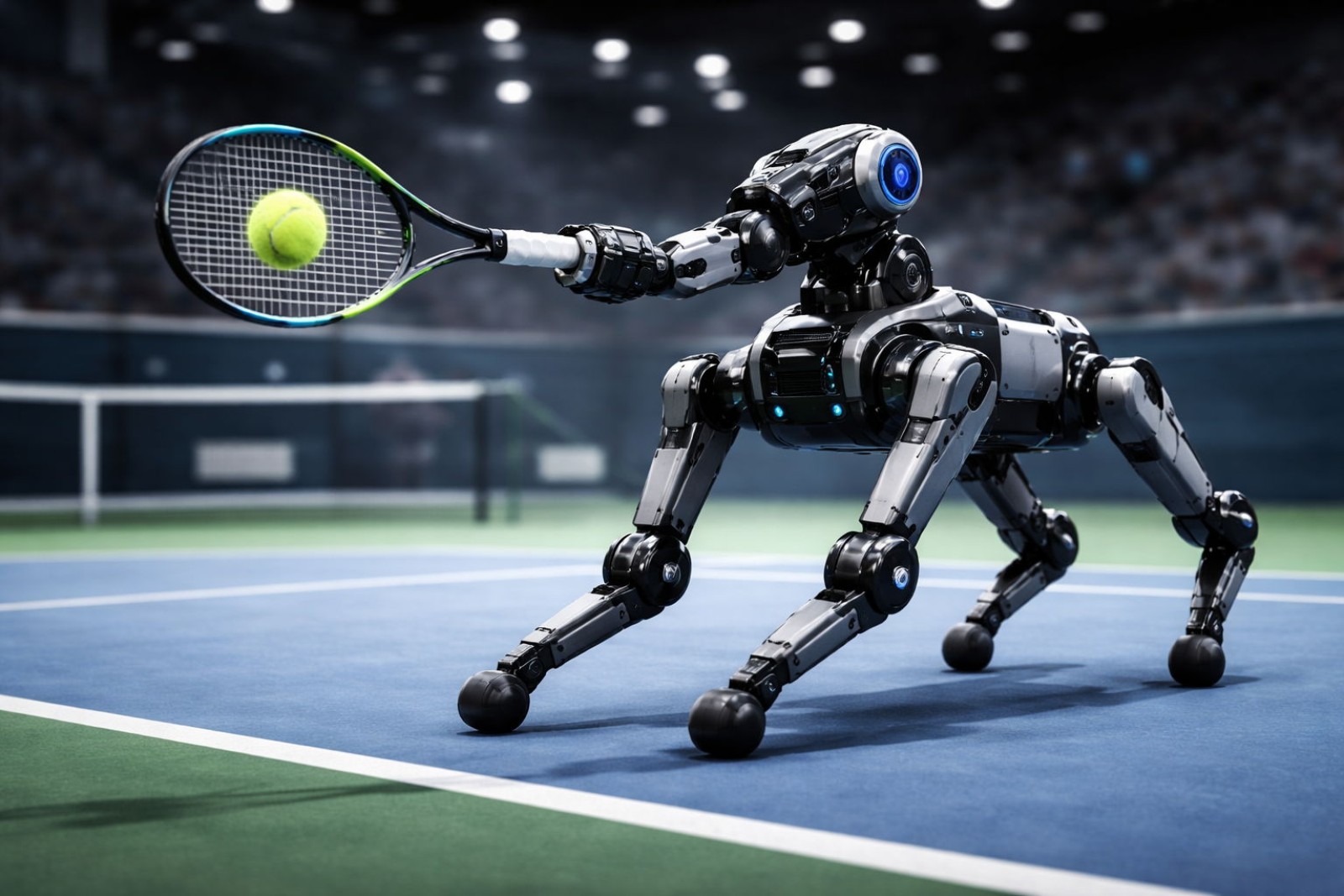
⬤ The Unitree G1 humanoid robot has reached a new athletic milestone, successfully keeping up multi-shot tennis rallies with human players. Researchers from Tsinghua University and Peking University developed the LATENT framework, which tightly couples the robot's perception and motion systems to handle dynamic, high-speed environments in real time, according to Humanoids Daily.
⬤ LATENT enables the G1 to return tennis balls traveling at speeds exceeding 15 meters per second, a significant step forward in reaction time and motion control for humanoid platforms. The robot tracks incoming balls and adjusts its entire body continuously, maintaining rally consistency rather than executing isolated one-off movements. That distinction matters: it points toward machines capable of genuine, sustained physical interaction.
⬤ The core training breakthrough relies on "imperfect" motion fragments paired with corrective adjustments, letting the G1 learn and adapt without requiring flawless reference data. This approach connects to wider trends in the field: Unitree G1 Humanoid Robot Goes Viral From Dance Performances to Industrial Testing showed that motion quality and adaptability have been central themes throughout the platform's development, while Stanford's Multi-Agent AI Shows 146% Accuracy Boost Through Latent Collaboration highlights how structured learning frameworks are pushing overall AI performance higher across very different domains.
⬤ LATENT reflects a broader shift in robotics: hardware is increasingly meeting software at the edge of real-world complexity. The gains in coordination, perception, and adaptive learning here could carry over into logistics, rehabilitation, and human-machine collaboration. At the same time, deployment outside controlled settings brings its own questions, as seen in Unitree G1 Humanoid Robot Taken by Police After Macau Street Incident, where the pace of progress in humanoid tech is already outrunning public readiness.
 Sergey Diakov



