
 Victoria Bazir
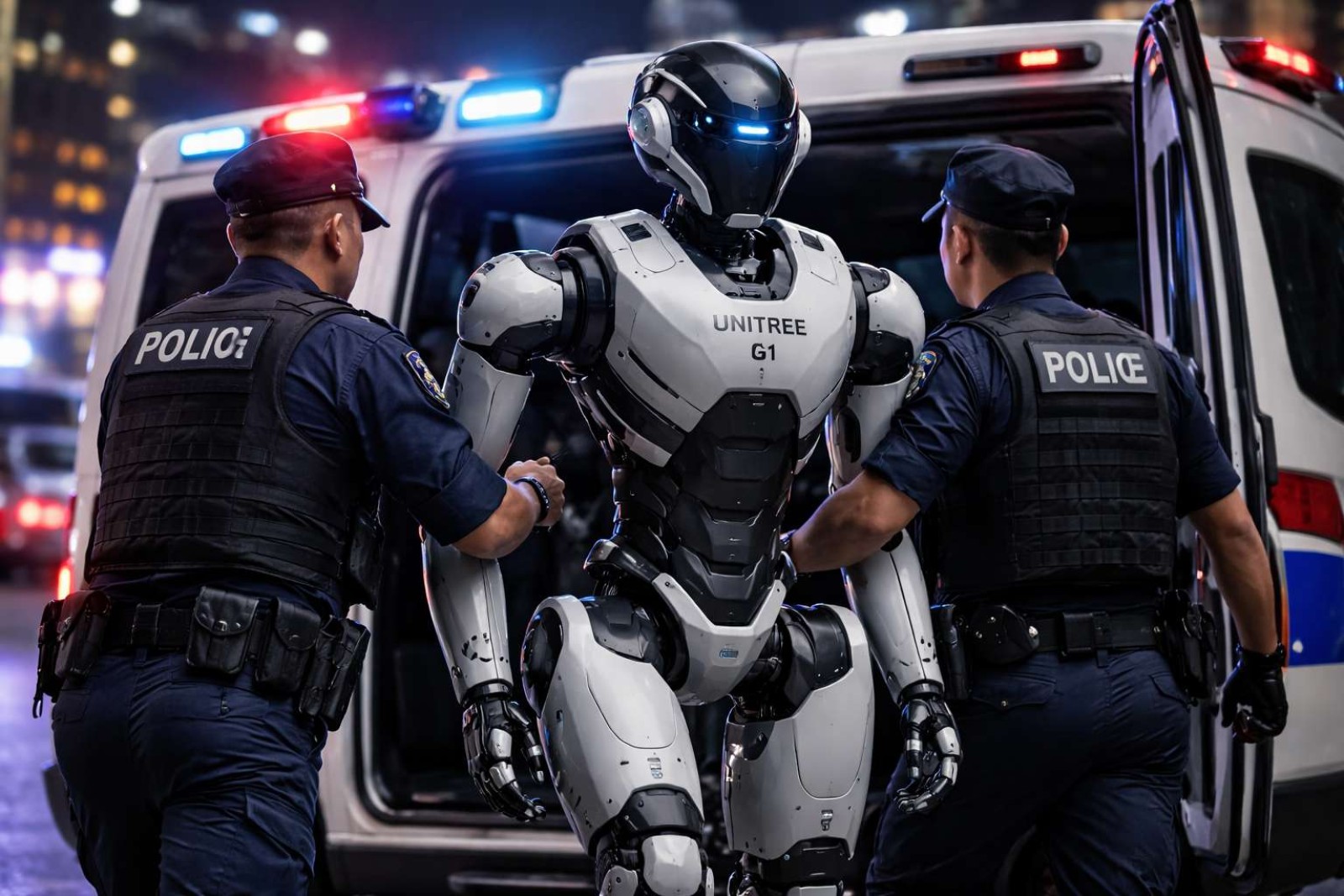
A humanoid robot's evening walk in Macau turned into something no one expected: a police intervention. Unitree Robotics' G1 humanoid drew widespread attention after an unusual street encounter involving local authorities, putting a spotlight on how quickly this technology is moving out of labs and into everyday life.
A citizen was walking with a Unitree G1 humanoid robot during an evening outing when the situation escalated. A passerby, startled by the presence of the machine, confronted the robot's owner and questioned why he was walking with it in public. The exchange drew a crowd and eventually prompted police to step in.
What Happened When Police Encountered the Unitree G1
Authorities reportedly intervened and took the humanoid robot away from the scene directly, marking what observers are calling one of the first widely circulated examples of law enforcement handling a humanoid robot during a public encounter. The moment was striking precisely because it felt so ordinary, a robot on a sidewalk, a startled pedestrian, and then the police, treating it like any other object involved in a public disturbance.
The Unitree G1 is a commercially available humanoid platform built for research, development, and public demonstrations. Designed to replicate human movement and operate in environments built for people, it represents a new wave of robotics entering shared spaces without a clear set of rules to govern its presence.
Humanoid Robots in Public Spaces: A Growing Legal Gray Zone
The Macau incident illustrates how emerging technologies can quickly outpace existing social and regulatory frameworks. As humanoid robots become more visible in cities, whether for research testing, commercial use, or personal ownership, authorities face real questions about how to manage them in shared spaces. There are no established protocols for what to do when a robot causes a public disturbance, or whether the machine itself can be treated as property, evidence, or something else entirely.
New humanoid platforms like the AheadForm F1 are designed specifically for human interaction, making public encounters even more likely going forward. Meanwhile, China controls 90% of global humanoid robot shipments in 2025, with Unitree leading at 5,500 units, meaning incidents like this one in Macau are only going to become more frequent.
 Victoria Bazir



