
 Eseandre Mordi
A new large language model built for industrial software engineering has entered the AI code market. InCoder-32B combines chip design, GPU kernel development, embedded systems, and 3D modeling into one foundation model - and its creators say it outperforms rivals on the benchmarks that matter most to enterprise engineers.
One Model for Verilog, CUDA, and CAD: How InCoder-32B Bridges Engineering Domains
According to DailyPapers, InCoder-32B is a code-focused foundation model designed specifically for industrial applications. Unlike general-purpose coding assistants, it unifies multiple disciplines - including chip design and RTL/Verilog workflows, GPU kernel optimization, compiler engineering, embedded systems, and CAD/CAE modeling - inside a single 32-billion-parameter architecture. This comes at a time when AI job growth tied to language models has surged 93% since ChatGPT's launch, signaling a clear shift in how the industry approaches AI for engineering.
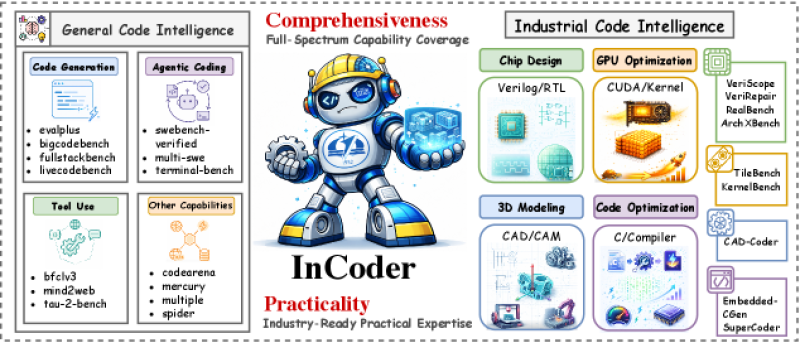
According to the announcement, InCoder-32B outperforms Anthropic's Claude Sonnet 4.6 on specialized industrial benchmarks, including Verilog/RTL design, CUDA kernel optimization, and CAD/CAE modeling tasks. These aren't academic tests - they reflect the kinds of pipelines production engineering teams run every day. For context, Claude Sonnet 4.6 ranks 2nd in the AI Index with 51 points, making InCoder-32B's performance on domain-specific tasks all the more notable.
Why Industrial AI Models Are Beating General-Purpose Assistants on Specialized Benchmarks
The broader context matters here. Demand for AI systems capable of handling complex, domain-specific development pipelines has been growing steadily, and the infrastructure is keeping pace. Recent work like PaddlePaddle's FlashMaskV4, which delivers a 29x speed boost for long-context AI workloads, shows just how fast the underlying stack is evolving. InCoder-32B sits directly on top of that momentum - combining code generation, optimization, and embedded system development into a unified framework rather than requiring engineers to patch together multiple tools.
Competition in the AI model space remains intense. But the emergence of InCoder-32B signals that the next frontier isn't raw capability - it's real-world integration into production engineering environments. The race to build models that handle entire industrial workflows end-to-end is now fully underway.
 Eseandre Mordi



