
 Peter Smith

⬤ Anthropic's Claude Sonnet 4.6 just dropped on Poe, giving the platform's users fresh access to one of the latest AI models designed to handle real-world tasks. The model hits a sweet spot between quality, speed, and affordability while packing computer-use features that let it actually interact with software tools and automate interface actions.
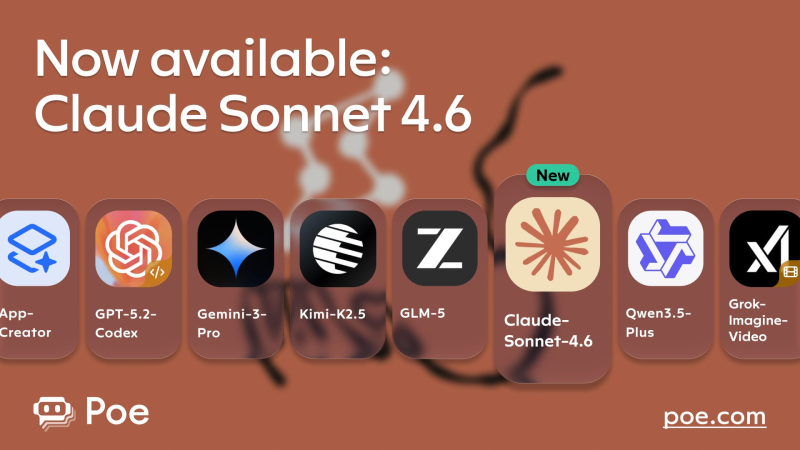
⬤ Poe's announcement shows Claude Sonnet 4.6 sitting right alongside other major AI systems in the app, meaning users get multi-model flexibility without jumping between platforms. Whether you're testing it out in the Poe app or building something through the Poe API, the model's now accessible for both casual users and developers looking to integrate AI-driven automation.
⬤ What makes this release interesting is how Poe frames the model's practical side. Claude Sonnet 4.6 is built for "tool-driven workflows and interface automation" - basically, it can handle routine productivity tasks that involve clicking through UIs and executing multi-step processes. This isn't experimental tech anymore; it's positioned as something you'd actually use day-to-day.
The model is designed to provide a balance of quality, speed, and price, while offering computer-use functionality intended for tool-driven workflows, Poe noted in the release.
⬤ The timing matters too. Rolling out Claude Sonnet 4.6 through Poe's infrastructure shows how automation-focused AI models are moving from research labs into operational environments. With access through both consumer apps and developer APIs, this kind of deployment suggests AI automation is becoming standard infrastructure rather than a novelty feature.
⬤ For users already on Poe, this means another powerful model option. For developers, it's another programmable AI tool that can handle structured workflows without constant human oversight. The focus on reliability and responsiveness over raw experimental power signals where practical AI deployment is heading - toward consistent execution of defined tasks rather than open-ended exploration.
 Peter Smith



