
 Alex Dudov

⬤ A large-scale analysis of over 40 million academic papers reveals that AI-adopting scientists drastically outperform their peers in productivity and visibility—yet their work increasingly clusters around narrower research topics, potentially slowing the broader pace of discovery.
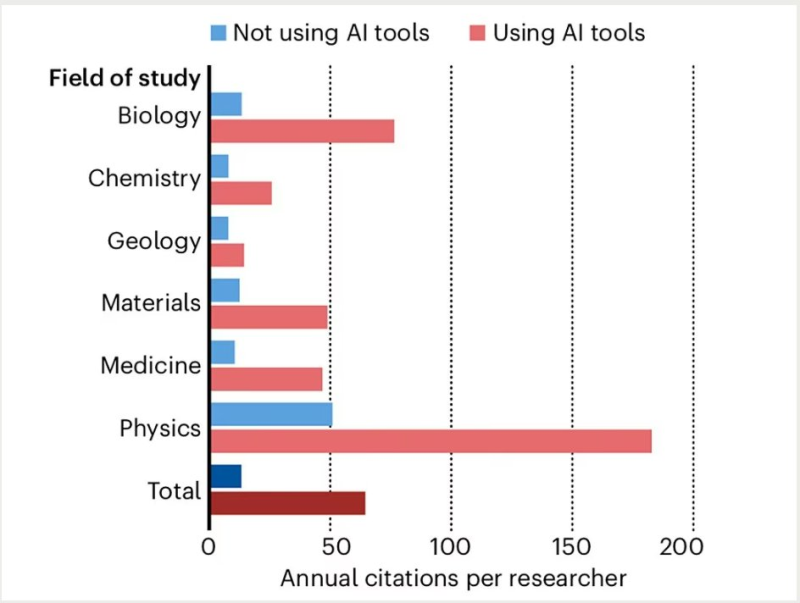
⬤ Researchers leveraging AI tools publish roughly three times more papers and rack up nearly five times the annual citations compared to non-users. The gap shows up across biology, chemistry, physics, medicine, geology, and materials science, with physics displaying the sharpest divide in citation impact.
⬤ AI doesn't just boost output—it speeds up careers. Scientists using these tools move into leadership positions one to two years earlier than colleagues sticking with traditional methods.
⬤ The downside? AI-driven research tends to revisit similar data-heavy problems rather than branching into unexplored territory. This narrowing focus correlates with less follow-up work and fewer curiosity-driven investigations—raising questions about long-term innovation.

⬤ While AI clearly accelerates efficiency and recognition, the shift toward concentrated research areas could reshape how new ideas emerge. Balancing productivity gains with exploratory breadth may determine the future depth and diversity of scientific progress across disciplines.
 Alex Dudov



