
 Eseandre Mordi

⬤ AI infrastructure is quickly morphing into something that looks a lot like heavy industry. The sprawling data centers powering today's AI systems are pulling electricity, water, and capital at levels that put them shoulder-to-shoulder with steel mills and cement plants. What started as specialized tech facilities are now becoming structural fixtures in energy grids and water networks across the country.
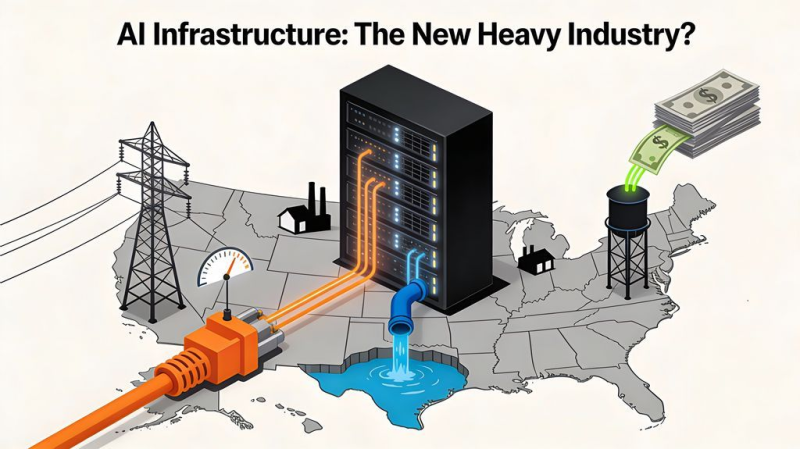
⬤ The electricity numbers tell the story most clearly. Global data-center power demand is set to jump to around 945 terawatt-hours by 2030—more than double what it is today, and roughly what Japan uses in an entire year. In the U.S., these facilities are expected to consume more power than all energy-intensive manufacturing combined. That means data centers will soon draw more electricity than the steel, cement, and chemical industries put together.
⬤ Water is becoming just as tight. Texas data centers alone could see consumption surge from about 49 billion gallons in 2025 to around 399 billion gallons by 2030. Globally, daily water use at these facilities is projected to hit roughly 450 million gallons by decade's end—equivalent to what five million people use every day. In regions already dealing with water stress, this kind of growth is creating real friction between tech expansion and local resource limits.
⬤ The financial scale is equally staggering. The U.S. may need an additional 122 gigawatts of data-center capacity by 2030, with total investment estimates running between $5 trillion and $7 trillion. Meanwhile, many of these massive facilities create relatively few jobs on-site, even as they collect significant tax breaks. Between the resource drain and the capital demands, AI infrastructure is no longer just a tech story—it's becoming a macro-level challenge for energy markets, public policy, and long-term economic planning.
 Eseandre Mordi



