
 Saad Ullah

⬤ A new artificial intelligence framework called DyMo introduces an adaptive method for handling incomplete multimodal data, a persistent limitation in modern AI. Developed by researchers at Imperial College London, the system focuses on improving model inference when input data is partially missing. Rather than discarding incomplete inputs or relying on fixed combinations, DyMo evaluates and selects the most informative data sources in real time. The approach reflects similar momentum toward smarter data handling covered in TrustSQL breakthrough: 99% gain signals a shift in AI data systems.
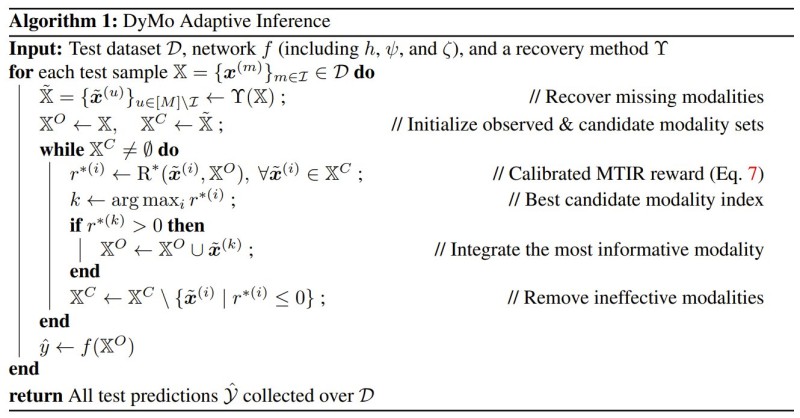
⬤ The algorithm operates through an iterative selection process: at each inference step, DyMo scores candidate data modalities by their usefulness, integrates only those that improve the prediction, and removes signals that introduce noise. This scoring mechanism allows the model to recover missing modalities and sustain accuracy even in degraded data conditions, a key challenge in multimodal learning. Unlike traditional methods tied to fixed input structures, DyMo adapts dynamically based on what information is actually available.
⬤ Testing shows DyMo significantly outperforms existing state-of-the-art methods across natural image processing and medical imaging tasks, where missing or inconsistent data is especially common. The results align with a broader wave of adaptable AI architectures, including One4D AI, which creates 3D video worlds from just 1 image, where models are built to perform under challenging, real-world conditions with limited input.
⬤ DyMo reflects a broader shift toward inference systems that can function reliably with incomplete and dynamic data. As AI expands into healthcare, computer vision, and autonomous systems, the ability to intelligently select and combine available inputs is becoming a critical performance factor. This trend is also visible in developments like MiniMax M2.7, which hits a 66.6% medal rate with self-evolving AI across 22 competitions, signaling that adaptive reasoning is now central to advancing AI reliability at scale.
 Saad Ullah



