
 Victoria Bazir
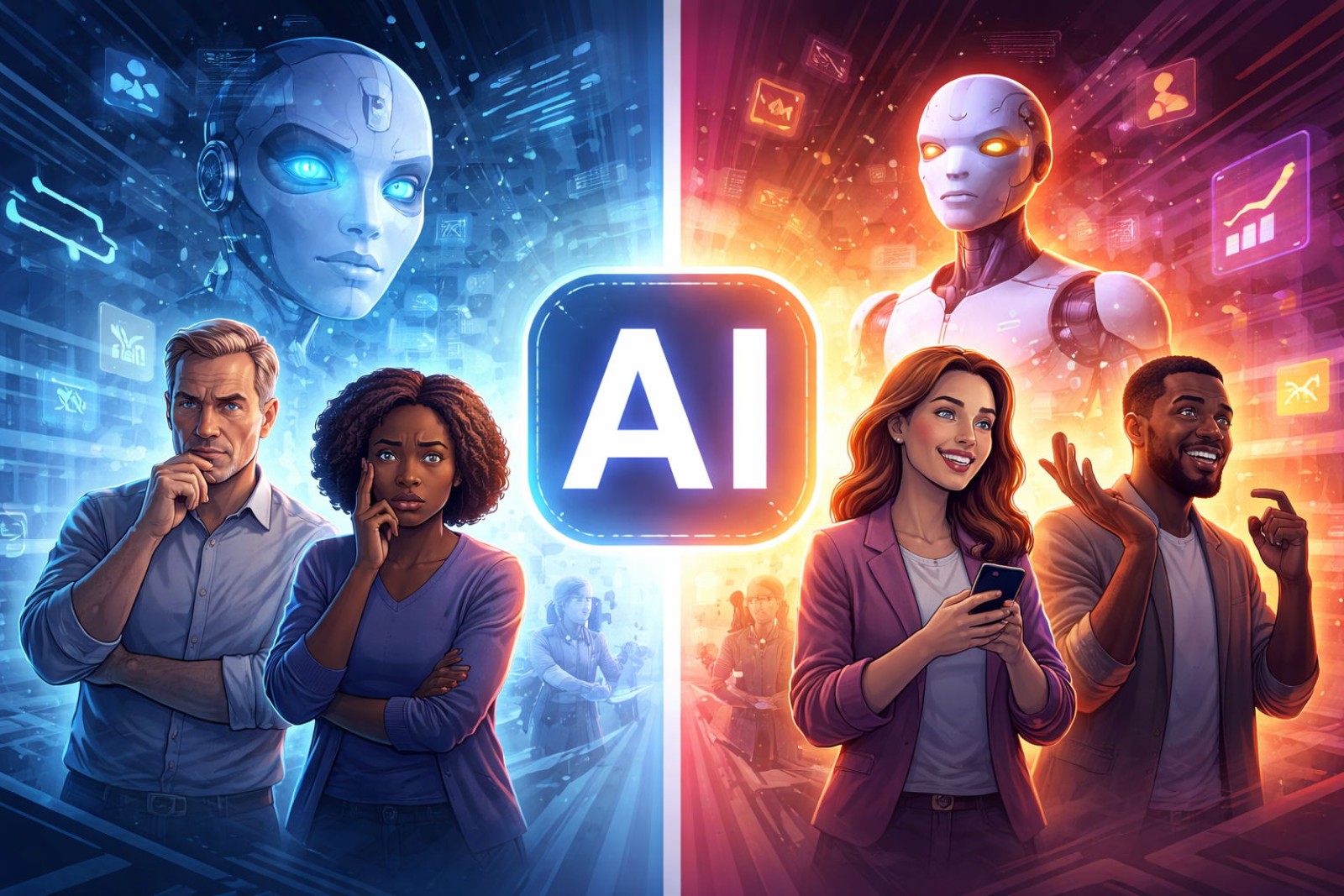
⬤ Pew Research Center has released a report on how Americans view artificial intelligence in daily life. The findings expose a sharp divide between expert and public opinion: 56% of AI experts expect the technology to deliver positive societal impact, while just 17% of the general public agrees. Despite rapid progress in the field, confidence in AI's long-term benefits remains limited for most Americans.
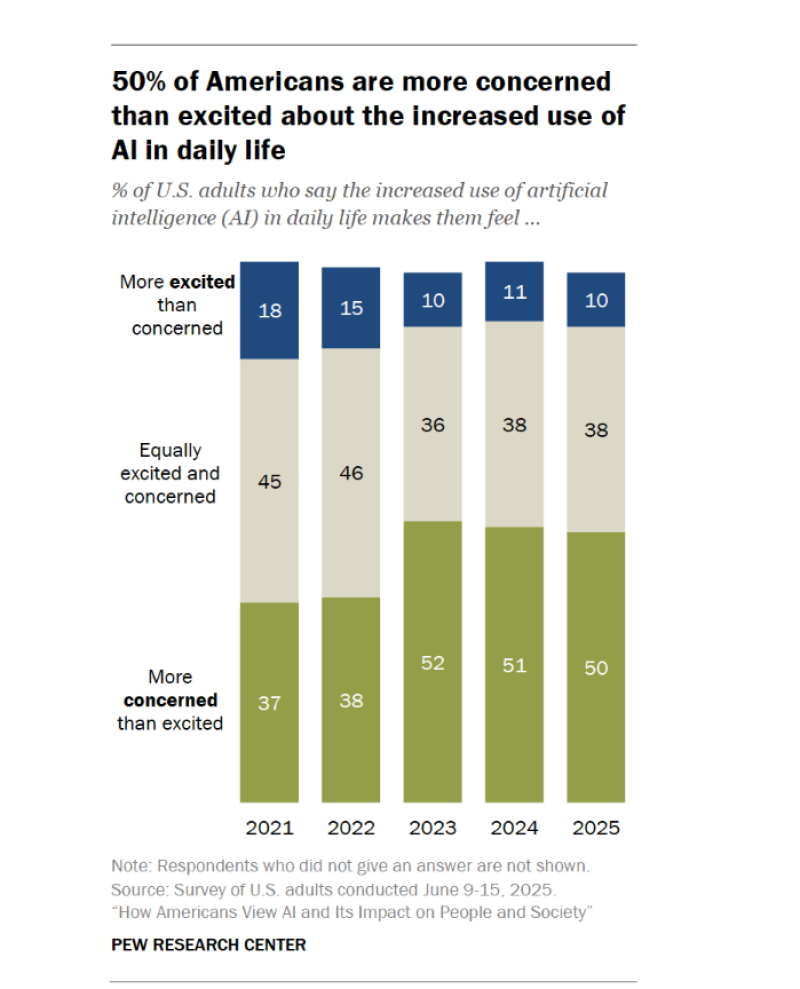
⬤ Public concern about AI has grown steadily. In 2025, 50% of U.S. adults say they feel more concerned than excited about AI, up from 37% in 2021. Over the same period, those who are more excited than concerned dropped from 18% to just 10%. Another 38% report mixed feelings, saying they feel equally excited and concerned about AI's expanding role in society.
Despite rapid technological progress, confidence in AI's long-term benefits remains limited among many Americans.
⬤ Workplace adoption is growing: 21% of adults now say they use AI tools at work, reflecting how embedded these technologies have become in professional workflows. At the same time, concerns around education are mounting. About 60% of students aged 13 to 17 report that classmates use AI chatbots to complete or bypass school assignments, and roughly one-third say such cheating happens frequently.
⬤ The broader public debate reflects AI's rapid spread across industries and consumer platforms. How sentiment evolves may shape government regulation, transparency standards, and responsible deployment frameworks going forward. Recent developments underscore this acceleration: IBM's Agent Memory System boosted task success by 149%, and GPT-5.2 hit 33% on LiveCodeBench Pro, arriving five years ahead of 2030 expert predictions - all signs that AI capabilities are reshaping global adoption faster than public trust can keep pace.
 Victoria Bazir



