
 Saad Ullah
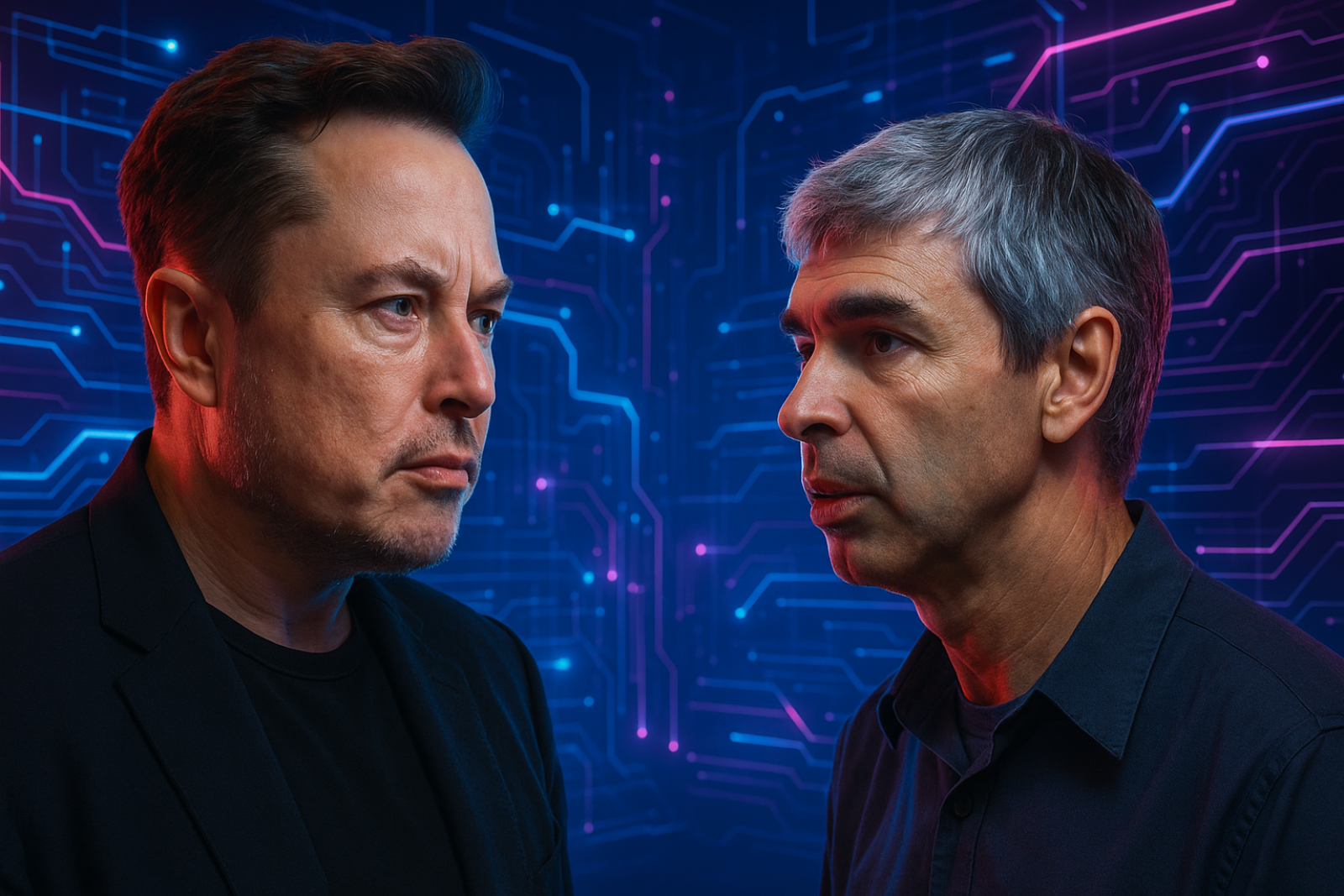
⬤ Elon Musk brought up longstanding AI safety concerns after recounting a heated early exchange with Google leadership over advanced artificial intelligence development. Musk said he pushed for OpenAI's creation to counterbalance Google's dominance, arguing that letting one company control frontier AI created unacceptable risks. The discussion came as renewed attention focused on AI competition, reflected in benchmark charts comparing performance across leading models.
⬤ The dispute came from Musk's belief that advanced AI systems could pose existential threats without proper safety precautions. He recalled that Larry Page dismissed his concerns and called him a "specie-ist," suggesting that prioritizing human survival over machine intelligence was outdated. Musk said he responded by asking, "Larry, what side are you on? We need to make sure the AI doesn't destroy all the humans." His remarks highlight persistent philosophical divides within tech over alignment, autonomy, and long-term implications of increasingly capable systems.
⬤ The exchange resurfaced when the competitive landscape has shifted dramatically. Current charts show diverse AI systems — including Grok 4 Heavy, GPT-5 variants, Gemini deep research, Claude, Qwen, DeepSeek, and NVIDIA-based models — achieving a wide range of performance scores on Humanity's Last Exam. This distribution contrasts with Musk's earlier fears of single-company monopoly, showing how multiple global players now shape frontier AI direction. The ranking also shows how advanced tool-augmented models compete closely across research and benchmark environments.
⬤ Musk's comments highlight how foundational questions about AI governance, power concentration, and long-term safety continue influencing sector discussions. As performance benchmarks evolve and multi-model ecosystems expand, debates over who controls advanced AI — and how it should be managed — remain central to strategic and regulatory conversations. The resurgence of this early Google conflict shows the enduring relevance of concerns Musk raised nearly a decade ago, at a time when AI development trajectory appears more consequential than ever.
 Saad Ullah



