
 Peter Smith

⬤ MIT's Media Lab has published a study that examines how AI tools shape the way we think - the work focused on ChatGPT. For four months the team recorded brain signals while volunteers wrote with ChatGPT, with Google Search or with no digital aid. The outcome was clear - people who leaned on ChatGPT showed measurable losses in both recall and in the links between brain regions, which raises the question of whether AI-assisted writing is rewiring the brain.
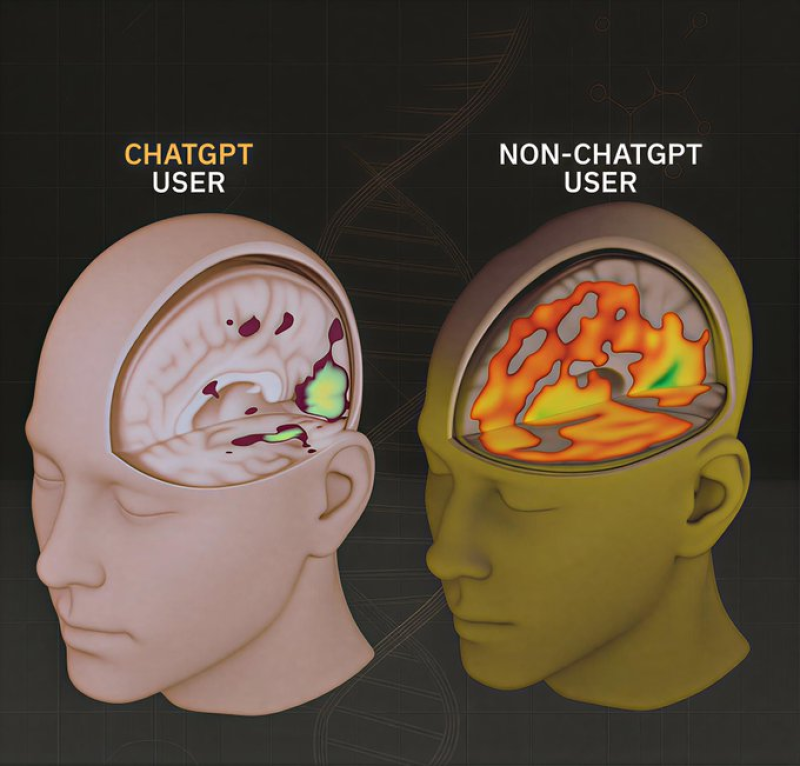
⬤ The figures are unsettling. Eighty-three per cent of habitual ChatGPT users were unable to reproduce even one sentence they had typed only minutes earlier - writers who worked without the tool did not display this failure. Neural coupling fell by forty seven per cent in the ChatGPT group and the reduction persisted after the session ended. Volunteers who used Google Search exhibited smaller shifts indicating that each AI product alters cognition in its own way. Mental exertion also declined by a third for ChatGPT users - assignments were finished sooner - yet little was retained.
⬤ The researchers remarked that the outcome mirrors earlier changes triggered by calculators, GPS units and digital cameras - early dependence on the device lessened individual mental effort.
⬤ The results carry weight now that ChatGPT is woven into Microsoft's AI services. The authors do not call for abandoning AI - they recommend that users draft their own thoughts first and only afterwards let the system refine the text. The same rebalancing occurred with calculators besides GPS once their use became routine.

⬤ As AI helpers spread across the globe, the study supplies a frame of reference for judging productivity software. For technology firms, educators and policy staff who must weigh speed against mental agility, MIT's data sound a clear warning - employ AI with purpose, not on autopilot.
 Peter Smith



