
 Sergey Diakov
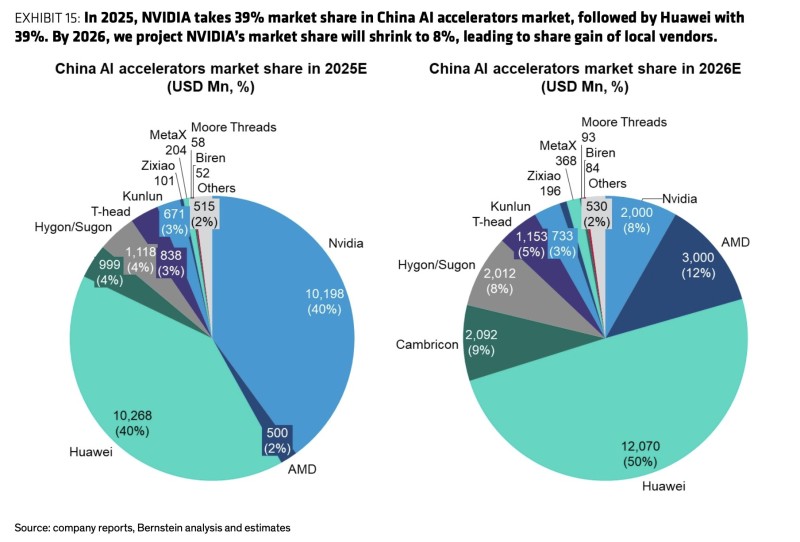
⬤ Recent Bernstein modeling points to a fundamental transformation in China's AI chip landscape, with Huawei positioned to capture half of the country's AI accelerator market in 2026. The analysis reveals a sharp upward trend in domestic semiconductor capabilities, showing that Chinese-made AI chips will likely satisfy internal demand and eventually generate surplus capacity. Huawei's projected accelerator revenue stands at roughly 12 billion USD for 2026, placing it well ahead of any rival vendors in the space.
⬤ The numbers paint a clear picture of how quickly things are changing. China's AI accelerator market is expected to expand from 37 billion USD in 2025 to 69 billion USD by 2027. During that same window, local chip production will jump from 16 billion USD to 39 billion USD. By 2028, domestic output should hit 91 billion USD while total national demand reaches 88 billion USD. This shift is being driven by stronger policy support, aggressive capacity buildouts, and a growing emphasis on homegrown innovation throughout China's semiconductor industry.
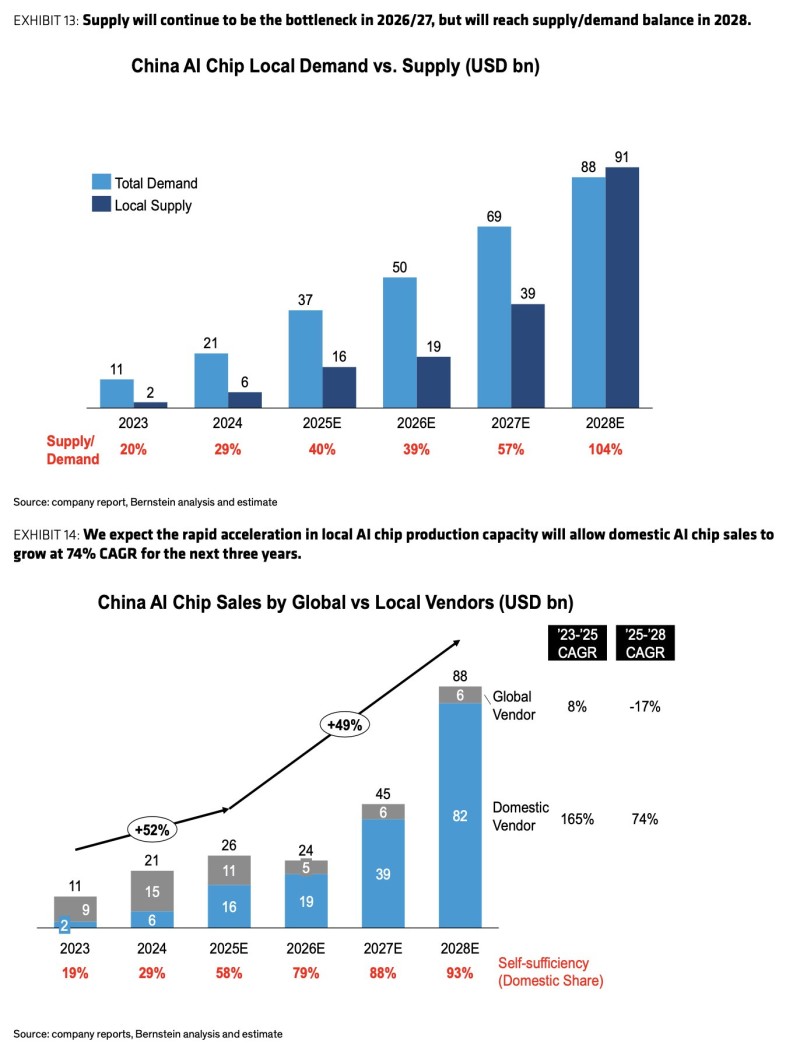
⬤ Bernstein's broader forecast also tracks the rising influence of Chinese vendors like Huawei, Cambricon, and Hygon as supply chains become more localized. Domestic suppliers are expected to control 93 percent of China's AI chip sales by 2028, a massive leap from just 19 percent in 2023. Local vendors' revenue is projected to surge from 9 billion USD in 2023 to 82 billion USD in 2028, delivering growth rates that far outpace foreign competitors. This transformation will also impact job creation, tax revenues, and China's long-term position in the global semiconductor arena.
⬤ These developments mark a pivotal moment for China's AI hardware sector, signaling a decisive push toward tech independence and reduced dependence on overseas suppliers. For global markets, Huawei's expected dominance and the broader rise of Chinese chipmakers could reshape supply networks, redirect investment capital, and shift how computing power is distributed worldwide in the coming years.
 Sergey Diakov



