
 Peter Smith
⬤ McKinsey Global Institute's latest research shows that current technology could automate up to 57% of all U.S. work hours by 2024. AI agents might handle tasks representing 44% of work time, while robots could take on another 13%. It's a massive shift showing just how far automation has come and where it's heading next.
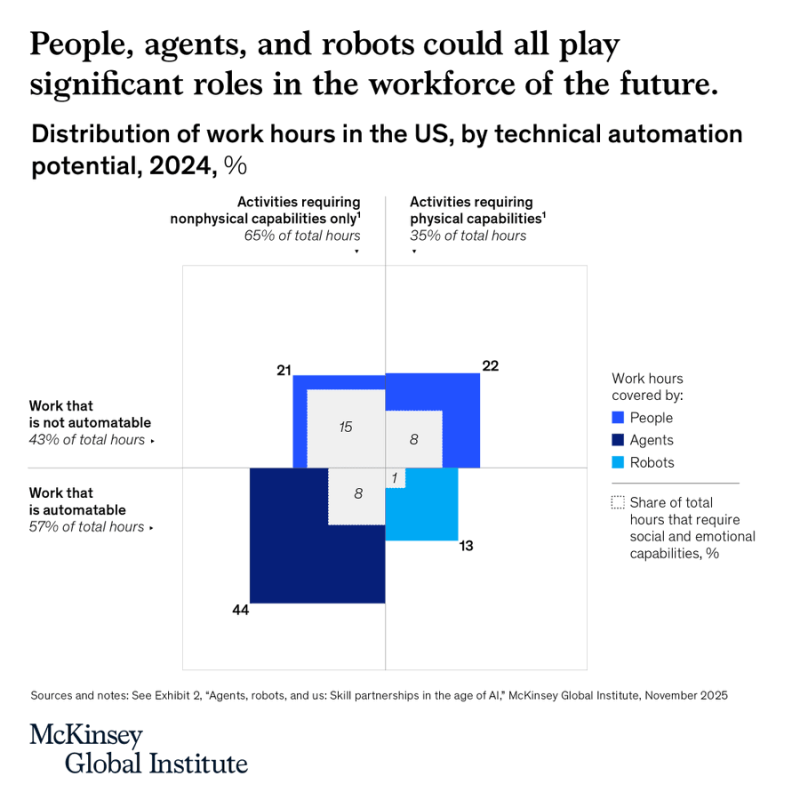
⬤ But here's the catch - machines still can't touch anything requiring genuine emotional intelligence or social awareness. Jobs needing real-time judgment, human oversight, and the ability to navigate complex interpersonal situations aren't going anywhere. There's simply no substitute for actual human connection and understanding.
⬤ Industries built around routine physical tasks will feel this the hardest. Sure, automation means better efficiency and productivity, but it also means workers need to adapt fast. The focus now shifts to reskilling - moving people toward roles that demand higher cognitive abilities and emotional intelligence that machines can't replicate.
⬤ For markets, this creates winners and losers. Companies jumping on AI and automation early could see serious profit boosts, while traditional labor-heavy industries face tough transitions. How quickly workers can move into more complex, human-centered roles will determine whether this shift strengthens or strains the economy.
 Peter Smith



