
 Eseandre Mordi
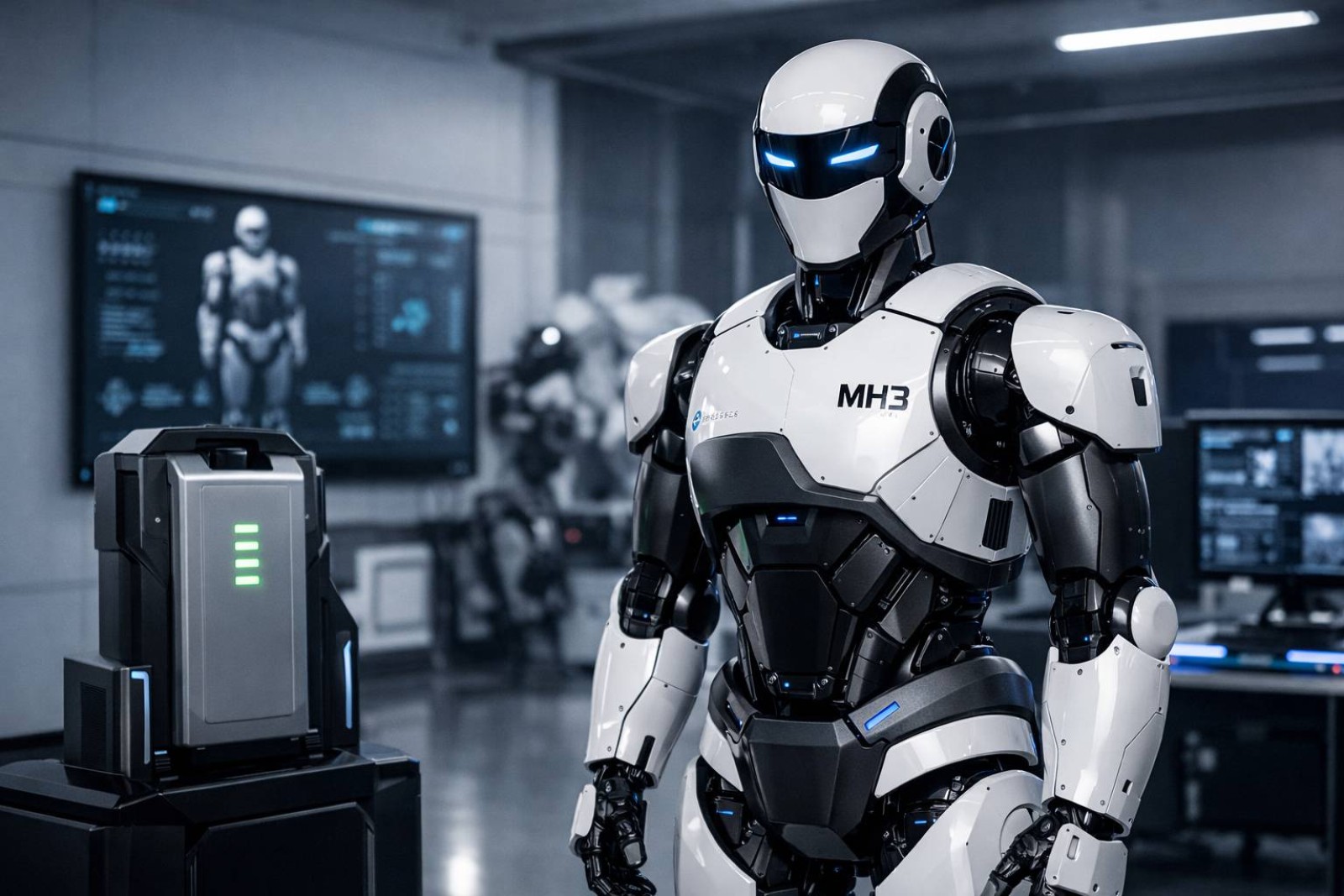
⬤ Mirsee Robotics stands out among Canada's few humanoid robot developers with its practical deployment approach for the MH3 platform. Unlike many robotics projects chasing full autonomy and general intelligence, Mirsee took a different route—they started by finding jobs where humans can't safely work but still need human-like control and dexterity. Think dangerous environments, remote locations, and high-risk operations where you'd rather not put a person.
⬤ The MH3 humanoid robot represents Mirsee's third-generation system built for real-world use right now. It packs a 10-hour battery life, over 30 degrees of freedom, stable robotic arms and hands that can actually use tools, plus wheeled legs for better balance and mobility. Here's the interesting part: instead of trying to make it fully autonomous, humans control MH3 remotely through VR and haptic systems. This lets operators execute precise tasks from safe locations while the robot handles the dangerous stuff.
⬤ Mirsee's approach basically flips the script on AI's role in humanoid robotics. They're not trying to replace humans completely—instead, they're bringing AI in gradually to handle repetitive tasks and ease the burden of manual control over time. The MH3 has already proven itself in high-risk operations and remote infrastructure maintenance, attracting attention from defense and aerospace organizations looking for humanoid solutions they can deploy today, not five years from now.
⬤ Despite the technical progress, Mirsee faces real challenges. Canada's industrial manufacturing and robotics supply chain limitations have held them back, along with ongoing funding pressures. They recently secured $500,000 from the Canadian Department of National Defence through its IDEaS program, but that's modest money for humanoid robot development. To boost MH3's interaction and agency capabilities, Mirsee partnered with Nucleus, an AI-focused company. The MH3 project sends a clear market signal: remote operation isn't a limitation—it's a practical stepping stone toward more autonomous humanoid systems.
 Eseandre Mordi



