
 Eseandre Mordi
⬤ A new dental-focused AI model is making waves for how well it handles visual diagnostic tasks in oral healthcare. DentalGPT is a multimodal language model built from the ground up to analyze dental images and tackle complex diagnostic challenges. Recent benchmarks show it interpreting panoramic X-rays and identifying subtle features like radiopaque fillings with impressive accuracy.
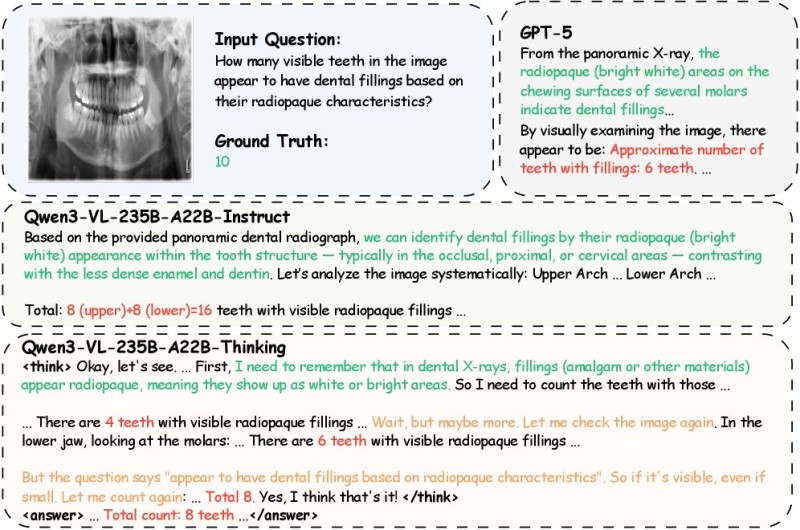
⬤ Benchmark comparisons reveal how DentalGPT stacks up against bigger general-purpose vision models when asked to spot specific dental features in radiographs. While larger models sometimes miss the mark on precise visual counting and interpretation, DentalGPT's domain-specific training helps it nail these fine-grained details. The focused approach to dental terminology and imaging pays off where general AI systems stumble.
⬤ What's striking is that DentalGPT pulls this off with just 7 billion parameters—a fraction of what many competing models carry. This efficiency matters because it shows specialized training can deliver better results than simply throwing more computing power at the problem. For medical imaging tasks where subtle visual cues make all the difference, targeted models like this one are proving their worth.

⬤ This shift toward domain-specific AI could reshape how we build clinical tools across healthcare. Instead of relying on massive one-size-fits-all systems, smaller specialized models might offer more reliable performance with less computational overhead. If dental AI continues this trajectory, we'll likely see similar approaches spreading to other diagnostic imaging fields, raising the bar for both accuracy and practical usability in real-world clinical settings.
 Eseandre Mordi



