
 Saad Ullah
⬤ U.S. data center electricity demand is climbing much faster than anyone anticipated. BloombergNEF just revised its 2035 forecast upward to 106 gigawatts—a massive 36% jump from what they predicted back in April. Current demand sits around 40 GW, so we're looking at more than doubling consumption over the next decade. The driving force? AI expansion is fundamentally changing how the country thinks about power infrastructure. This surge has also caught the attention of investors tracking macro-sensitive assets like XAU, especially as billions flow into energy projects.
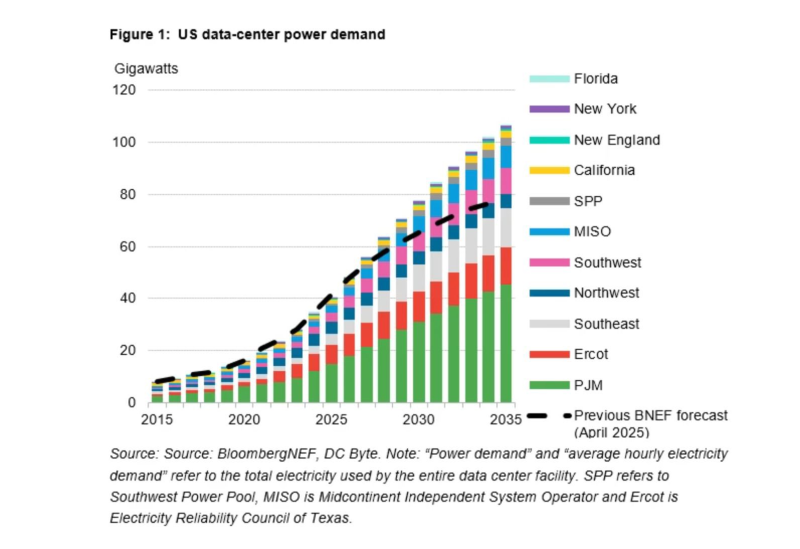
⬤ The growth isn't concentrated in one region. Bloomberg's chart shows PJM, Ercot, the Southeast, and Southwest grids all contributing to the spike. PJM and Ercot are leading the charge, thanks to aggressive cloud buildouts and industrial expansion. What stands out is how widespread this is—hyperscale data centers, AI training clusters, and high-density compute facilities are popping up across the map rather than clustering in traditional tech hubs.
⬤ Getting to 106 GW means adding capacity equal to dozens of major power plants. It's one of the biggest long-term demand increases the U.S. grid has seen in decades. Utilities are already moving fast on land acquisition, renewable energy contracts, and transmission upgrades to keep pace with future AI workloads. As infrastructure spending ramps up, markets are reassessing long-duration assets and commodities, with XAU staying in the conversation as a reference point during heavy capital deployment cycles.

⬤ This acceleration marks a turning point for both AI development and the power sector. Energy availability is quickly becoming the main bottleneck—and opportunity—shaping how fast AI can scale. Regulators, utilities, and tech companies will need tight coordination to meet demand. Bloomberg's revised numbers make one thing clear: the power grid isn't just supporting the AI boom anymore, it's central to making it happen.
 Saad Ullah



