
 Saad Ullah
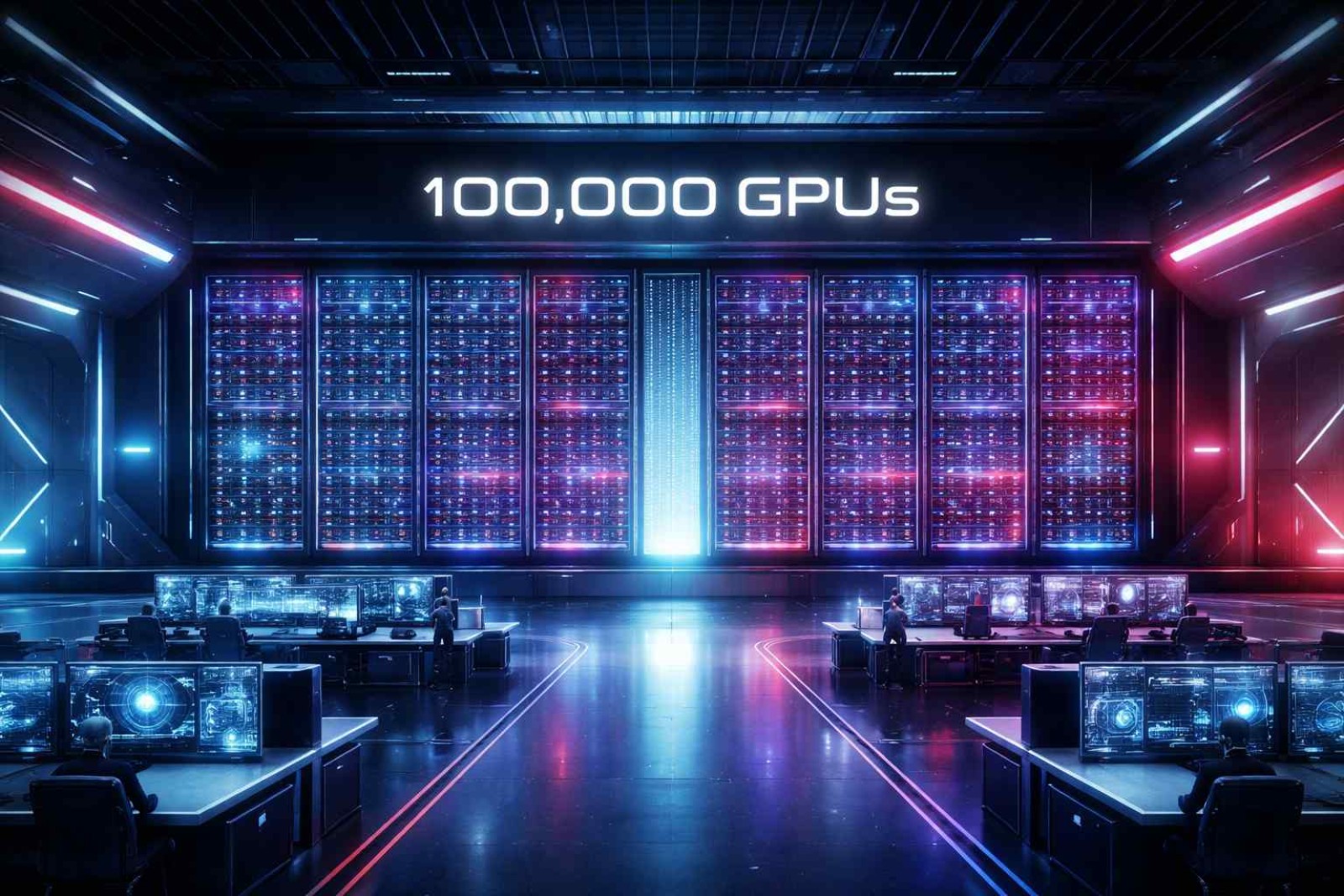
⬤ The Giga Texas Cortex AI facility has been pushing 100,000 GPUs at maximum capacity since June, and the operational reality is reshaping assumptions about what it takes to scale AI. The system is already bumping against constraints that most industry observers didn't expect to hit this soon—particularly around power delivery and thermal management at unprecedented intensity levels.
⬤ Cooling alone can consume up to 40% of a large data center's total energy draw, but that's no longer the primary headache. The real problem is simpler and harder to fix: Earth's electrical grid wasn't built to handle terawatt-scale power demands from continuous, high-intensity compute. Even with efficiency improvements, existing infrastructure can't keep pace with nonstop GPU operation at this magnitude.
⬤ The conversation is shifting toward space-based solutions as the only realistic path forward. Continuous solar power in orbit eliminates day-night cycles, and space data centers would swap fans for radiators and water cooling for advanced thermal coatings. But even with those advantages, materials science remains the chokepoint—the right materials for these systems don't exist at the scale needed, and developing them takes time.
⬤ This matters because it redefines what AI growth actually depends on. The bottleneck isn't software or chip design anymore—it's energy systems, heat dissipation, and materials availability. Those physical constraints will determine how fast next-generation AI capacity comes online and what it costs to build, which directly shapes where investment flows and how quickly the market can expand.
 Saad Ullah



