
 Eseandre Mordi
The race for real-time AI responsiveness just got more interesting. A head-to-head comparison between xAI's Grok and a competing assistant has sparked conversations about how quickly artificial intelligence can process and deliver breaking information to users.
Grok Delivers Instant Updates While Competitors Fall Behind
xAI's Grok recently caught attention when X Freeze shared a revealing side-by-side test. The comparison showed Grok responding immediately to a time-sensitive question while another AI assistant displayed noticeably older information. Both systems received identical queries at the same moment, yet their answers told completely different stories about their data freshness.
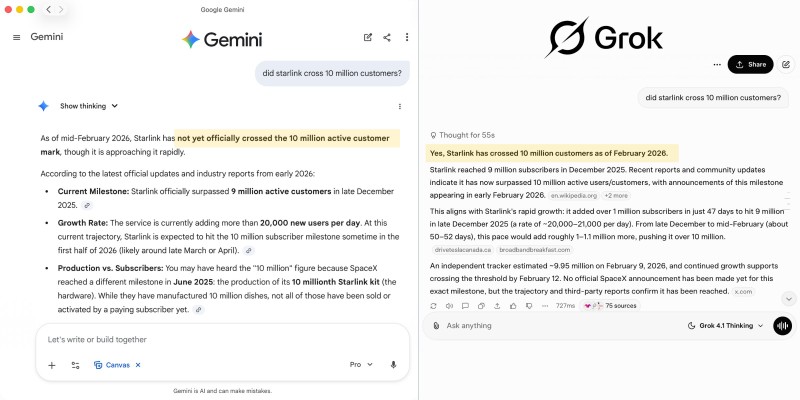
The test focused on a Starlink milestone question, where Grok presented current information while its competitor still reflected earlier data points. This wasn't about which answer was factually correct—it was about demonstrating how quickly each system could pull in newly available information.
The contrast reflects architectural differences in information retrieval approaches rather than proving accuracy.
Real-Time Data Integration Becomes New Competitive Battleground
This example points to a larger shift happening across the AI industry. Real-time data integration is rapidly becoming a make-or-break feature rather than a nice-to-have bonus. Systems connected to continuously refreshed information sources can surface breaking news and updates within seconds, while platforms designed around slower verification cycles inevitably lag behind.
The speed gap isn't accidental—it reveals fundamental differences in how various AI platforms are built. Some prioritize instant access to streaming data feeds, while others emphasize verification protocols and stability checks before displaying information to users.
Why Response Speed Matters for AI Platforms
Response speed is quickly emerging as a defining capability for AI systems used in news monitoring, research, and market analysis. When users need answers about developing situations, the difference between instant and delayed responses can be significant.
For platforms competing in the real-time information space, faster update handling directly influences market positioning. As AI assistants become primary information sources for professionals and consumers alike, the ability to deliver current data faster than competitors creates clear competitive advantages.
The xAI Grok comparison illustrates where the industry is heading: toward AI systems that don't just answer questions accurately but answer them with the freshest possible information. As this technology continues evolving, expect response speed to become as important as response quality in how users choose their AI platforms.
 Eseandre Mordi



