
 Saad Ullah
⬤ Google's Gemini 3 is picking up real momentum in the AI chatbot race, closing what used to be a comfortable lead for ChatGPT. Recent data shows Gemini matching or beating OpenAI's platform in key areas like how long people stick around during sessions and how many new users are downloading the app. The shift suggests we might be watching a genuine competitive battle take shape, where ChatGPT's biggest remaining edge could be simple name recognition rather than any real technical or distribution advantage.
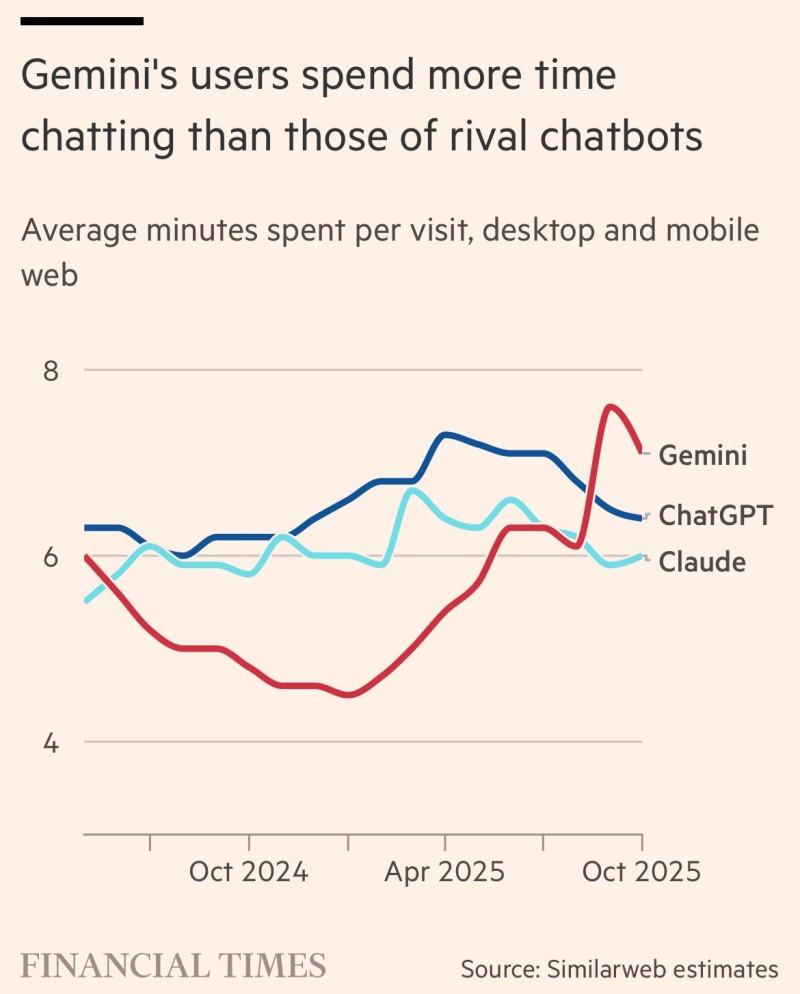
⬤ Engagement numbers from Similarweb tell an interesting story. Gemini users are now spending over 8 minutes per session as of late 2025, which actually beats both ChatGPT and Claude—both hovering around 6 minutes. That's not just a small bump, it's a meaningful difference that shows people are finding more reasons to stay and interact with Gemini. Meanwhile, app download data from Sensor Tower shows Gemini's monthly installs shot up through mid-to-late 2025, peaking near 70 million. ChatGPT still leads the pack with downloads that topped 100 million earlier in the year, but the trend line is heading down as we move into Q4 2025. Other players like Perplexity and DeepSeek aren't even playing in the same league yet.
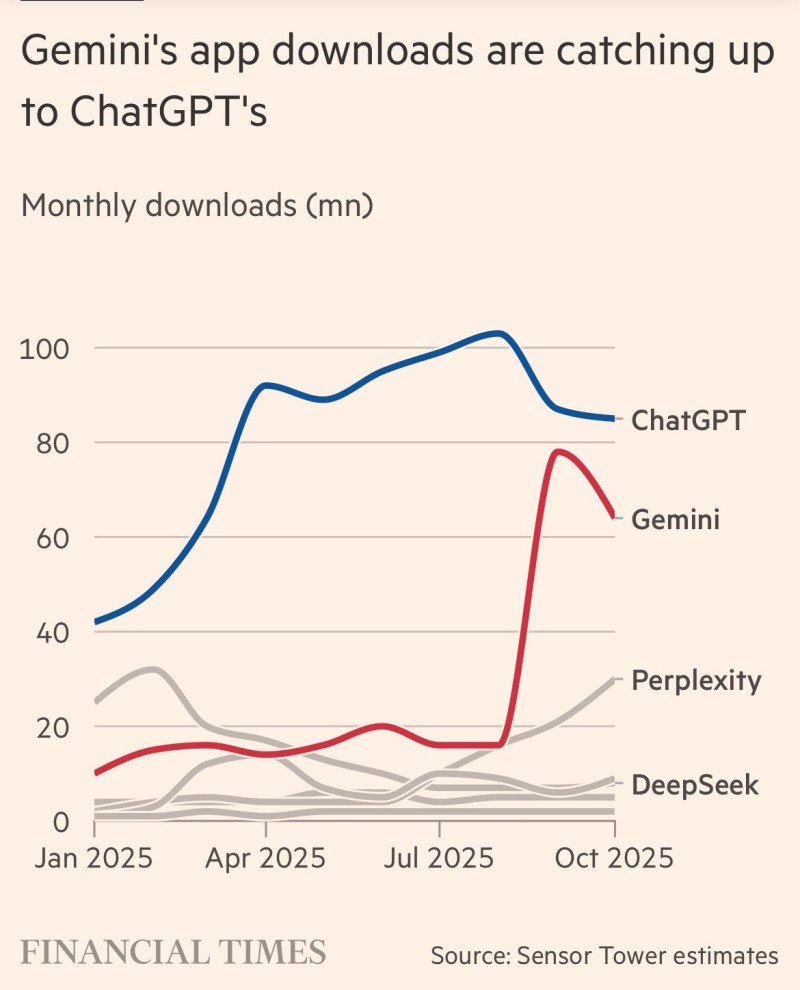
⬤ What makes these numbers matter is what they say about user behavior. When session times go up, it usually means the product is working better or people are finding more value in it. When downloads surge, it means word is spreading and adoption is accelerating. If Gemini keeps this up, OpenAI's brand advantage might not be enough to hold the line—especially in a market where switching between chatbots costs you nothing and people will move to whatever feels better or more useful. The data suggests users are responding to real improvements in what Gemini can do and how well it integrates into their workflow.
⬤ This shift matters because it's happening in one of tech's hottest growth areas. As GOOGL pushes Gemini 3 forward with rising engagement and expanding reach, the competitive landscape is changing fast. How these platforms compete on user experience, retention, and scale will shape not just market share but also how companies monetize AI and which players define the next chapter of generative AI adoption.
 Saad Ullah



